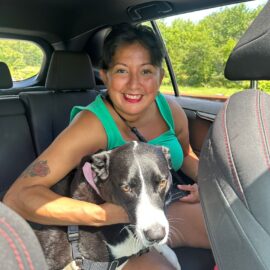
How my story begins: My cancer story didn’t begin in a hospital or with a sudden diagnosis — it began in the quiet persistence of hope. After seven years of fertility treatments, endless prayers, and unwavering determination, I had learned to live in cycles of waiting: for results, for answers, for miracles. My body had been through so much — hormones, procedures, medications — and yet I still believed in its resilience.
When unusual symptoms began, I brushed them aside, assuming they were side effects of treatment or stress. I had learned to push through discomfort, to stay strong for others, to keep showing up for my clients and my dreams. But something inside me — a deep intuition — whispered that this time was different.
Eventually, I listened. What followed was a whirlwind of tests, referrals, and uncertainty that led to words no one ever expects to hear: “You have cancer.”
In that moment, the air left the room. I thought about all the years I had spent helping women heal after birth, supporting families through their most vulnerable moments — and suddenly, I was the one who needed care. I wasn’t the doula anymore. I was the patient.
My world shifted overnight. Appointments, scans, chemo, radiation, and eventually brachytherapy became my new routine. But even through the fear and exhaustion, I held onto the same principles I had taught others: breathe, rest, trust your body, and accept help.
This wasn’t the journey I had imagined after years of trying to create life — yet somehow, it became a rebirth of its own. My cancer story began as an ending, but it has unfolded as a lesson in surrender, in strength, and in rediscovering who I am beyond survival.
Life before my diagnosis: Before the Diagnosis: A Life in Motion
Before cancer ever entered my story, my life was a tapestry woven with care, creativity, and deep purpose. I spent my days supporting mothers and families through the sacred transition of postpartum life — nurturing, educating, and holding space for their healing. Under Miss Poppins Doula and Supernova Doula, I built a practice rooted in love and resilience, helping new parents feel seen and supported through every tender, chaotic moment.
For years, I also worked at Montclair Baby in my hometown of Montclair, New Jersey — a space that felt like home in every sense of the word. There, I guided expecting and new mothers, shared resources, taught, listened, and poured my energy into a community that mirrored my own dreams of motherhood.
Behind the scenes, I carried my own quiet battle: a seven-year journey through infertility. A path filled with hope, heartbreak, faith, and perseverance. Each treatment, each appointment, each waiting period shaped me — not just as a woman yearning for a child, but as a doula who understood the raw, emotional landscape of longing and loss firsthand.
Life before my diagnosis was full — a blend of purpose and persistence. I was constantly moving, learning, laughing, and loving. My home was filled with the smell of bone broth simmering, herbal teas brewing, and my loyal dog Brooklyn curled up by my side. I was surrounded by families I’d helped create, and though my own dream of motherhood hadn’t yet been fulfilled, I continued to believe in miracles — for my clients, for my loved ones, and for myself.
How I felt after diagnosis: When I first heard the words “You have cancer,” I wasn’t just scared — I was angry. Angry at the timing, angry at my body, angry that after seven long years of infertility treatments, shots, retrievals, and losses — after every ounce of hope I had poured into creating life — I was facing something that threatened it.
I felt betrayed by my own body, the same body I had spent years nurturing and preparing for motherhood. I thought about the debt from all my fertility treatments, the emotional and financial sacrifices, the hope that someday I’d finally hold my baby. And now, with my diagnosis, I was being told that if I ever wanted that dream to come true, I would likely need a gestational surrogate to carry my child.
It felt unfair — painfully unfair. I had given so much love and care to others as a doula, guiding mothers through postpartum recovery, helping them bond with their babies, holding their hands through the hardest parts of early motherhood. Now, I was the one who needed holding.
But beneath the anger, there was still hope — stubborn, defiant hope. Hope that my embryos, my dream of motherhood, my faith, and my spirit were stronger than this disease. Hope that somehow, this part of my story could lead to something new — not the ending of my dream, but a different way it might come true.
I allowed myself to feel it all: the rage, the sadness, the disbelief, and the hope. Because all of it is part of me — the woman who fought for seven years to become a mother, and now fights every day to live, to heal, and to keep believing that miracles don’t always look the way we expect them to.
So I’m praying for the miracle of either an altruistic situation or fund raising.
Telling my family and friends: Telling my friends was one of the hardest parts. I’ve always been the strong one — the helper, the doula, the one people call when they’re in crisis. I wasn’t used to being the one who needed the care, the one whose voice trembled as she tried to explain what was happening.
At first, I didn’t know how to find the words. How do you even begin to tell the people you love that you have cancer? That your body — the same body that had already endured years of infertility treatments — was now fighting for its life?
When I finally started sharing, it came out in pieces: a text here, a call there, sometimes between tears, sometimes with awkward humor just to get through it. Some friends cried with me, others went quiet, and a few didn’t know what to say — and that was okay.
But then something beautiful happened. The same people I had supported over the years — the mothers, the families, the friends — became my village. They showed up with messages, meals, prayers, playlists, candles, and words of strength I didn’t even know I needed.
I realized that telling my friends wasn’t just about sharing bad news; it was about opening the door for love to walk in. It reminded me that vulnerability doesn’t make you weak — it makes you reachable.
Through their kindness, I felt held in the same way I had held so many others. And that’s when I understood: community is medicine.
My treatment: 1. External Beam Radiation Therapy (EBRT)
I began with a course of daily radiation, Monday through Friday. This part of treatment targets the tumor and surrounding areas to eliminate cancer cells and prevent spread. It’s routine in schedule but powerful in purpose. The fatigue is real, and the GI and bladder side effects are something no one warns you enough about — but each session feels like a step forward.
2. Chemotherapy (Weekly Cisplatin)
Once a week, I receive cisplatin, a chemotherapy drug that boosts the effectiveness of radiation. This is not the “hair-falling-out” chemo many imagine — it’s a radiosensitizer. Still, the nausea, fatigue, and electrolyte shifting keep me on my toes. Hydration and advocating for supportive meds have become non-negotiable.
3. Brachytherapy
After external radiation, I will move into internal radiation (brachytherapy). This part scared me the most at first — the idea of applicators and sedation felt intense — but hearing survivor stories gave me strength. It is an incredibly effective way to deliver radiation right where it’s needed.
4. Immunotherapy (Every 3 Weeks)
Given the specifics of my diagnosis, my oncologist added immunotherapy to continue supporting my body in fighting cancer cells. This treatment is empowering in its own way — knowing my immune system is being trained and strengthened to keep me safe.
Learning to Live in Treatment
The emotional, physical, and mental load has been heavy at times. There are mornings I don’t want to get out of bed and nights I lie awake thinking about the future. But I also remind myself: treatment is working even when I’m exhausted. My body is doing everything I ask of it, and I’ve learned to honor that.
Support Makes a Difference
My angels — my husband, my mom, my friends — are carrying me in ways I never expected to need. And just as they support me, I hope they are supported too. Cancer impacts the whole circle, not just the patient.
How I felt after treatment: Loved
What was most difficult for me: Losing my uterus and ability to carry my baby. Angry I have only one embryo. Angry that we have no money for a surrogate and that I’m in so much debt for it to wind up with me having cancer.
What I did to help myself: I journal, walk, pray, talk to god, talk to my cancer
My life after cancer: Who knows
Where I am today: In the middle of therapy.
What I want other women to know: That we can support each other and move mountains. That we must advocate for ourselves and listen to OURSELVES.
How I will try to help others: Resilience, humor, and to face the pain to help navigate it better.
Any additional information you'd like to share: I want to help women navigate all this. Like my friends are helping me.