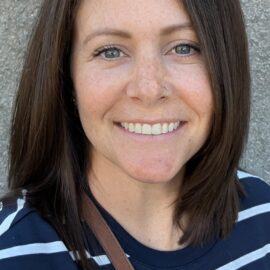
How my story begins: When I first started seeing some spotting after intercourse, I wasn't too worried. It could be anything, right? However, as things seemed to intensify, I grew increasingly worried. Everyone tells you not to Google your symptoms because it will alway say cancer so I figured that cancer was the least likely and I began ruling out other options. In the meantime, I visited my family doctor to discuss my symptoms and have a PAP done. I was told my PAP came back normal, and there was no follow-up for my symptoms.
Months later, as things continued to get worse, I switched doctors and became part of a family health team. When I shared my symptoms, they threw everything at me to help rule out anything suspicious, and when all my tests came back normal, they completed another PAP (despite provincial regulations calling for PAPs to only be done every three years). This one came back as atypical glandular cells, leading to a colposcopy and a confirmation of a cancer diagnosis. I met with my oncologist for the first time a few weeks later.
**It is worth noting here, that I underwent treatment and was NED for nearly three years before my first recurrence and was NED for nearly six months following that treatment before my second recurrence.**
Life before my diagnosis: Before diagnosis, I was incredibly active. Working out regularly and participating in sports like volleyball and softball with my boyfriend (now husband). We lived an adventurous life with our two little pups, travelling the world and taking on new adventures.
How I felt after diagnosis: Things went from slowly working towards getting answers to an overwhelming snowballing effect. Learning the language of a cancer diagnosis was exhausting, confusing, and frustrating. This was a whole new world to me and my family. Everyone asked for answers and I just felt lost in a sea of information.
My treatment: Initial Diagnosis: I had a radical hysterectomy which preserved my fertility but took away my physical ability to carry a child. This was done laparoscopically and had significant impacts on my sexual well-being but was manageable.
Second Diagnosis: Recurrence of tumour, this time on vaginal cuff; the plan = 25 rounds of external radiation, 5 chemo infusions and 4 rounds of brachytherapy. Due to infection after the first round of brachytherapy the external radiation was extended to 27 rounds.
Third Diagnosis: Regional metastasis found in lymph nodes; the plan = 6 rounds of chemotherapy (1x every three weeks) and 5 rounds of high dose radiation. With luck, I ended up only needed 3 rounds of chemo as it shrunk the mets enough for the high dose radiation to be effective.
My life after cancer: In a lot of ways my life is similar to how it was before, however, it's so different in the experiences within my body. Treatment triggered medically induced menopause that has made life challenging. I am still navigating through various hormone supports and treatments to help me adjust and feel my best. The internal radiation from brachytherapy left me with some hyper sensitive cells that bleed easily which was re-traumatizing. I'm not nearly as active as I was but I'm finding ways back to my old self slowly but surely. Managing the mental side effects from chemo and menopause is definitely one of the most challenging things I've had to deal with.
Where I am today: Today, I am almost 4 years NED and am so blessed to have my amazing son who was born via surrogacy (gestational carrier). I am back to working full-time and despite struggling with some of the things my new body throws at me, I'm happy, healthy and thriving. I don't think I'll ever not feel panicked when symptoms of anything or pains show up. Given my extensive treatment, I occasionally think about the future and if I'll be facing this again in my later years and what that could look like. But for now, I'm focused on what I have control over.
What I want other women to know: It's easier said than done, but advocate, advocate, advocate for yourself. Trust your gut and don't stress about being a "problem" patient. You know your body better than anyone.