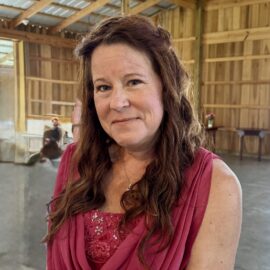
How my story begins: My story began with symptoms that were easy to explain away at first; they lined up with perimenopausal symptoms. Like many women, I was busy and kept pushing forward. Eventually, I realized something didn’t feel right and knew I needed answers. What followed was a whirlwind of appointments, testing, uncertainty, and fear.
Hearing the words “you have cervical cancer” completely changed my life in an instant. Even as a nurse, nothing prepares you for hearing those words about yourself. In that moment, I stopped being the caregiver and became the patient.
Life before my diagnosis: Before my cervical cancer diagnosis, I was living a very full and busy life as a labor and delivery nurse, wife, and mother. Women’s health has always been deeply personal and important to me, both professionally and personally. I spent my days caring for women during some of the most vulnerable and transformative moments of their lives, helping them bring babies into the world and advocating for them throughout pregnancy and birth. Outside of work, my life centered around my family, my education, and my passion for helping others.
I considered myself very health conscious. I stayed on top of appointments, exercised, and genuinely believed that because I worked in healthcare, I understood how to navigate the medical system. Cervical cancer was never something I truly thought would happen to me.
How I felt after diagnosis: After my diagnosis, I felt shocked, terrified, angry, and overwhelmed all at once. I remember feeling like the ground had been pulled out from under me. One of the hardest parts was the uncertainty—wondering what treatment would look like, whether it had spread, how my family would cope, and what the future would hold.
I also struggled emotionally with my relationship to my own body. As women, we are often taught to trust our bodies, but after my diagnosis, I felt betrayed by mine. There were moments where I was angry that my body had developed cancer despite everything I had done to take care of myself.
At the same time, being a nurse gave me a unique perspective. I understood enough medically to know the seriousness of the diagnosis, but I also understood the importance of advocating for myself and asking questions. That experience made me realize how overwhelming and intimidating the healthcare system can feel for patients who do not have a medical background.
Telling my family and friends: Telling my family and friends was one of the most difficult parts of the experience. As a mother and caregiver, I am usually the person trying to hold everything together, so suddenly being the one who needed support was incredibly hard.
Watching the people I love process the diagnosis was heartbreaking. At the same time, their support became one of the greatest sources of strength throughout my treatment. I quickly learned that cancer affects not only the patient, but everyone who loves them.
My treatment: My treatment journey involved difficult decisions, physically exhausting treatments, and emotional highs and lows. I had five weeks of external beam radiation daily (25 treatments) coupled with six weeks of Cisplatin / Keytruda (weekly), five sessions of brachytherapy (internal radiation under general anesthesia), followed by Keytruda every three weeks. There were days where I felt strong and hopeful, and other days where I felt scared, exhausted, and defeated.
As someone who works in healthcare, it was incredibly humbling to be on the other side of care. I gained an entirely new appreciation for the nurses, providers, and support staff who care for patients during their hardest moments.
Treatment taught me resilience in ways I never expected. It forced me to slow down, accept help, and focus on survival one day at a time.
How I felt after treatment: After treatment, I felt physically and emotionally drained in ways I never could have fully prepared for. The combination of daily radiation, weekly chemotherapy and immunotherapy, repeated anesthesia for brachytherapy, and ongoing Keytruda treatments took a tremendous toll on my body. There was relief in finally completing such an intense treatment regimen, but that relief was also mixed with fear, uncertainty, and anxiety about whether the treatment had truly worked. I remember wanting so badly to return to “normal,” yet realizing that cancer had changed me physically, emotionally, and mentally.
At the same time, I also felt incredibly grateful and proud of myself for making it through something I once thought I could never endure. Treatment forced me to confront my own vulnerability and taught me how strong and resilient I really am. Even on the hardest days, I kept showing up, one appointment and one treatment at a time. The experience deepened my empathy as both a nurse and a future provider because I now understand firsthand what it feels like to sit in the patient chair, to fear scan results, and to keep moving forward despite uncertainty.
What was most difficult for me: One of the most difficult aspects of my journey was the emotional toll. Cancer impacts every part of your life—your physical health, mental health, relationships, body image, and sense of identity.
Another challenge was balancing my role as a healthcare provider while navigating being a patient myself. It was difficult to step away from caring for others and focus on my own healing.
There was also grief involved—grief for the version of myself and my life before cancer. Even after treatment ends, cancer changes you forever.
What I did to help myself: What helped me most was the support of my family, friends, coworkers, and fellow survivors. I also found strength in connecting with other women who truly understood the experience of cervical cancer.
Advocacy became an important part of my healing. Sharing my story, educating others, and encouraging women to listen to their bodies gave purpose to what I had gone through. I have even spoken publicly about my experience and the importance of self-advocacy in healthcare.
I also leaned heavily on my faith, my determination, and my desire to continue helping women through both my personal experiences and my professional career.
My life after cancer: Life after cancer did not unfold the way I originally hoped it would. After completing my initial treatment, I tried to move forward with gratitude and optimism while rebuilding my life physically and emotionally. Like many survivors, I carried the anxiety that comes with every follow-up appointment and scan, but I also tried to focus on healing, my family, my career, and my future goals.
In February 2026, I learned that my cervical cancer had recurred. Imaging identified lesions on several vertebrae as well as involvement of retrocrural lymph nodes. Hearing that the cancer had returned was devastating. It felt like the fear I had worked so hard to quiet suddenly came rushing back all at once. Recurrence brings a different kind of emotional weight—one that includes not only fear and uncertainty, but also grief for the sense of safety you thought you had regained.
At the same time, recurrence has also reinforced my resilience and determination. Cancer has changed my perspective on life, healthcare, and what truly matters. It has deepened my empathy as a nurse and strengthened my passion for women’s health advocacy. It reinforced my desire to become a Women’s Health Nurse Practitioner and eventually a Certified Nurse Midwife so I can continue supporting women throughout every stage of their lives with compassion, honesty, and understanding.
My experience has made me a more compassionate nurse and future provider because I understand in a much deeper way what it means to feel vulnerable, scared, overwhelmed, and uncertain in a medical setting.
Where I am today: Today, I am continuing to fight. I am currently undergoing a more aggressive treatment regimen for my recurrence, including Paclitaxel, Carboplatin, and Avastin every three weeks. While treatment is physically and emotionally challenging, I am doing everything I can to continue showing up for myself and my family with strength and hope.
I am also utilizing cold capping during chemotherapy in an effort to preserve my hair, along with SuziPad iced gloves and booties to help reduce the risk of chemotherapy-induced peripheral neuropathy. These supportive measures may seem small to some people, but they represent an important part of maintaining both quality of life and a sense of identity during treatment.
In three weeks, I will undergo repeat imaging to determine how I am responding to treatment. Living scan to scan is difficult, but I continue to hold onto hope while taking things one step at a time.
Despite everything, I continue working toward my goals, including completing my Women’s Health Nurse Practitioner program and continuing my work in labor and delivery and high-risk obstetrics. I remain deeply passionate about helping women advocate for themselves, prioritize preventive care, and know that they deserve to be heard when something feels wrong.
Cancer may always be part of my story, but it does not define me.
Outside of treatment and work, my family continues to be one of my greatest sources of strength and motivation. I am the mother of three young adult sons, and even during this difficult chapter, life continues to move forward in beautiful ways. One of my sons will be getting married in June 2026, and another in June 2027. These milestones remind me daily why I continue to fight so hard and hold onto hope for the future.
What I want other women to know: I want other women to know that their symptoms matter and their voices matter. If something feels off, advocate for yourself and make that appointment.
You know your body better than anyone else. If something feels wrong, keep asking questions until you get answers.
I also want women to know that they are stronger than they realize. Cancer changes you, but it can also reveal strength, resilience, and purpose you never knew you had.
Most importantly, I want women facing cervical cancer or any difficult diagnosis to know that they are not alone.
How I will try to help others: I hope to use my story to help other women feel less alone. Cervical cancer can feel isolating and frightening, but there is so much power in connection, education, and advocacy.
I want women to know the importance of routine screenings, HPV awareness, and listening to their bodies. I also want patients to know that they have the right to ask questions, seek second opinions, and advocate for themselves throughout their healthcare journey.
As both a nurse and a patient, I hope to continue combining clinical care with compassion, empathy, and advocacy.
Any additional information you'd like to share: way I care for others. As both a patient and a labor and delivery nurse, I have experienced healthcare from both sides, and that perspective has profoundly shaped the provider I am becoming. I understand what it feels like to be vulnerable, overwhelmed, scared, and desperate for someone to truly listen. Because of that, I am deeply committed to helping women feel heard, respected, educated, and empowered throughout their healthcare journeys.
My experiences have strengthened my passion for women’s health advocacy, survivorship awareness, and compassionate patient-centered care. They have also reinforced my goal of becoming both a Women’s Health Nurse Practitioner and Certified Nurse Midwife so I can continue supporting women across all stages of life—from preventive care and pregnancy to menopause, survivorship, and beyond. While cancer will always be part of my story, I hope the way I use my story to advocate for and uplift others becomes an even bigger part of who I am.