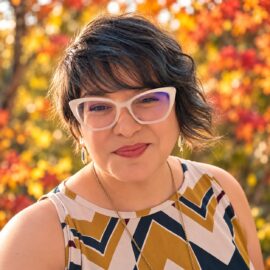
How my story begins: I honestly thought I was going through menopause. I had just turned 51, and the lightheadedness, sleeplessness, and increasingly irregular menstrual cycles seemed to fit. My cycle had always been like clockwork, but throughout 2021 it became unpredictable, sometimes disappearing for months. Then, in early 2022, I experienced two extraordinarily heavy cycles
within a month of each other.
Looking back, I probably should have gone to the emergency room. But hindsight is a funny
thing, isn't it? We recognize the warning signs much more clearly once we know what they were warning us about.
At my scheduled Pap test, my primary care provider told me to arrange a colposcopy with my gynecologist as soon as possible. On May 18, 2022, I had that procedure. The bleeding was difficult to control, and although my doctor didn't say the word cancer, I could sense his concern.
Within two weeks, I had my results and was sitting in an oncology office.
And just like that, the story I thought I was living took a very unexpected turn.
Life before my diagnosis: I lived a fairly quiet life in a small North Carolina town with my husband, our son, and our pandemic-adopted dog, Ethel Mertz. (Yes, named after that Ethel Mertz!)
I worked in a small boutique, handling everything from sales and displays to social media. I enjoyed the creativity, the people, and the flexibility it gave me to care for my family and home.
I was the caretaker. The organizer. The person who made sure everyone else had what they needed. I had my hobbies, my family, my community, and a life that felt comfortably settled.
I didn't know how much of my identity was wrapped up in being the person who took care of everyone else until I found myself needing to be cared for.
How I felt after diagnosis: My husband accompanied me to my first oncology consultation. Initially, I was staged at 1B3, and the prognosis seemed encouraging. The plan was chemotherapy and radiation, and although the word cancer was terrifying, we felt we had a fairly straightforward path ahead.
I think I was still in shock. I remember calling my nurse navigator afterward because I couldn't quite process everything we'd been told. I needed clarification, answers, and probably a little reassurance that I'd heard everything correctly.
Two weeks later, a PET scan for radiation planning changed everything.
I wasn't Stage 1B3.
I was Stage 4B.
There is something almost surreal about having your future rewritten in the span of a single appointment. The treatment conversations changed. The statistics changed. The uncertainty became much bigger. But here's something I've learned since then: A prognosis is information. It is not a prophecy.
I didn't know what the next chapter would hold. I only knew I wanted to be here to write it.
Telling my family and friends: We told our immediate family and closest friends first. Living in a small town, though, I knew people would notice my absence from work and social activities. Rather than repeat the same difficult conversations over and over, I created a private Facebook page where I could share updates.
I called it What A Beautiful Mess, inspired by a favorite song, and published my first newsletter on June 13, 2022. Initially, it was simply a practical way to keep everyone informed. But something wonderful happened.
That little page became a community. People showed up with encouragement, humor, prayers, kindness, and love. I discovered that writing helped me process what I was experiencing, sometimes even before I fully understood it myself.
What began as a way to share medical updates became a place to share the messy, complicated, occasionally ridiculous, and unexpectedly beautiful business of living with cancer.
Eventually, What A Beautiful Mess grew beyond that private Facebook page into a public blog and website, a home for my writing about survivorship, grief, community, advocacy, and practicing hope.
I started writing because I needed people to know what was happening to me. I kept writing because I discovered what happens when we let people into our stories.
My treatment: After my cancer was restaged, my oncology team and I decided to proceed with our original treatment plan, minus brachytherapy: cisplatin chemotherapy and external radiation.
Treatment was challenging. I experienced significant side effects and was unable to complete two of my six planned cisplatin infusions. Thankfully, subsequent scans showed that the cancer had stabilized.
Based on findings from the CheckMate 358 clinical trial, my team determined I was a candidate for immunotherapy. In September 2022, I began Opdivo and Yervoy (nivolumab and ipilimumab).
Unfortunately, I developed a rare, serious eye-related adverse reaction and was unable to complete two of my four planned infusions. I experienced double vision from October 2022 until December 2023.
For more than a year, the world quite literally looked different.
My experience with immunotherapy also meant that continuing with maintenance treatment wasn't considered a safe option for me. My medical team and I have had to balance the potential benefits of additional treatment against the possibility of serious complications.
Cancer treatment isn't always a straight line. Sometimes the plan changes. Sometimes your body makes decisions you wish it hadn't. And sometimes you have to learn to live with questions that don't have easy answers.
How I felt after treatment: I was absolutely overjoyed to ring that bell after radiation! Although, I have to admit, getting my water intake just right for those treatments was practically an Olympic event.
What I wasn't prepared for was how long recovery would take. The fatigue, digestive issues, and lingering effects of treatment didn't disappear when the appointments stopped. And because of my vision problems, I struggled to feel as though treatment had truly ended.
I had imagined that finishing treatment would be a finish line. Instead, I discovered it was the beginning of another kind of journey.
Recovery isn't always linear. Some days I feel wonderfully capable. Other days my body reminds me of everything it has experienced. I've learned to listen more carefully, offer myself a little grace, and redefine what a good day looks like.
I don't spend much time trying to get back to my old "normal" anymore. I'm much more interested in building a life that feels full, meaningful, and comfortably mine.
What was most difficult for me: The isolation.
I am a hugger. A people person. Someone who thrives on human connection. When my immune system became compromised, I understood the need to protect myself, but that didn't make the separation any easier.
Before my diagnosis, we'd planned a family vacation. Wanting to preserve some sense of normalcy for our son, I encouraged my husband and him to go without me. I figured I could manage a week alone.
Then they contracted COVID while traveling. One week became three.
Three weeks without a hug, a hand to hold, or the physical presence of the people I loved most.
Phone calls and video chats helped, but they couldn't replace human touch. I remember how profoundly lonely that time felt.
That experience taught me something I carry into my advocacy today:
Support isn't a luxury.
Sometimes support is oxygen.
And support doesn't always mean having the right words or knowing how to fix something. Sometimes it means simply being there. Sitting beside someone. Holding a hand. Making sure they know they haven't been forgotten.
Cancer can be terribly isolating. Community helps us find our way back to one another.
What I did to help myself: During treatment, I was determined to stay positive. I used to tell people that positivity was like a muscle: something you could train and strengthen through practice.
I still believe there's truth in that, but my understanding has evolved. I now call myself a Hope Practitioner.
Because I've learned that positivity and hope aren't quite the same thing.
Positivity often asks us to look for the bright side. Hope allows us to acknowledge that things are genuinely difficult and still believe there may be something beautiful ahead.
And some days, hope doesn't look particularly cheerful.
Sometimes it looks like crying in the shower, asking for help, taking a nap, or admitting that you're scared.
I've learned that strength isn't measured by how much we can carry alone. Sometimes it's measured by how willing we are to let ourselves be loved while carrying it.
I practice hope by looking for glimmers of joy, staying present, writing, connecting with others, and remembering that difficult feelings deserve acknowledgment, not permanent residency.
I don't have to be positive every minute.
I don't have to have all the answers.
I just have to keep practicing.
My life after cancer: During treatment, I often told people that I was living with cancer, not dying from it.
I still believe in living as fully as possible, although my definition of a full life has changed.
Cancer didn't magically make me fearless or infinitely wise. I still have difficult days, lingering health issues, moments of uncertainty, and plenty of things I'm figuring out as I go.
But it did change the way I think about time, connection, and purpose.
I have become much more intentional about how I spend my energy and who I share it with. I say yes to experiences that help me grow, even when they push me outside my comfort zone.
I'm learning to say no without quite so much guilt. And I'm discovering that becoming a beginner again can be its own wonderful adventure.
I've also found a sense of purpose I never anticipated through patient advocacy, writing, speaking, and supporting other survivors.
Some of the most meaningful relationships in my life have grown out of experiences I would never have chosen.
There is a beautiful contradiction in that. I would never call cancer a gift. But I refuse to ignore the gifts of love, friendship, and purpose that have found me along the way.
I'm still living my dash, still working on that legacy of love, and still discovering just how much life there is to live.
Where I am today: As of October 2026, I am more than three years NED — No Evidence of Disease! I first received that wonderful news on May 9, 2023.
My vision has recovered, and I remain off maintenance immunotherapy because of the serious complications I experienced during treatment.
But survivorship isn't a place where all the uncertainty magically disappears.
In the summer of 2026, imaging revealed something concerning, and suddenly I found myself facing the possibility of recurrence. After three years of NED, I had begun to feel relatively safe.
I thought I'd gotten pretty good at managing scanxiety. Apparently, life had another lesson in store. The waiting, the additional testing, the biopsy — it brought back emotions I thought I'd made peace with.
On August 4, 2026, I received the news I'd been hoping for. No cancer. Still NED. And an enormous exhale.
That experience reminded me that hope isn't something we master once and tuck away on a shelf. It's something we continue to practice, especially when life becomes uncertain again.
These days, I'm actively involved in gynecologic cancer advocacy. I'm a Cervivor Ambassador, a Cervivor School graduate and two-time mentor, and I work with Teal Diva, a nonprofit dedicated to the emotional and mental well-being of gynecologic cancer survivors.
I write, speak, create, mentor, and continue to learn from the extraordinary people I meet along the way.
My life isn't without uncertainty. But it is filled with purpose, community, and a whole lot of love.
And perhaps most importantly, I've learned that fear may always have a voice. But it doesn't deserve the microphone.
What I want other women to know: First, please listen to your body. Don't dismiss changes because they seem inconvenient, embarrassing, or easily explained away. I thought I was experiencing menopause. I had no idea that those symptoms would lead
to a Stage 4 cervical cancer diagnosis.
Stay informed about HPV, cervical cancer prevention, screening, and vaccination. Ask questions. Follow up on abnormal results. Advocate for yourself when something doesn't feel right.
And please, find your people. If you don't have a support network, look for one. Build one. Allow yourself to become part of one.
You do not have to navigate cancer alone, and you don't have to earn support by being brave, cheerful, or endlessly strong. I've learned that sisterhood isn't simply about celebrating the good days. It's about having people who will sit beside you through the hardest ones.
Speak up. Use your voice. Ask for what you need, whether that's a clearer explanation from your medical team, a second opinion, a ride to treatment, or someone to sit quietly beside you.
And remember that your story matters. You don't have to be a professional speaker, an experienced advocate, or someone with a perfectly polished message. Your lived experience has value.
My cancer journey started with me, but it became about so much more than me. Every time we share what we've learned, challenge misinformation, or help another person feel less alone, we create the possibility of change.
How I will try to help others: Early in my cancer journey, I came across a quote from Rainn Wilson about fostering hope and joy in others being one of our highest spiritual callings.
Those words stayed with me.
During treatment, I began a small outreach effort, sharing bracelets with other cancer patients and healthcare staff as reminders that they weren't alone. It was a simple gesture, but I discovered how much meaning can live in something so small.
A bracelet. A conversation. A handwritten note. A moment of connection.
I began to understand that hope doesn't have to be grand to be powerful. Since then, my advocacy has grown in ways I never could have imagined.
Through Cervivor, I've had the privilege of learning from extraordinary advocates, sharing my own experiences, mentoring new Cervivor School graduates, and helping others discover the power of their voices.
One of my favorite things is helping people find the words to tell their stories — not the stories they think they're supposed to tell, but the ones that belong uniquely to them.
Through Teal Diva, I've become deeply involved in creating community, sharing survivor experiences, and helping women feel seen, supported, and celebrated. I've experienced firsthand the extraordinary power of survivor retreats and the sisterhood that can grow when people are given the space to show up exactly as they are.
And What A Beautiful Mess has become a home for my writing, speaking, and reflections on survivorship, grief, resilience, leadership, and practicing hope.
My advocacy now extends well beyond my own diagnosis. I want people to understand the importance of HPV education, vaccination, screening, and access to care. I want survivors to know that their emotional well-being matters just as much as their medical treatment. And I want us to keep building communities where nobody has to wonder whether they belong.
I believe our stories can educate. They can connect. They can challenge systems. They can change lives. But perhaps most beautifully, they can remind someone who is struggling that they are not alone. I used to think my job was to be strong enough to say, "I've got this." Now I know the greater power is in being able to say, "We've got you."
I'm a writer, a speaker, an advocate, a Stage 4 cervical cancer survivor, and a Hope Practitioner.
I'm still learning. Still evolving. Still finding beauty in the mess. And choosing hope daily. Because hope isn't something you find. It's something you practice.