by Cervivor Ambassador Lori
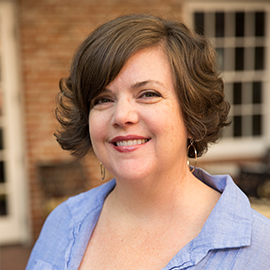 I’ll never forget that first time I got up in front of a group of medical professionals to talk about my cervical cancer. It was a little over a year after finishing treatment. I was surprisingly nervous, and I’m someone with a speaking and training background.
I was selected to be one of three panelists for a Q&A session on patient experiences at a nursing oncology forum in the Seattle area, my home town and a hot seat of academic research, global health advocacy, and medical innovation. Essentially, it’s filled with people who are smarter than me when it comes to the big wide world of medicine.
I figured I would go in and wing it, as I wasn’t sure what they would ask. The moderator had advised me earlier, “Just speak from the heart and be yourself. This audience wants to hear what it was like being a patient.” I was not prepared for what was coming. The first question that came up around sharing my story sent me into one of those crying sessions where your lip starts to quiver and eventually your voice comes out in broken sobs. I lost all train of thought.
Through the sobs, I was able to get a few pieces of my story out, but they were just the dark parts, the topics that in the moment seemed compelling, just so I would appear interesting to these oncology nurses. I began spewing random thoughts about big topics like fertility removal, a nasty doctor I had encountered, STIs (sexually transmitted infections), and ramblings that I can’t recall. They invited me back for a second panel the next year, so it was likely not as bad as I remember. But I left that event upset with myself that I hadn’t come better prepared when I had so much more to say and offer.
Fast-forward eight-plus years and I am a new person, a seasoned advocate that knows her stuff and has evolved into a subject matter expert on HPV, cervical cancer, sexual health, anatomy, and all things taboo about gynecological truths.
Here are my tips on how I got here.
1) Work it, Own it
You have or have had HPV infection, pre-cancer, or cancer. It is what it is. Be honest about that. I have seen many survivors be dismissive of their diagnosis as not to draw attention for cultural, religious, and personal reasons. Those are valid concerns, yet it’s so important to find your path to end any shame or stigma, as it’s about to get very real. Sharing your story is one of the MOST POWERFUL TOOLS in survivor advocacy. Own your experiences and never apologize for, dismiss, or downplay how you feel about them. They are yours and not up for debate.
2) Do your homework and stay current
I can’t stress this one enough. Soak yourself in the facts. Go to conferences, listen to presentations from medical practitioners, read the medical literature, and understand the vocabulary of cancer and gynecological topics. Stay current on news and events by dedicating a few hours each month to understanding the cancer landscape. Not being informed is this biggest thing that can get you stuck when faced with hard questions.
3) Pick the level of advocacy you are ready for and build on that
Not ready to speak to large groups or the media yet … or ever? That’s ok! Start where you feel most comfortable and build. Create a 1-5 year plan for what you want to accomplish. Stair-step your advocacy that fits your readiness. Start with opportunities like tabling at health fairs and events in your local community. This gives great practice for body language, engaging people, and delivering your message. PRO TIP: Never stand behind a table. Get in the aisle with attendees and draw them in.
4) Memorize the following guidelines like your social security number
- Vaccinate boys and girls well before they are sexually active, around age 11 but anytime between 9-26;
- Woman should get a Pap smear starting at age 21;
- Women should add an HPV test starting at age 30; and
- Some women may be able to end certain screenings after age 65, but check with your doctor.
5) Speak from experience only
You don’t need to have all the answers. In fact, you should never give medical advice for integrity and liability reasons. This takes off a ton of pressure. If you don’t know the answer to something, it’s ok to say so. If you are not a medical practitioner, don’t pretend to be one. At speaking engagements, I always include some form of the following, “Remember, I am not a medical practitioner. I am a survivor-turned-advocate and nothing I say here today should be construed as medical advice or care.” Do this every time.
6) Develop a compelling elevator pitch
An “elevator pitch” is a lightning fast response you use when meeting someone for the first time that immediately tells your story. Think five seconds of you that leaves the door open for them to ask more. It can be as simple as meeting someone at a fundraiser and introducing with, “Hi! I’m Lori. I am a cancer survivor-turned-advocate working to eradicate HPV cancer stereotypes.” I have about five pitches that I shuffle through. At educational and health fair events, I always start with something like, “Hi! Tell me what YOU know about HPV.” Never yes or no options. Assess the room, know your audience, and engage.
7) Create a list of objection handling
It’s inevitable. You will run into people who are misinformed, ignorant, judgmental, and downright nasty. It really helps to have a list of common objections and know how to address them. Don’t try and win arguments. Give facts that blow up the myth. Get help crafting these from your medical community or other advocates. Comments like, “No way! I’m not giving my kid that vaccine. It kills people,” can be frustrating and leave you stuck in the conversation. Be ready for these. I have a list of mythbuster facts that I bring to events and hand them out when needed. Develop your own responses and engage only when you are ready. Today I can provide solid counter-arguments from memory, but it took about five years to get there and I still pick my battles.
8) Research speaking techniques and body language
As advocates, we need to develop an awareness of how we are seen, like it or not. This was a big hurdle for me as I developed my advocate persona. You don’t need to become a professional speaker, but it helps to be aware of how you look when speaking. Video record yourself telling your story and then watch it back. If needed, practice with your community and get help with local speaking groups. Find a style that works for you AND represents your affiliates with professionalism. I strive to achieve that magic combination of someone who is engaging, humble, and believable, with just the right dose of humor thrown in. You don’t need to be someone you’re not. Be your best self and people will respond.
9) Always carry takeaways and leave a call-to-action
In marketing, a takeaway is something you can give to an attendee that you hope she won’t throw away. I always carry additional advocate-specific calling cards/business cards. They are easy and cheap to make or ask for them if you represent an organization. Leave people with a reason to get in touch. Avoid sending people with too much literature or info. It goes in the waste bin and is not specific enough. Make it as easy as possible for people to find you.
10) Update your story as you evolve
You change every day. While the details of your treatment, facts, and players might not vary straight away, who you are as an advocate will naturally shift. Embrace that and go with it. For example, early on I wanted people to start talking about cervical cancer in my community for peer support. I wanted to find other women going through treatment to know I wasn’t alone. Today, my advocacy passions lie in deep, philosophical discussions of change that need to happen in governance, policy, and leadership. Your written record of your story may need to adapt as your experiences change.
Through my cancer advocacy adventures, I have had hits and misses. Some of them are cringe-worthy. Some too positive and powerful to measure. Yet, this process has fundamentally changed me in ways that I could never have imagined, launching my confidence, presence, and body awareness into uncharted territories. What a gift.
It is often hard to find the gifts and blessings that come with illness, especially when you are in the thick of it. We are usually aware that saving even one life from disease makes advocacy a worthy path to choose. But I guarantee you that making your unique voice heard in the world will move the dial further than you could ever know.
Find your voice, be prepared, join the Cervivor community, and take that leap. The world needs you now and you matter.
 Eight years ago, at age 32, I was a cervical cancer patient. Surgery, chemo, radiation, fatigue is how you could describe my