A Decade of Advocacy

It is surreal for me to think that I have been an advocate and sharing my story of cervical cancer for ten years.  I say this because after treatment, I just wanted to stay quiet.  Not talk about the whole ordeal and just move forward.

I am sure many survivors feel this way after treatment, but I have also met many that are very vocal about every single step of their journey.  I was not one of them.  I do not have any documentation about my journey.  The only thing I have are 35 hospital bracelets for each time I had a radiation treatment.  

It wasn’t until four months after treatment that my brother insisted on doing a cervical cancer walk. A coincidence? Perhaps. I will never know.  At first, I did not want to do it, but he insisted so much that I gave in. 
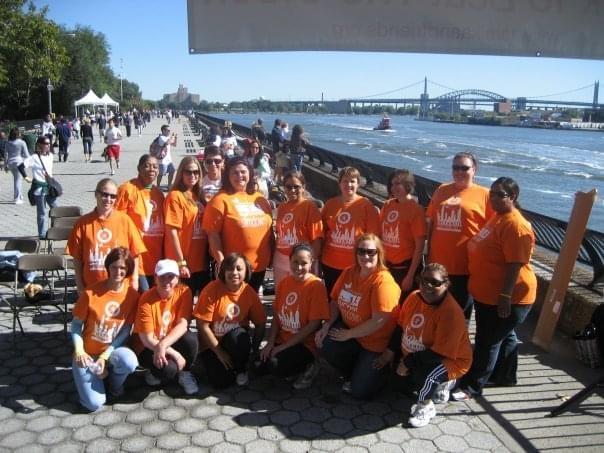
Walk to Beat the Clock – NYC

On September 19, 2009, at the Walk to Beat the Clock, I met Tamika Felder, a cervical cancer survivor and the founder of Tamika and Friends, which later rebranded to Cervivor.  That day I met other survivors as well.  They were sharing their cervical cancer stories.  These stories were similar to mine and told with such heart, passion and confidence.
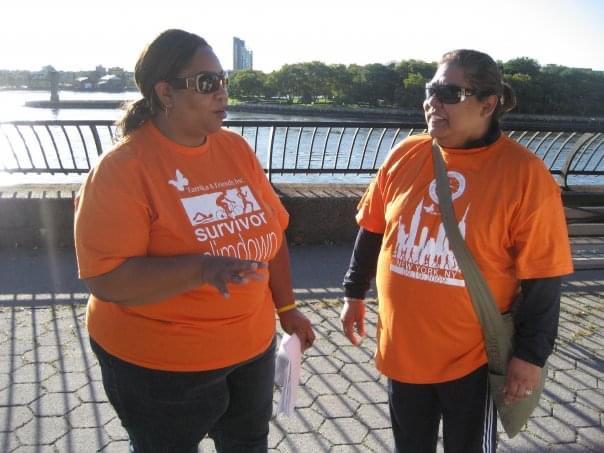
First time meeting Tamika

I was in awe.  I was inspired and motivated but most importantly I did not feel alone anymore.  At that moment, I made a decision that I wanted to join the cause and the movement. I wanted to share my own story and let other women know that my journey did not have to be theirs and that they were not alone. 

My mission became even clearer when Tamika invited me to a Latino Summit in Washington D.C. It was there that I learned the statistics between cervical cancer and Latinas

To be able to share my own story I needed to be authentic, open and be able to deliver it with an open heart.  Tamika said to me at the very beginning “always tell your story from your heart, because when it comes from the heart people listen.” I have applied this statement to the hundreds of times I have told my story and I still do.  
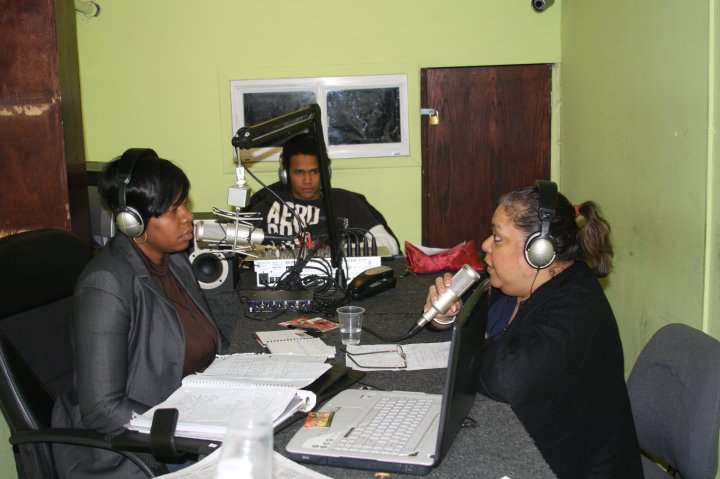
First radio interview

I still remember the first time I told my story. It was March 28, 2010 and it was a radio interview in Spanish for 95.9 FM El Poder Latino (The Latino Power).  I was so nervous, my heart was pounding, but I remembered what Tamika had told me to do and I spoke from the heart.

On January 25, 2014, I attended the first Cervivor School, which took place in New York City.  Cervivor School is a life-changing event. It is empowering, informational, educational and inspirational.  We also get to share our views, our stories, our concerns, our goals, our obstacles and our strengths.  It is so important that survivors who become advocates are educated and informed with the latest facts to be able to bring the proper message forward. 

It has been a journey of highs and lows.  The reality of things is that not everyone is going to be interested in listening to your story or anything you have to say and this had to be OK with me. I did not let this discourage me.  As advocates, we set to save the world. Unfortunately, I came to the realization that I cannot save the world, I cannot even save New York City, where I reside, but if my message gets to one person in the crowd, I have completed my mission. 

Through the years, there have been many ways I have advocated: free cervical cancer screening events, health fairs and interviews with different media outlets. Not every presentation or interview has been perfect, but I can honestly say that I never did it for the accolades.  I do it to educate women that need to know that this cancer is preventable and treatable if found early.  We lose over 4000 women every year in the United States alone. These women were someone’s wife, aunt, daughter, mother, grandmother and their lives matter.

I am very proud of the work I do as an advocate and I am humbled to say that my advocacy work has been recognized.  
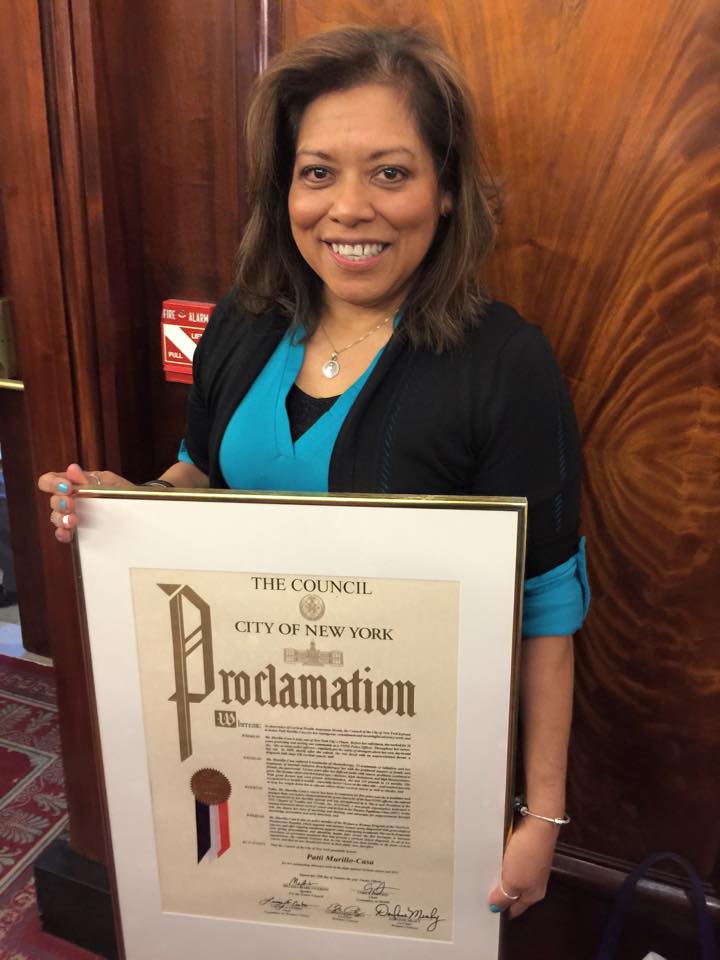
New York City Proclamation

All the work has been important to me, but I hold two events dear to my heart. The first is the proclamation for my advocacy, given to me by the New York City Council on January 10, 2015. This was one of the proudest moments of my advocacy world. 
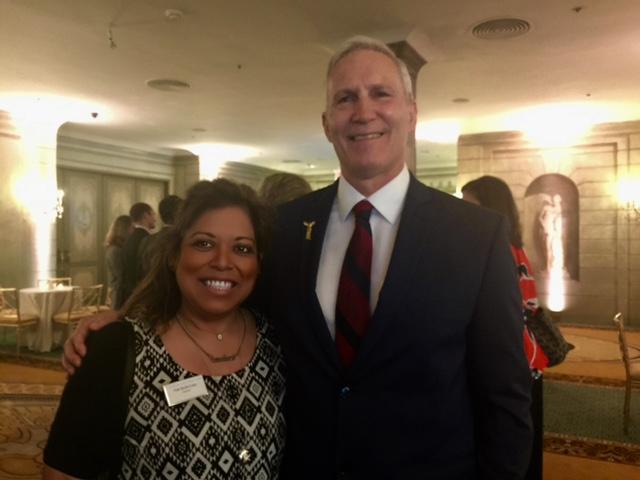
Lasker Awards with Dr. Lowy

The other was being invited to the Lasker Awards  in 2017 where I met Dr. Douglas R. Lowy and Dr. John T. Schiller, the two scientists that were the recipients of that year’s  award for their technological advances enabling the development of the human papillomavirus (HPV) vaccine which prevents cervical cancer and other tumors.  So proud that my story was featured in their submitted video

My advocacy journey has brought me full circle.  Today I lead a survivor fitness group as the Cervivor Wellness Instructor.  Survivor Slimdown is a Facebook group open to ALL CANCER SURVIVORS.  It is a space for inspiration, motivation and accountability as we learn to navigate our way to health after a cancer diagnosis.

I must say that the best part of my advocacy has been meeting my wonderful and inspirational Cervivor sisters.  Every single one of them has a story that matters.  Stories that show resilience, courage and strength.  Unfortunately, many of them are no longer here, but we keep them in our hearts.  We honor them by continuing to share their stories and legacies because they did make a difference. 

We all bond with the same mission to end cervical cancer and to make our generation the last one to fight this disease.
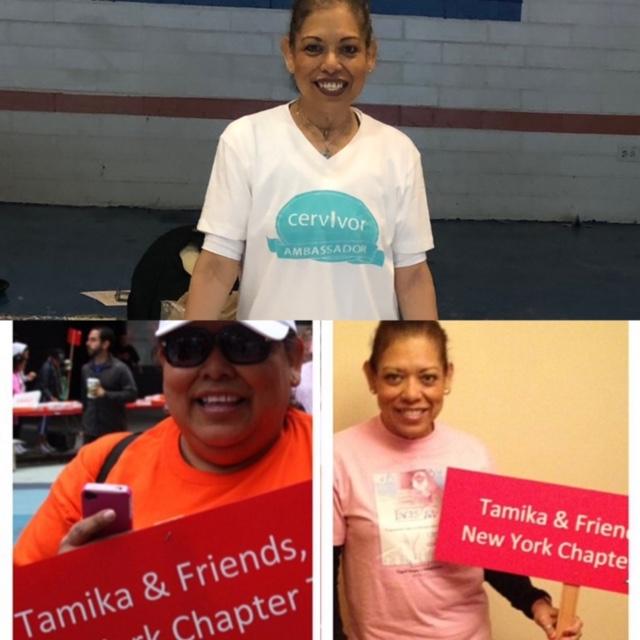
Advocacy in action!

My heartfelt thanks to Tamika Felder and the Cervivor organization for giving me a voice and a platform to share my story. This organization has supported me on my way back.  They have also supported so many other women fighting and surviving this disease. I will never feel alone again.

Patti is a Cervivor Ambassador and Cervivor’s Wellness Instructor who manages our Survivor Slimdown Facebook group. She is a retired NYPD police officer and an 11 year cervical cancer survivor. She resides in NYC with her husband of 21 years where she’s a Group Fitness Instructor and a Health Advocate.
Una colostomizada en Honduras durante la pandemia de COVID-19

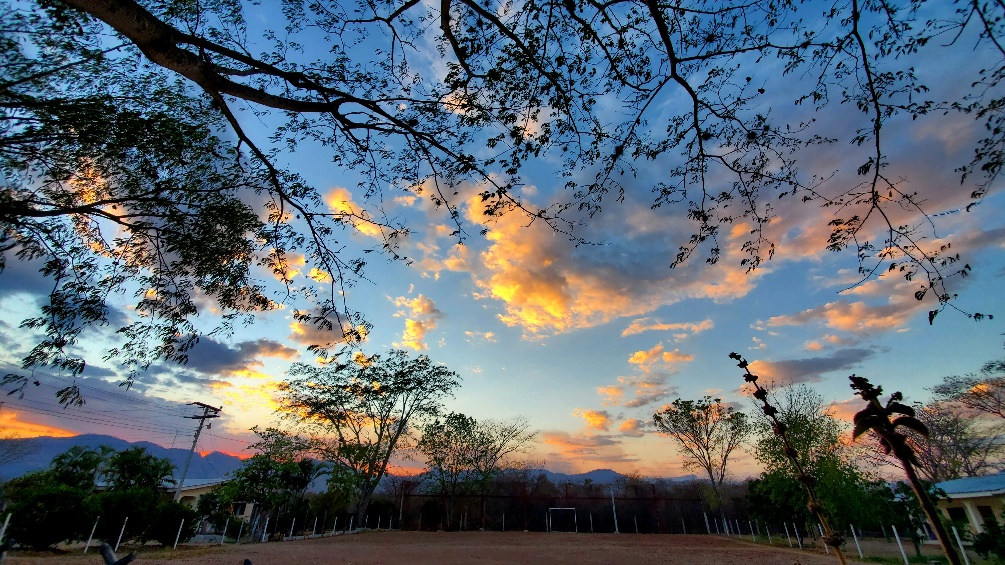
Honduras es un hermoso país tropical ubicado en el centro de Centroamérica. Honduras se jacta de hermosas playas, bosques, montañas y gente. Me encanta vivir en Honduras, simplemente ir a cualquier parte y poder ver las cadenas montañosas, y el cielo vale la pena.

A pesar de eso, un problema que muestran las estadísticas es que 991 mujeres son diagnosticadas con cáncer de cuello uterino cada año en Honduras, el cáncer de cuello uterino es la primera causa de muerte en las mujeres, después del cáncer de mama. Afortunadamente, en 2016, el gobierno hondureño aprobó la vacuna contra el VPH para niñas. Los centros médicos privados proporcionan la vacuna al resto de la población.

Cuando me diagnosticaron cáncer de cuello uterino, no sabía nada al respecto. Fui la primera persona que supe que tenía este tipo de cáncer. Después del tratamiento cervical desarrollé una fístula rectovaginal, una cosa más que no sabía que existía.

Para ayudarme a sanar o tener una mejor calidad de vida, mi siguiente tratamiento fue una colostomía temporal, otra primicia en mi vida. Realmente sabía poco sobre ostomías; conocí a una persona que se sometió a una y nunca habló de ello.

Una colostomía es una abertura en el intestino grueso que lleva un extremo del colon a través de una incisión a la pared abdominal. Eso fue lo primero que aprendí sobre la colostomía.

Mi médico fue de gran ayuda al brindarme material y apoyo, pero me sentí tan perdida. Me conecté a Internet para buscar información o cualquier persona en Honduras con una colostomía. No encontré a nadie con quien hablar de ello. Google y otros sitios web fueron mi lugar de consulta para obtener información y consejos.

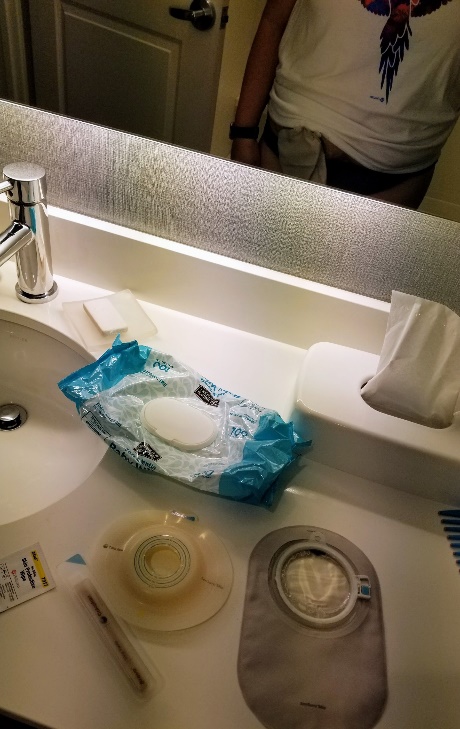
Cuando llegó la cirugía y tuve que pedir mis bolsas de ostomía no tenía idea de lo que estaba haciendo. Llamé a los hospitales de mi país y dijeron que tenían un solo y eso es todo. Entonces pedí por Amazon y compré lo que pensé que podría ser útil y más fácil de aceptar para mí (estuve en negación de mi ostomía hasta el día después de mi cirugía cuando sentí el alivio).

Comprar insumos en Honduras no es fácil, de hecho, llamas a proveedores médicos y ellos no saben lo que les estás pidiendo. Solo encontré un proveedor que comprende las ostomías, pero no proporciona la marca específica que necesito. La marca que uso no está disponible en Honduras.

Soy muy inflexible con mis suministros de ostomía, quiero estar cómodo y sentirme seguro. Me tomó un año encontrar mi pareja perfecta entre mi estoma y mi bolsa de colostomía.

Compro en línea en los EE. UU. Y me lo envían a través de un servicio de mensajería. Regularmente me toma 3 semanas llevar mis suministros a mi casa. Siempre planifico con anticipación y tengo suficientes suministros para 2 meses en cualquier momento.

Durante la pandemia, Honduras no estaba preparada para nada que viniera después de marzo. Todo parecía ser un caos cuando nuestro país comenzó a cerrarse. Dicho esto, cuando llegó la cuarentena, acababa de recibir un envío de mis suministros y, a mediados de abril, pedí más.

Pedí mis suministros habituales, no estaba preocupado, me había abastecido. Luego llegó junio y solo tuve suministros para la primera semana. No hay noticias de mi pedido. Innumerables correos electrónicos, llamadas y todavía no había recibido nada. Pedí más, por si acaso, con la esperanza de que este nuevo pedido llegara antes. Llamé y pedí innumerables veces mis pedidos.

Primero, llegaron tarde a mi mensajero, luego la aduana tardó meses en dejarlos pasar. Odiaba escuchar esta respuesta repetidamente: “Su paquete está aquí en Honduras, está en la Aduana y aún no ha sido entregado”. Tuve suerte de que un proveedor médico aquí tuviera suministros, pero como no son lo que necesitaba, los revisé rápidamente. Mis bolsas de ostomía tardaron 4 meses en llegar y el pedido llegó incompleto. Todavía estoy esperando el próximo envío y la finalización del primero.

La ansiedad me golpeó con fuerza en junio y julio. Estaba tan enojado porque esto estaba sucediendo. Me desperté un día llorando, porque las bolsas que estaba usando me estaban provocando una reacción alérgica en la piel.

Ese mismo día, mientras estaba deprimido por todo el lugar y haciendo que todos se sintieran miserables, recordé que todavía estaba aquí. Aunque esto era horrible y exasperante, todavía estaba aquí. Decidí dejarme arrastrarme por un día, dejarlo salir, liberarme.Al día siguiente me di una ducha larga sin bolsa y me puse una nueva, aunque la erupción todavía estaba allí, iba a revisarla y esperar a que llegaran mis suministros. Tenía que ser positiva.

Cuando finalmente llegaron aquí, lloré de nuevo (culpé a la menopausia). Fue como abrir un regalo de cumpleaños.

Ser ostomizado en un país donde se considera un tabú y hay poca información y suministros es tremendamente difícil. Soy increíblemente afortunado de tener una buena relación con mis médicos y, cuando tengo problemas, puedo enviarles un mensaje de texto y me responderán rápidamente. Tener este apoyo es de gran ayuda. Pero a veces necesitas el apoyo de alguien que comprenda física y emocionalmente por lo que estás pasando.Me tomó poco más de un año encontrarme con hondureños con ostomías. El solo hecho de saber que hay personas con una ostomía y que usted no está solo es útil. No los he conocido personalmente, pero estar abierto a compartir su historia ayuda a otros a abrirse a compartir la suya. El uso de las redes sociales ayuda muchísimo.

Mi ostomía me llegó debido al tratamiento del cáncer de cuello uterino. He llamado a mi estoma Jeepers, porque se me acercó sigilosamente. Soy un ostomado orgulloso, he aprendido a aceptar mi ostomía y a hablar de ello abiertamente. No debe ser un tabú o algo que nadie no pueda discutir.

Karla Chavez vive en Honduras, es ingeniera civil y entusiasta de los amigurumi. Karla es sobreviviente de cáncer de cuello uterino y de tiroides por 3 años y es una orgullosa ostomizada. Karla se graduó de Cervivor School en el 2019 y desde entonces es Embajadora de Cervivor y un apoyo clave para nuestra creciente comunidad de Cervivor Español.