Each July, National Minority Mental Health Awareness Month serves as a reminder that mental health deserves the same attention and care as physical health. For those impacted by cervical cancer, emotional well-being is not separate from survivorship. It is an essential part of the journey.
Receiving a cancer diagnosis can bring fear, uncertainty, isolation, and anxiety. For many people in historically underserved communities, these feelings are often compounded by barriers to healthcare, financial challenges, cultural stigma surrounding mental health, and inequities in access to support services. No one should have to navigate those challenges alone.
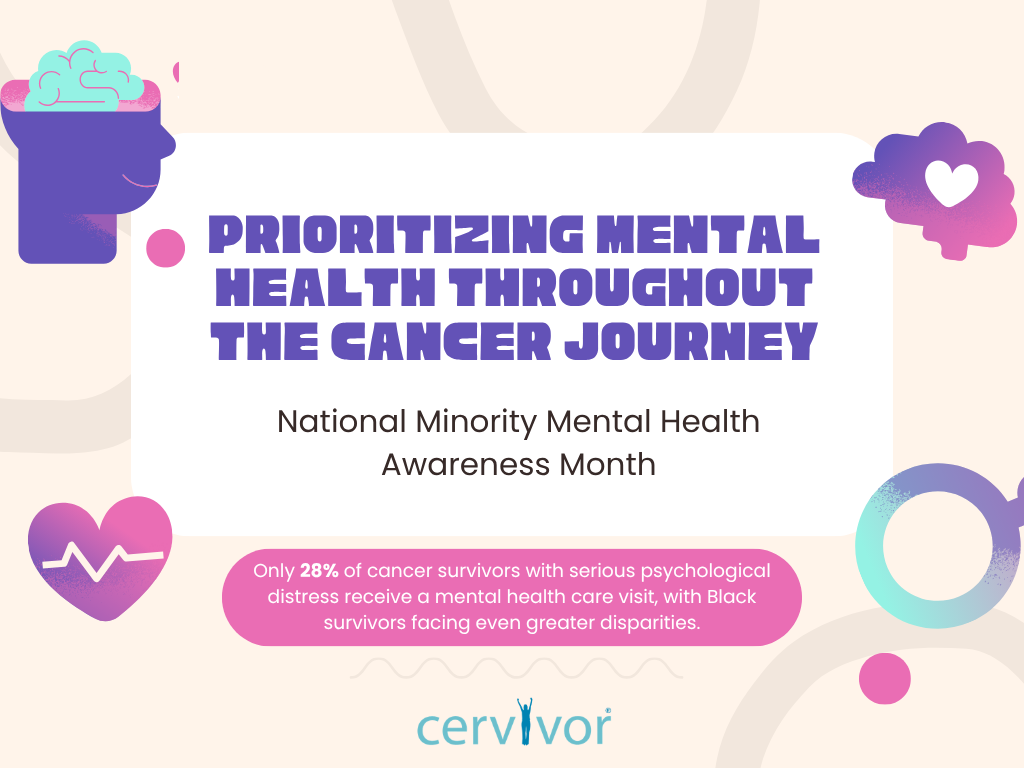
Receiving a cancer diagnosis can bring fear, uncertainty, isolation, and anxiety. For many people in historically underserved communities, these feelings are often compounded by barriers to healthcare, financial challenges, cultural stigma surrounding mental health, and inequities in access to support services. Research shows that while cancer survivors from racial and ethnic minority communities often experience higher levels of psychological distress, they are also less likely to receive mental health care than their White counterparts. Among cancer survivors experiencing serious psychological distress, only 28% reported having a mental health care visit, with Black survivors receiving fewer counseling visits and spending less on mental health care than White survivors.
For Tiera Wade, Community Outreach & Partnership Director at Cervivor, prioritizing her mental health became an important part of navigating her own cancer experience.
“During my cancer journey, I advocated for my mental health. In the isolation of the pandemic, I knew I needed the tools to speak up for myself and make it through,” said Tiera. “Seeking that support didn’t just help me cope; it became a lifeline through the hardest moments, and it’s still helping me today. Combined with my faith, I truly believe I can do all things through Christ who strengthens me.”
This month is also an opportunity to encourage honest conversations about mental health within our families, communities, and healthcare settings. Seeking counseling, joining a support group, leaning on loved ones, or simply asking for help are all signs of strength, not weakness.
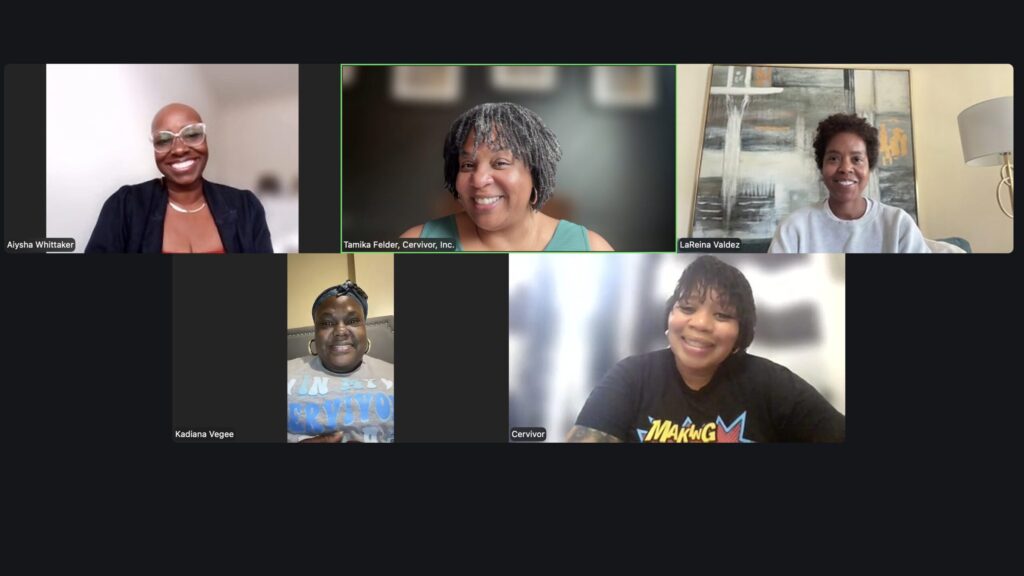
Participants gathered for the Cervivor Noir ‘Healing Out Loud: Beyond the Diagnosis’ event with guest psychotherapist Aiysha Whittaker
At Cervivor, we believe caring for the whole person means recognizing that healing extends beyond treatment. Survivors deserve access to emotional support, trusted information, and a community that understands what they’re experiencing. Through programs like Cervivor Noir, our community created by and for Black cervical cancer patients, survivors, and thrivers, we foster culturally affirming spaces where members can connect, share their stories, and find support from others who understand their unique experiences.
This month is also an opportunity to encourage honest conversations about mental health within our families, communities, and healthcare settings. Seeking counseling, joining a support group, leaning on loved ones, or simply asking for help are all signs of strength, not weakness.
At Cervivor, we’re committed to ensuring every survivor feels seen, heard, and supported. Whether through Cervivor Noir, our virtual support groups, advocacy programs, or survivor community, we want every person affected by cervical cancer to know they don’t have to face this journey alone.
This National Minority Mental Health Awareness Month, let’s continue breaking the stigma surrounding mental health, advocating for equitable access to care, and reminding every survivor that healing includes both the body and the mind.
After all, this is supposed to be the season of vacations, sunshine, and making memories. Social media fills with beach trips, backyard barbecues, family reunions, and weekends by the water.
But for many cervical cancer survivors, summer can bring a complicated mix of emotions. While the world seems to lean into rest and normalcy, survivorship doesn’t take the summer off.
For some, this season brings milestones worth celebrating. For others, it’s marked by treatment cycles, scan anxiety, grief, or the lingering effects of cancer that don’t fade when the weather warms. Many experience all of it.
In a recent letter published in CURE, Cervivor Founder and Chief Visionary Tamika Felder reflected on this disconnect from personal experience. Just days before her 26th birthday, she underwent a radical hysterectomy — and even planning a simple vacation felt different. Packing meant extra toiletries, a “barf bag” close by, and mapping every restroom along the route.
Realities like these inspired Tamika to create Cervivor 21 years ago: a community where no one has to pretend they’re “fine” just because treatment has ended or the sun is shining.
That message continues to resonate across the Cervivor community.
Healing Isn’t Always What We Expect
“Anything by the water is my happy place,” says Tiera. But after finishing treatment, the scars from cancer and other surgeries almost kept her from taking a beach vacation.
For Cervivor Community Outreach and Partnership Director Tiera Wade, one of the first summers after treatment was supposed to be a celebration. She and her best friend had planned a beach getaway, and she couldn’t wait to spend time by the water.
Then she looked in the mirror. After multiple surgeries, more than 10 scars crossed her abdomen. For a moment, excitement gave way to self-consciousness. “I can’t go to the beach like this,” she remembered thinking.
But instead of staying behind, Tiera chose something different. She showed up anyway — scars and all.
Today, after even more surgeries, including a hip replacement that changed one of her favorite tattoos, she sees those scars differently. They tell the story of everything she’s endured and everything she’s overcome.
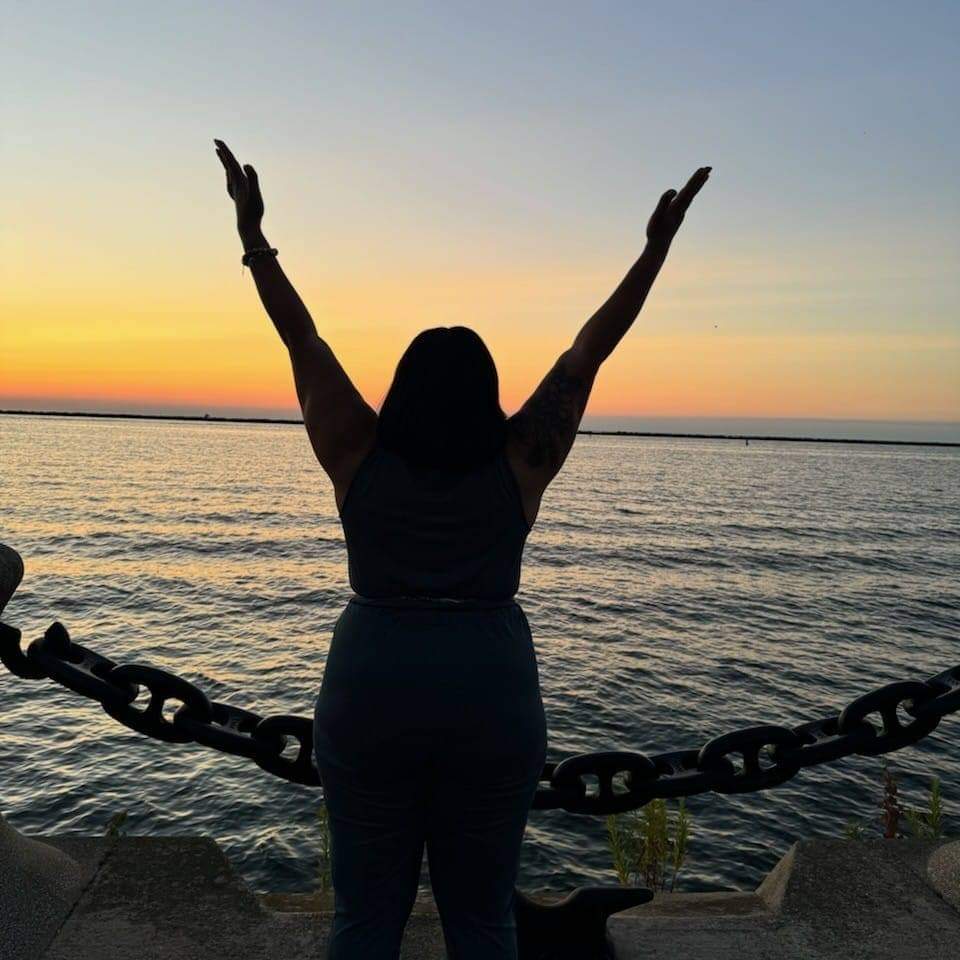
“This summer,” she says, “I’m showing out proudly — by the water, in the sun, scars and all — still showing up, still celebrating, and still busy living.”
Her experience is one many survivors recognize: Learning that healing isn’t about returning to the person you were before cancer. It’s about making peace with the person you’ve become.
The Invisible Weight of Survivorship
This summer marks an incredible milestone for Cervivor Program Coordinator Lauren Lastauskas: 10 years cancer-free.
“It’s a huge milestone,” she says.
Yet survivorship has taught her that milestones and mixed emotions can exist side by side.
Lauren was diagnosed with cervical cancer at 23. In the summer of 2017, she joined a weeklong whitewater kayaking trip with First Descents in Montana. “I absolutely loved the adventure,” she says, “but it was so hard to see how much my physical abilities had changed since cancer.”
A day at the beach or on the boat still means thinking about where the nearest restroom is because of long-term side effects. Hiking can aggravate nerve damage. Compression socks are a daily necessity because of lymphedema.
Then, every fall, another reminder arrives. As social media fills with back-to-school photos, Lauren is reminded of one of cancer’s lasting losses: the children she’ll never have.
“Ten years later,” she reflects, “summer is just a constant reminder that my body isn’t what it used to be.”
Summer, Through the Eyes of Cervical Cancer Survivors
We recently asked members of the Cervivor community how summer feels after cervical cancer. Their answers revealed that while every journey is different, many survivors carry invisible burdens that others never see.
“Summer is when it all started for me. I knew something was wrong, but I didn’t know what it was. Now, every summer feels like a blessing because I’m still here to experience it.” — Lindsay Gullatte-Lee, North Carolina, three-year survivor
“I was diagnosed in the summer of 2022. I call it ‘The Summer That Never Was.’ I spent those months in treatment and fighting blood clots. Was it worth it? Absolutely. I’d gladly give up another summer to still be here.” — Ann Marie McHale Hartung, Massachusetts, 3.5-year survivor
“I am existing from scan to scan right now. I try to live life fully, but every three weeks, immunotherapy is a reminder. The fear of recurrence is always there.” — Stephenie Milita Jacobs, Virginia, recent survivor
“Cancer changed the way I travel. I can’t book a vacation months in advance without wondering if I’ll still be in treatment. We always buy trip insurance, and I travel with a medical bag full of supplies. Vacation isn’t carefree anymore—but I still want to make memories with my family.” — Sara Dennin Johney, Virginia, currently in treatment
“Summer used to be my favorite season. Now, with dual nephrostomy tubes, the heat and everything that comes with treatment, I often feel left out. I miss swimming, biking, and volleyball. Some days it’s easier to stay home, but I try to join in when I can.” — Nancy Long, Michigan, currently in treatment
“Bilateral nephrostomies, compression stockings, medications that make me burn more easily—there are so many impediments to easy summer fun. I can’t swim with my kids, but I can still take them swimming. I’ve learned to adapt instead of giving up.” — Lauren, Washington, 9-year survivor (6-year metastatic)
“I’m proud of my scars and my ostomy, but summer can still be hard. I’m constantly navigating weight changes from thyroid cancer and hormone imbalances, and I don’t always feel as comfortable in a bathing suit or summer dress as I once did. I remind myself I’m there to relax, but the anxiety sometimes gets to me.” — Karla Chavez Aplicano, Honduras, cervical and thyroid cancer survivor
“Being diagnosed just before Memorial Day, I spent my summers in treatment, and later my recurrences affected them, too. Even if all I could do was sit on my back porch with the sun on my face, I felt transformed. Find the little things that give you summer joy. It may not be the summer you planned, but it doesn’t have to dictate how you find your happiness.” — Carol Lacey, California, 15-year survivor
Finding Your Own Summer — Together
There isn’t one right way to navigate summer after cervical cancer.
Finding your own summer doesn’t mean pretending cancer never happened. It means making room for both gratitude and grief, healing and hard days, celebration and uncertainty. Most importantly, it means remembering that you don’t have to figure it all out by yourself.
If this season feels more complicated than carefree, here are a few ways to care for yourself and stay connected:
Redefine what a “good” summer looks like. Maybe it’s a weekend getaway — or maybe it’s an evening on the porch watching the sunset. Both count.
Stay connected instead of isolating. Request to join Cervivor’s private Facebook community, where thousands of people affected by cervical cancer share encouragement, practical advice, and honest conversations about survivorship.
Join us for Creating Connections. Our next virtual meetup is Tuesday, August 11, offering a welcoming space to connect with others who understand the realities of cervical cancer survivorship. You can also join one of our tailored community meetups, Cervivor Noir for Black survivors, or Café Con Leche for members of Cervivor Español. Each gathering offers support, conversation, and connection tailored to your lived experience.
Practice self-care in ways that truly serve you. Listen to your body, set boundaries, ask for help, rest when you need to, and celebrate what your body has carried you through. Self-care isn’t about perfection — it’s about giving yourself the compassion you’d offer a friend.
Remember that every survivor’s journey is different. However you’re spending this summer, your experience is valid.
Summer may remind you of what cervical cancer changed. But it can also remind you of your resilience, your capacity to adapt, and the community standing beside you every step of the way.
Even when the rest of the world feels “on vacation,” you never have to navigate cervical cancer survivorship alone.