A Cervical Cancer Survivor’s Story: The Truth About the HPV Vaccine — And Why Every Parent Should Start at Age 9

This is a cervical cancer story by Virginia “Ginny” Marable. You can read her full Cervivor story here.

I never expected cervical cancer to be part of my story. After experiencing common symptoms for months and advocating for myself even when doctors brushed off my concerns, I finally got answers: I had cervical cancer. That diagnosis changed my life forever.

Cervical cancer took away my fertility and the ability to carry my own children. Through modern medicine, the unwavering support of my husband, Sean, and the generosity of others, we were eventually able to become parents to two beautiful sons through surrogacy. Becoming their mom is the greatest privilege of my life — and it’s also the reason I feel a deep responsibility to speak up for other parents.

Because prevention matters.
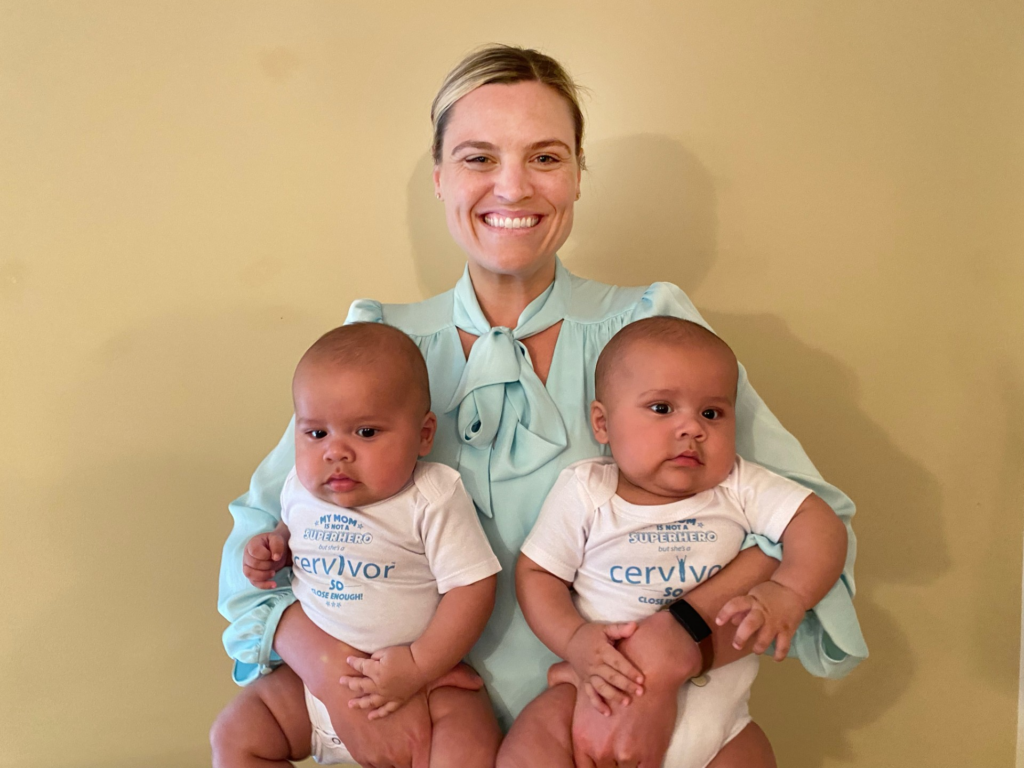
Ginny with her twin sons, Grant and Emmett, then 5 months old.

Recently, at my sons’ four-year pediatrician appointment, I was told they wouldn’t need any additional vaccines until age 11. I paused. As a cervical cancer survivor, I knew that wasn’t quite right. I gently corrected the doctor and shared that the HPV vaccine can — and should — start at age 9.

To her credit, she listened. We talked about the updated recommendations and the importance of accurate guidance. I was grateful for that moment — but I also left knowing something unsettling: If I hadn’t spoken up, that misinformation would have continued. And I know I won’t be the only parent hearing it.

That’s why I’m writing this.

HPV Causes Cancer — and We Can Prevent It

Human papillomavirus (HPV) is extremely common. It’s also responsible for nearly all cases of cervical cancer, as well as several other cancers that affect both men and women. According to the American Cancer Society, the HPV vaccine protects against the virus types that cause the majority of HPV-related cancers.

This vaccine doesn’t treat cancer. It prevents it.
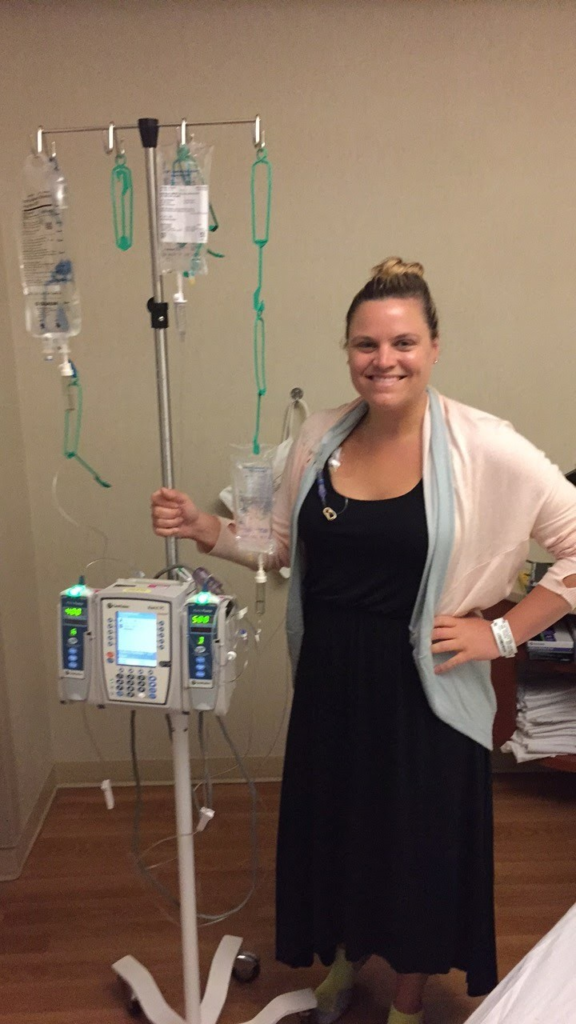
Ginny during cervical cancer treatment in 2017.

Age 9 Isn’t Too Early — It’s Optimal

Here’s the misconception I want to clear up once and for all:

➡️ The HPV vaccine is recommended to start at age 9 for both boys and girls.
➡️ Earlier vaccination leads to a stronger immune response.
➡️ The vaccine works best before any possible exposure to HPV.

This recommendation has nothing to do with sexual activity. It has everything to do with biology, timing, and cancer prevention.

Waiting until later — or assuming it’s something to think about “down the road” — can mean missing the window when the vaccine is most effective.

Why I’m Speaking Up Now

I know firsthand what cervical cancer can take from you — physically, emotionally, and permanently. I also know that misinformation, even when well-intentioned, has real consequences.

As a mom, I want my children protected.

As a survivor, I want fewer families shattered by preventable cancer.

As a parent speaking to other parents, I want us to have the right information.
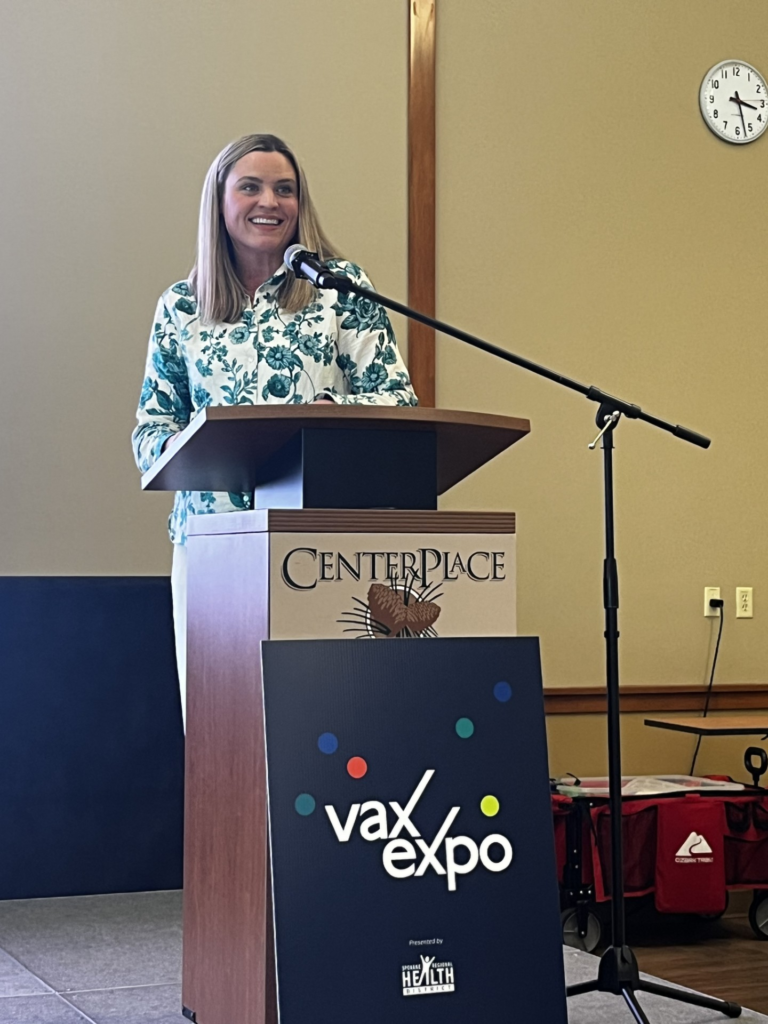
Ginny speaking at the city of Spokane’s Vax Expo 2024 event about the importance of the HPV vaccine.

So please ask your pediatrician about the HPV vaccine. Don’t wait.

Know that starting at age 9 is not early — it’s smart. Modern medicine gave me a second chance at motherhood. Let’s use it to give our children a future where HPV-related cancers are rare — not routine.

About the Author
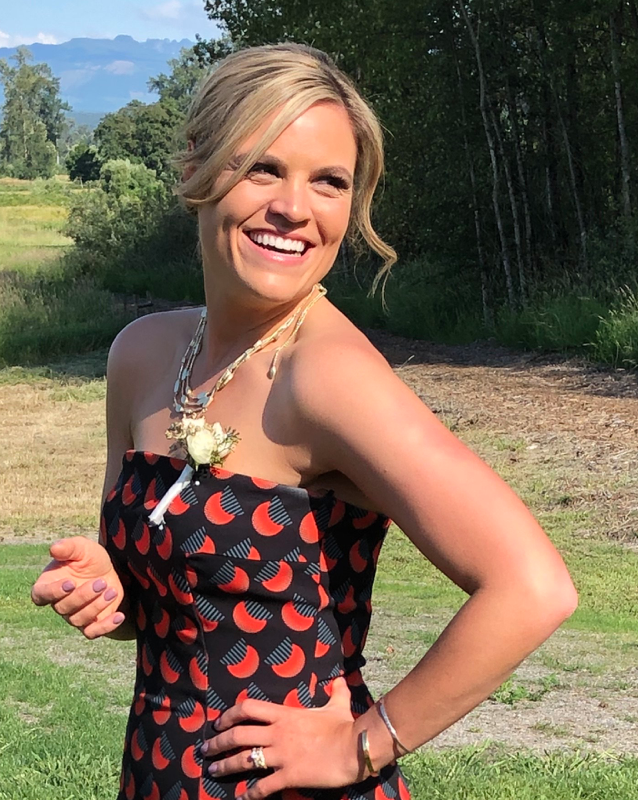
Virginia “Ginny” Marable is an eight-year Stage 2B cervical cancer survivor, Cervivor Ambassador, Patient Advocate, and a health and wellness enthusiast. She is passionate about supporting and raising awareness within the cervical cancer community and beyond, with a focus on taking charge of one’s health, alternative paths to parenthood, and surrogacy. Ginny believes kindness is a superpower and enjoys cooking, traveling, and spending time with her family. A Seattle native and graduate of the University of Puget Sound, she now lives in Portland, Oregon, with her husband, twin boys, and their dog, Bear. She is also an HR executive and leadership coach. 
A Cervical Cancer Survivor’s Story: The Surgery Was Rough, But I’m Still Alive

This is a cervical cancer story by Talitha Darragh. You can read her full Cervivor Story here.

Anytime I’m going through a hard time, physically or mentally, I try to stay positive. This was especially true when I was diagnosed with cervical cancer for a third time in April 2022. I knew when my original doctor at St. John’s Ascension in Southfield, Michigan referred me to a doctor at the University of Michigan that I was in for a long road ahead. This was no longer about a hysterectomy, the chemotherapy, or radiation therapy—the cervical cancer treatments I had had for my first two occurrences. 

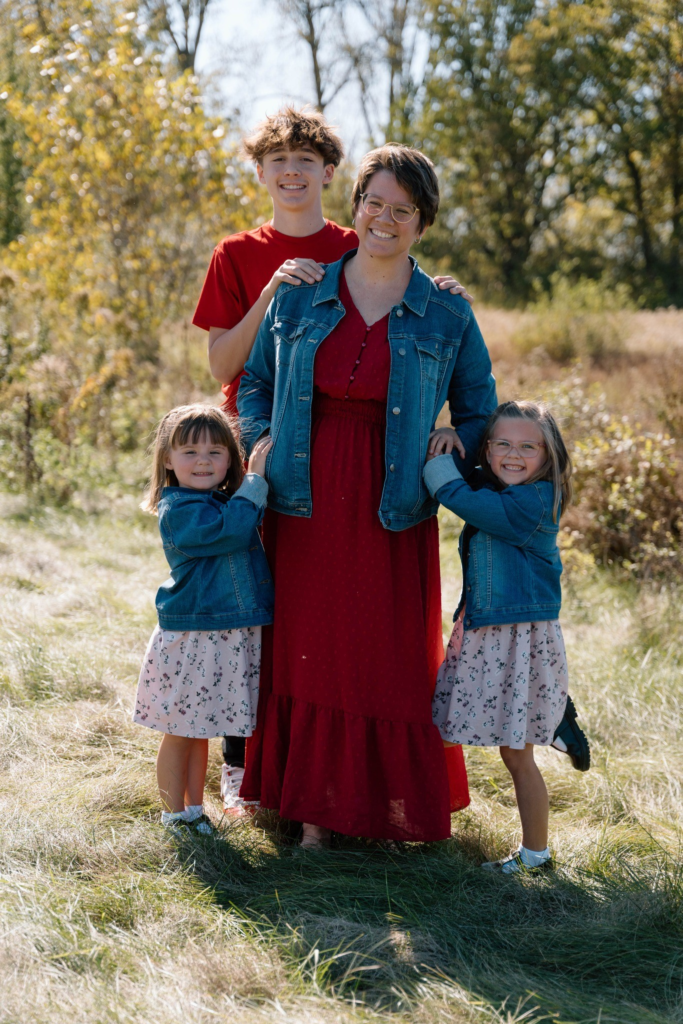
Cervical cancer survivor Talitha Darragh and her three children, Dominic (15), McKenna (7), and Amelia (5).

During my first appointment with my new oncologist, Dr. Uppal, he recommended doing a total pelvic exenteration. The words seemed to be going in one ear and out of the other. I was seeing his mouth move, but not truly understanding what he was saying. By the end of the appointment, I agreed to this major, life-changing surgery.  I was willing to do anything to be here for my three children. The doctors were planning to remove my bladder, bowels, and vagina while also doing vaginal reconstruction using muscle flaps from the back of my thighs. This would leave me with two ostomy bags for the rest of my life. One for urine and one for stool. Not exactly how I had my life planned, but it is what it is. 

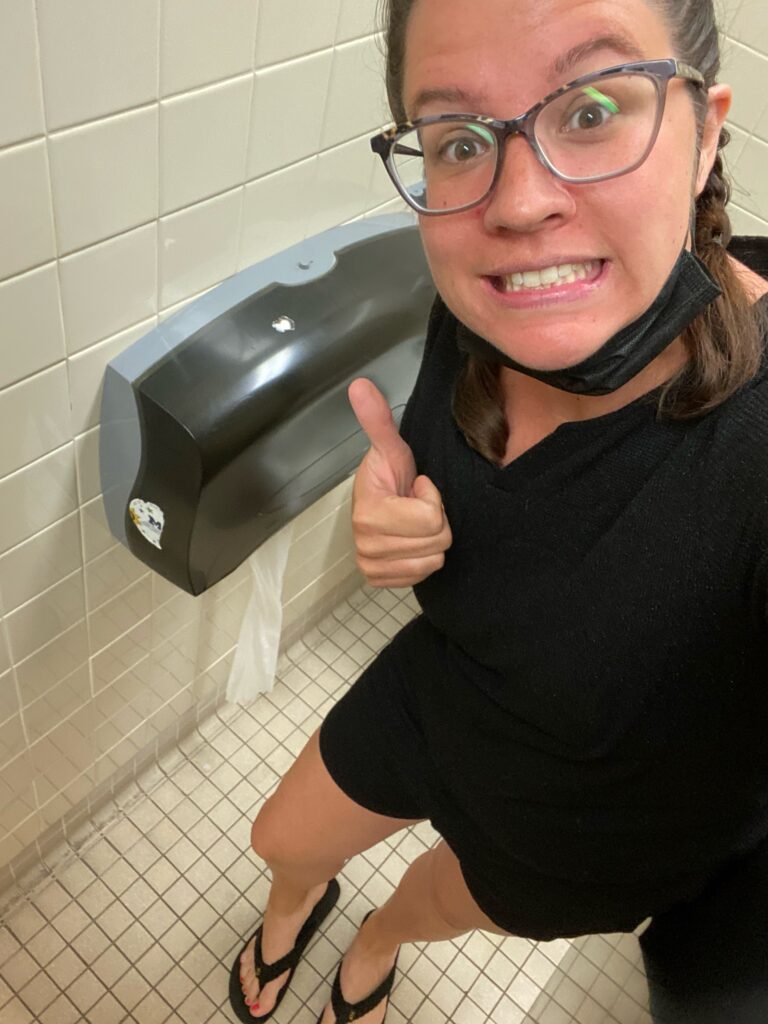
A few short weeks later, I remember taking a selfie in the bathroom stall after I used the bathroom for the last time as a “normal person.” I had a big grin on my face as I dealt with stress with humor and French braids in my hair, not knowing when I would be able to shower next. If I can remember right, surgery was 14 long hours. I had three surgeons: my oncologist, urologist, and plastic surgeon. Together, they saved my life. Two of them I have never met, but I trusted God that I was in good hands. I remember hearing them say, “She’s a young mom, this has to be successful.” 

Talitha’s bathroom selfie.

Surgery Recovery? Easier Said Than Done

Thank goodness, surgery was a success, and now it was time to recover. Easier said than done. Doctors were planning on about 10 days in the hospital. Unfortunately, those 10 days turned into six weeks. Because of the vaginal reconstruction, I was unable to sit for six weeks. 

My doctors knew that I had little ones at home and that I wouldn’t be able to heal and rest properly at home, so they had me admitted to a nursing and rehab facility two weeks after surgery. This was where things took a turn for the worse. My abdominal wound opened up, I wasn’t getting the physical or occupational therapy needed, and my nutrition was lacking, which resulted in even worse healing. I had to go by ambulance to my appointments because I couldn’t sit in a car. 

When I went to my first appointment while at the rehab, my doctors saw my decline and decided to keep me in the hospital rather than send me back to rehab. I stayed in the hospital for four more weeks before going home. 

Learning My “New Normal”

While in the hospital, I had to learn my “new normal.” Things were rough, but I never gave up. I was so mentally strong and determined. Maybe this is where my stubbornness is a plus! 

Finally, after six long weeks away from home, I was able to go back to my babies. Coming home was scary because I no longer had the help and support of my amazing nurses. Thankfully, I had a home nurse come by once a week or so. She was able to help me problem-solve and successfully change my ostomy bags without sobbing my eyes out because I couldn’t get them to stick. Overall, things would get easier every day, and I was slowly able to get back to normal. 

Looking Back Today

Here I am today, three and a half years post-surgery. Looking back, I am still amazed at myself. That surgery was huge. I’m still having healing issues, and there are still many bumps that we are trying to iron out, but I’m here, and I’m alive. I’m able to do everything that I did before surgery—swim, work out, ride a bike. 

Unfortunately, I’ve had multiple cancer re-occurrences, but I’m still fighting. Once I beat this cancer, my doctors plan on ironing out some things like repairing my internal vaginal wound that hasn’t healed in three and half years and figuring out why my ureter keeps closing up. to make my life even better. I cannot thank my team of doctors enough. They are truly on my side and want to do what they can to help. I’m truly blessed. 

The Importance of a Positive Mindset

This whole cancer journey has taught me so much in life. More than half the battle is mental. It’s so important that you keep a positive mindset. I would always tell myself, “Doctors are doing their job, nurses are doing their job, I have to do my job, which includes taking care of my body and my mind.”

I had faith in God, my care team, and myself. I pray that you don’t ever have to go through this, but if you do, I promise it will be okay. Sometimes you have to take it one day at a time, one hour at a time, or even one minute at a time. You can do anything for a minute…just keep doing it. Keep your mind positive. I promise, it makes a difference. You can do hard things.

About the Author

Talitha is a cervical cancer fighter who has had six reoccurrences since she was first diagnosed in February 2021. She is currently participating in a clinical trial at Yale University. Talitha loves spending time with her three children, Dominic, McKenna, and Amelia—riding bikes and swimming together in the summertime. Talitha also loves sharing her Cervivor Story. “I love sharing my story because hearing others’ stories has really helped me feel less alone,” she says.

Ready to share your Cervivor Story? Use this form to get started.