Black History Month and the Disparities Still To Overcome

As we discussed in an earlier post, advancements in the understanding of cervical cancer and the invention of the HPV vaccine are inextricably intertwined with Black History Month (February). Why? Because the “HeLa cells” used in groundbreaking scientific research were from the cells of Henrietta Lacks, a young Black woman who lost her life to cervical cancer in 1951 and whose cell lines have transformed modern medicine.

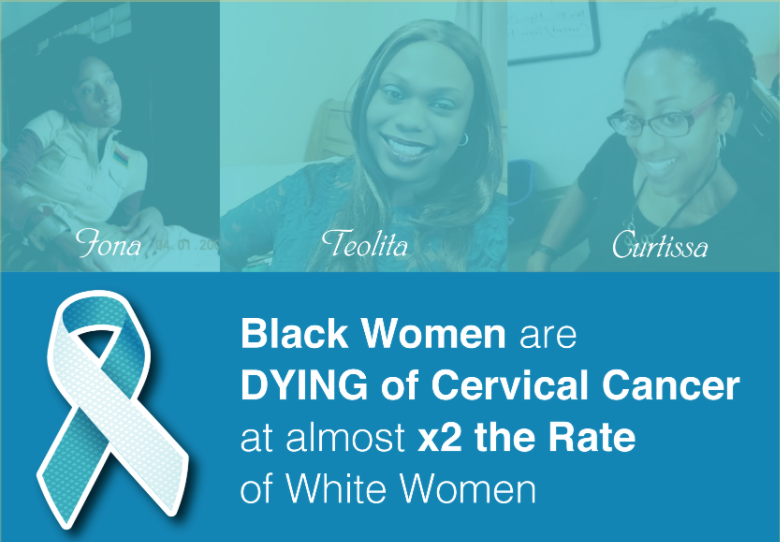
While HeLa cells were critical to the science that led to the HPV vaccines that have the power to prevent cervical cancer, today Black women in the U.S. bear a disproportionate burden of cervical cancer. Although  cervical cancer occurs most often in Hispanic women, Black women have lower 5-year survival rates and die more often than any other race.  In fact, they have nearly twice the cervical cancer mortality rate compared to white women. 
Why?

Interestingly, while most women with cervical cancer were probably exposed to cancer-causing HPV types years before, on average, Black women do not receive a diagnosis until 51 years of age. That compares to white women who have a median age of cervical cancer diagnosis at 48. Those three crucial years could make the difference between a treatable versus terminal cancer.

Why?

Researchers have reported that due to social and economic disparities, many Black women do not have access to regular screenings. Screening programs often fail to reach women living in an inner city or rural areas because of lack of transportation, education, health insurance, primary care providers who can perform cervical cancer screenings, or availability of nearby specialists for follow-on care.

How can we make a meaningful difference? 

The underlying causes of health disparities are complex and are multi-layers with lifestyle factors (obesity, cigarette smoking, etc.), socioeconomic factors (access to health insurance, access to healthcare providers), representation in research (clinical trials), and much much more. Yet there are still meaningful ways to make a difference.

Help increase screening rates.

Increasing screening rates could greatly reduce deaths from cervical cancer among Black women, Hispanic women and other underrepresented communities. This requires the delivery of interventions directly to underserved women such as screenings based at accessible locations closer to their places of residence – such as via mobile vans and/or screening locations at local community centers instead of medical clinics. This can substantially lower cervical cancer mortality rates through early detection.

The National Breast and Cervical Cancer Early Detection Program (NBCCEDP) has programs – and importantly, partnerships – in place across states, territories and tribal lands.

For example, in South Carolina, NBCCEDP has brought screening to underserved communities in collaboration with nonprofits and faith-based groups including The Best Chance Network and Catawba Indian Nation. In Nevada, programs with Women’s Health Connection increased screening numbers by 30%. Connect with your state’s screening programs. Share info about local screening programs and events. 

Encourage HPV vaccination

Encourage clinical trial participation

A lack of racial and ethnic diversity in both cancer research and the healthcare workforce is one of the major factors contributing to cancer health disparities, according to the American Association of Cancer Research. Clinical trials lead to the development of new interventions and new drugs. They are used to make better clinical decisions, but there is often a significant underrepresentation in clinical trials by non-White races and ethnicities. With a focus on targeted therapies and precision medicine, representation in clinical trials is increasingly important so that research includes and reflects all groups. Where to start? Share links to www.clinicaltrials.gov – where clinical trials are listed and searchable by location, disease, medicine, etc. 

During this year’s Black History Month, let’s work together to change the history of cervical cancer.
The Power of Setting Boundaries

This past Fall I was a keynote speaker for the Cervical Cancer Summit and spoke about the development of my three word “Why” statement. Why I keep fighting each day, educating and advocating about cervical cancer so that no other woman has to go through what I am going through. Why I speak up, research, question and give it my all. For me, my why statement is “Know Your Existence.”

I want women – and mothers especially – to know that their health and their checkups are equally as important  as their families’. I want minority women, especially in the Asian culture where  below-the-belt subjects are rarely discussed, to know how important their annual women’s health checkups are. I want women to Know Their Existence matters.

For me, part of Know Your Existence also means know what you need, physically and spiritually.  During my talk, I spoke about boundaries and how important it is to set boundaries with friends and loved ones during your cancer journey. Wherever you are in your cancer journey – initial diagnosis, surgery, chemo, radiation, etc. –  boundaries are extremely important. I did not set up boundaries the first time I was diagnosed and, as a result, I often cared too much about how others around me were feeling and dealing with MY diagnosis.

With my recurrence, it was a whole new ball game. For my own health and my own sanity, I put boundaries in place. It was no longer about how others were dealing with what I was going through. It was no longer making sure everybody else was okay. It was no longer about getting together with friends because I would feel bad or felt obligated. It was now about me and what my soul needed.

Everyone has good intentions. They want to be supportive and helpful, but it’s up to you to let your support system know exactly what you need from them.

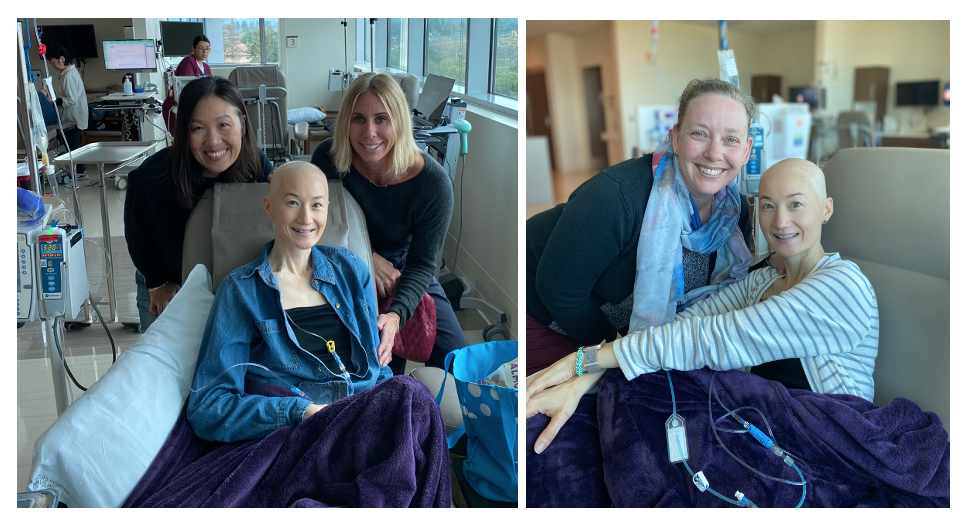
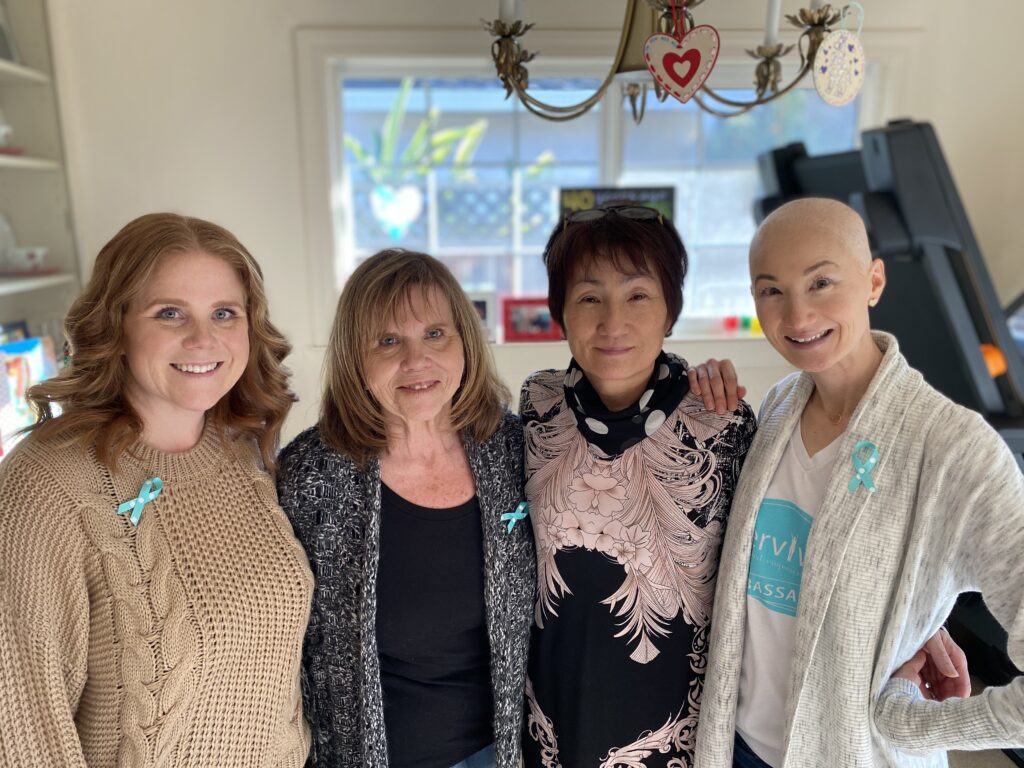
Becky with members of her “squad” of support.

I do want to stress the importance of a solid support system. But, it’s important to really be in control of who is in your squad. Overall, I have been extremely blessed to have an amazing support system. They listen to what my needs are. They respect me when it takes me days to respond to a text or call because I am not always in the mood to talk. At the end of the day, they know what boundaries I have set in place and they honor them.

Unfortunately, we all have some people in our lives that I like to call “energy vampires.” These are the folks that, though they may mean well, leave you emotionally drained after a conversation because they have literally sucked out the little energy that you do have. When dealing with the trauma and hell that cancer brings into your life, there is no better time to draw some strict boundaries around these folks and the access they have to you.

Unfortunately, I’ve come to learn that some people are just drawn to other people’s suffering and pain and only “show up” because at the end of the day, it really is about them and not you. These are people who might show up for a visit, but at the end of the day leave you feeling like the visit was only to make themselves feel better rather than to make you feel better.

I learned this first-hand when I had a few people who wanted to be there for me only on my chemo days. Almost like they wanted some sort of credit for showing up and sitting with me. Sorry folks, this isn’t school and you don’t get credit for just “showing up.” It is wonderful to have your solid support come visit and sit during those long chemo days, but make sure the people visiting are there for the right reason: YOU. If you want to take a nap while someone is visiting, take a nap. Don’t feel the need to entertain someone. Boundaries people, boundaries. There is no better advocate for yourself than yourself, remember that.

At the end of the day, I just want everyone, not just those who are going through trauma to truly understand how important boundaries are in our lives. I want people to know that it is okay to set boundaries for yourself and to not feel guilty about it. Know that you matter. Know that your voice matters. Know Your Existence.

Becky was originally diagnosed with cervical cancer in 2018, at age 35, and quickly became an active member of the Cervivor community, joining Facebook Group discussions, attending Meet Ups, participating in the September 2019 Cervivor School and becoming a Cervivor Ambassador. Read her Cervivor story and learn how she brings her passion and Cervivor Spark to help stop cervical cancer.