Losing Your Uterus, Losing Your Mind: Scientific Validation for Memory Loss After Cancer

When Samantha R. stumbled across a study suggesting that hysterectomies may cause memory problems, she clicked, read, and shared on our I’m A Cervivor Facebook group, kickstarting a dynamic discussion. Samantha shares her experience, her relief in finding the article, and the community of support that her post generated:

“Chemo brain gets a lot of discussion and attention, but not the topic of woman who had a hysterectomy or who have early onset menopause and who have similar fogginess. I actually did not have a hysterectomy but rather chemo-rad-brachy (stage 2b), which was oh so fun.  As radiation and chemo essentially killed my uterus and ovaries, this study about hysterectomies and memory loss caught my eye and resonated.

A wildlife ecologist, Samantha was diagnosed with cervical cancer at age 36 while in the midst of her postdoctoral research. The stress of the diagnosis and treatment on top of research and academics were brutal.

“After cancer, I couldn’t handle stress like I used to. I used to be able to do the cramming and the crunch time. But after treatment, I had really bad ‘chemo brain’ for at least a year until it finally started getting better. I still don’t feel as sharp as I was before, even though it’s been eight years since my diagnosis. As an academic with a master’s degree and a PhD, this had been really hard for me because my work, at the end of the day, depended on my brain. And of course brain fog doesn’t just impact work, but so many parts of life. My recall is slower. My short-term memory is slower. Things take me longer. It’s been hard for me to accept that my brain now functions differently. I used to be quick and make witty remarks. Now three days later, I come up with a response!”

Samantha was poking around online when she stumbled upon the article, New research suggests hysterectomies may cause memory problems.

“It’s about a first of its kind study conducted in rats (not humans), but the implications that our uterus plays a role in memory is just really interesting. I found it worth sharing because having an explanation gives women like us validation for having memory loss. It is nice to have some scientific acknowledgement of what we are going through.”
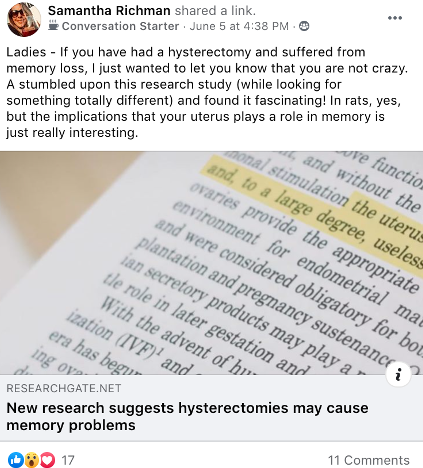
Newly published research has challenged a long-standing belief in the medical community that uteruses serve no purpose in the body except pregnancy. When researchers at Arizona State University performed hysterectomies on rats, the animals’ memory suffered.

Samantha’s Solutions: Coping Skills and Lessons Learned

Samantha now works for the federal government to protect and rebuild habitats for sea birds and sea ducks, specializing in restoration after oil spills. She shares some of the memory loss coping skills that she employs:

  1. Become a note taker: I take a lot of notes. I use a bullet journal. I now have a huge collection of hundreds of notebooks I’ve filled and it keeps growing, but it’s working for me.
  2. Keep a “done” list: Every day I write down not just to do lists, but “done” lists – so I remember that I did something. I capture calls I made, e-mails I sent, discussions and conversations I had.  My “done” list is my biggest coping strategy. My short term memory was really impacted from my chemo and the early menopause that resulted, so my journals and my “done” list are my recall mechanism. 
  3. Be proactive when it comes to therapy: My therapist has been amazing in coaching me to not beat myself up and to move forward and to be okay with not being okay. I had a hard time being weak – not just physically, but mentally weak. I’m a huge advocate of starting therapy early, when starting treatment, to get ahead of the roller coaster ride. I’d fallen into a severe depression after treatment was over, and I wish I’d started therapy earlier. 
  4. Don’t be afraid of medication: Medication has helped me battle my depression and panic attacks. My body doesn’t create estrogen and progesterone anymore. That makes a person crazy! It is not in your head! 
  5. Find your escape: I read a lot to escape. I’ve started meditating. I also started art therapy and do woodworking and jewelry making. I recently learned how to weld. I’ll never forget when I was in treatment and a social worker was trying to talk to me about art therapy and painting. I was like ‘screw you, I’m dying here.’ But now, years later, art has been my coping mechanism. It has become my sanity. (But I will never tell someone that during treatment! Only after!)

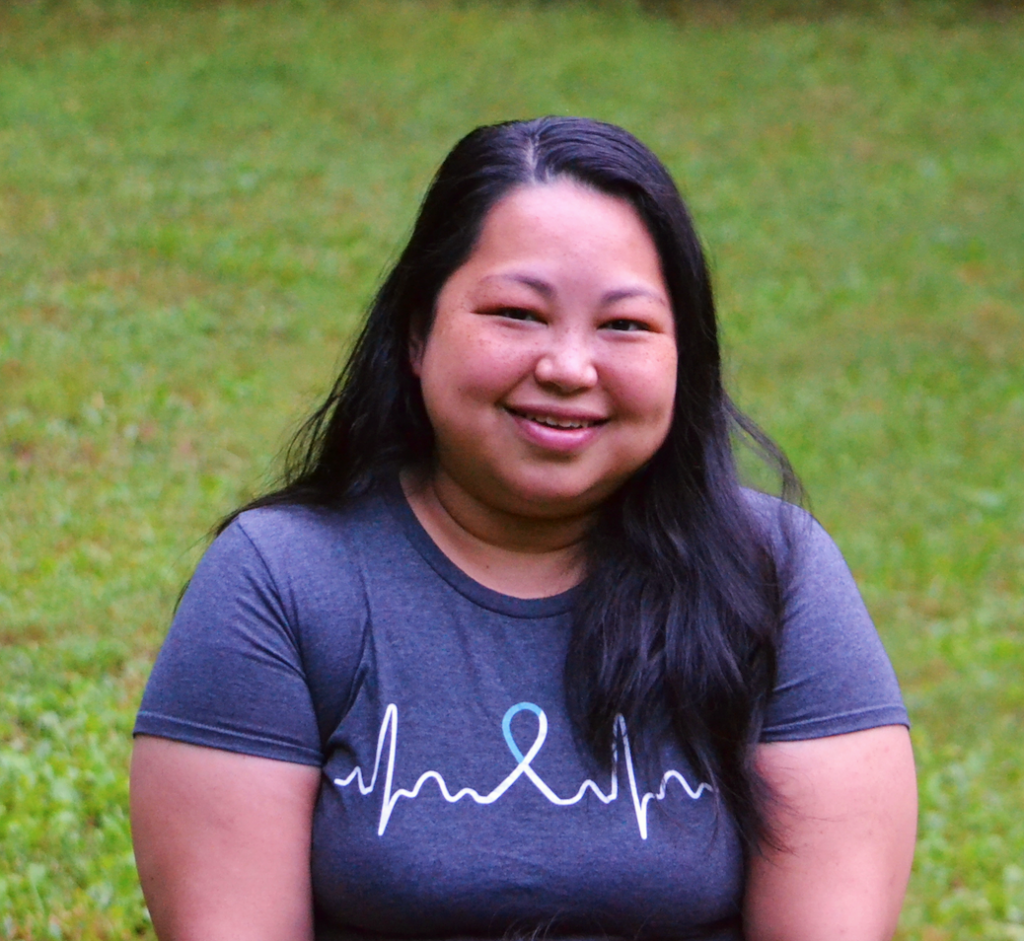
Eight year cancer survivor Samantha is a wildlife ecologist in San Diego, CA. When she is not protecting sea birds and restoring habitat for sea ducks injured by coastal oil spills, she volunteers with Burning Man and has attended the art festival 5 times. Learn more about Samantha’s Cervivor Story here.
I’m Done With Treatment, But Treatment Isn’t Done With Me

I recently celebrated my 31st birthday. Around this time last year, I was a brand new 30-year-old enjoying summer with my awesome husband and 3 amazing kids. I never suspected that two months after I celebrated that milestone birthday, cancer would invade my life.

On the day my OBGYN found my tumor, I left her office sobbing. I walked the long way through the parking lot, sobbing. I didn’t care who saw me. The diagnosis was so hard to cope with. I couldn’t align myself with my new reality. I searched every part of my soul to come to grips with what I felt was the end of my life.

“I can’t have cancer. I’m young! My kids are so young! My husband’s going to be a widower, he doesn’t deserve this! My kids are going to grow up without me! They won’t remember me. I have so much left to do here,” I thought, my brain in overdrive. I felt betrayed by my body. 

Treatment was the longest, weirdest dream I’ve ever had

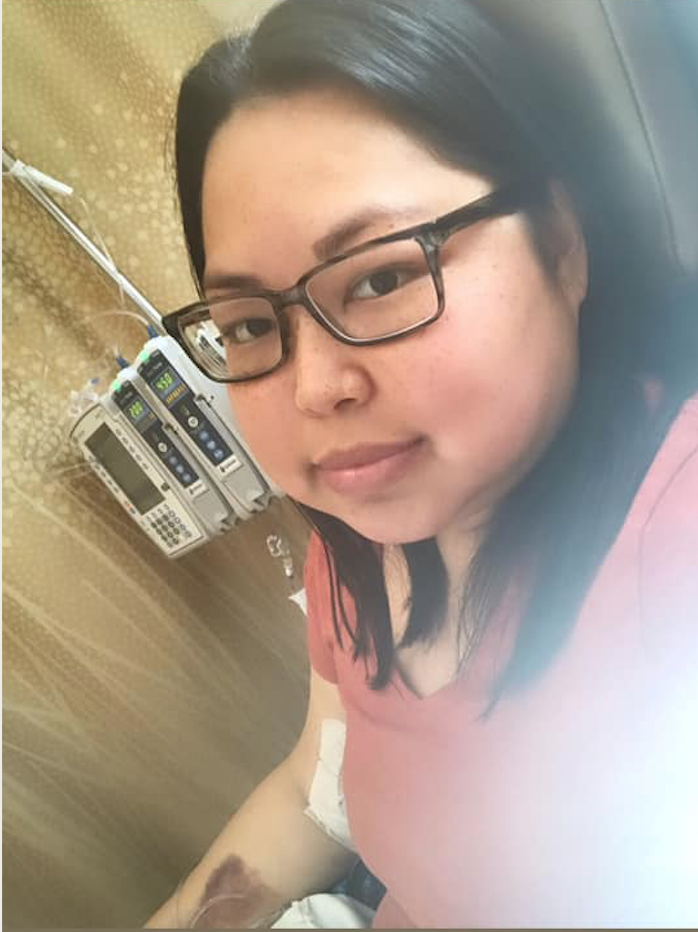
I began treatment. The plan was 6 rounds of chemotherapy, 30+ rounds of external radiation, and 5 internal radiations (brachytherapy). I now call treatment the longest, weirdest dream I’ve ever had because I felt like I was in a fog the entire time. My body was so weak. I barely ate. I slept all the time, but not deeply or comfortably. I felt restless. Thank goodness for my husband, my sister and my dad. They helped me daily. I remember trying to vacuum one day and nearly collapsing. It was so hard to take a back seat to everything. From not working or doing basic chores to watching as others took care of my children daily. That wasn’t me. Everyone who knows me knows that I am fiercely independent.

At the beginning of treatment, I had hand-drawn a calendar to count down to when I’d be done. With each day that passed, no matter how weak I felt, I always remembered to make another “X” on the calendar. It was a long 9 weeks. Treatment ended for me on December 13th, 2019. It was a Friday, and I joked that this nightmare was ending on Friday the 13th. To live up to its name, on that day – my last round of external radiation – the radiation machine that worked so faithfully all those weeks was broken. I stood there with my family (who all came for my last day) and waited around with a full bladder – which was the requirement before receiving radiation – for over an hour. I remember thinking, “Can’t I just get this over with?! I’m so ready!” Right at my breaking point, I heard my name over the intercom and 10 minutes later, I was done. I said goodbye to the amazing doctors and nurses who took care of me all those weeks.

I did it! I’m done!  I can move on forever. Or so I thought…
How naive I was to think that! I’ve learned over the past months that even though I’m done with treatment, treatment is not done with me. I’ve dealt with a plethora of side effects:

For a whole month after treatment, I had what felt like a never-ending UTI.

My bowels are a mess.

What I thought was an upset stomach one late February night has proven to be another side effect from radiation.

My joints ache.

My body doesn’t feel like a 31-year-old. I’m going through menopause! The physical symptoms are many, but the mental stuff is particularly hard. There are highs and lows. I’ve lost two friends over the past few months to cervical cancer. It does something to you to see other women with the same disease pass away. My heart breaks daily for their families.

NED (but there is still the physical and mental evidence of my cancer)

I had my first post-treatment PET scan in March and received the wonderful news that I had “No Evidence of Disease.” In the cancer world, “NED” is a term everyone wants to hear.

NED brings people to their knees.

We rejoice. We celebrate. We still worry, of course. I think I always will, and the aftereffects of treatment continue to bring challenges. But having cancer has given me the gift of perspective. I gladly accept each day that comes. I am thankful for my family and friends. I am thankful for all of the small things that bring me joy.

Even with everything I’ve been through – all the procedures, side effects, and pain – I’d do it all again to be here with my husband and children. I’d do it a thousand times over.

My body: How can I not love something that has fought so hard for me to be here?

I am most thankful for my body. I’m proud of it for everything it has been through and how it still keeps going. All of my physical insecurities have been put to rest.

How can I not love something that has fought so hard for me to be here? That’s what I am. I’m here.  I’m still here! 

About Natasha:

Natasha is full time work-from-home/homeschooling mom of three who enjoys taking photos of anything and everything, traveling, reading multiple books at the same time, and finding new places to show her kids. Read Natasha’s Cervivor Story here.