By Nathalie Latham
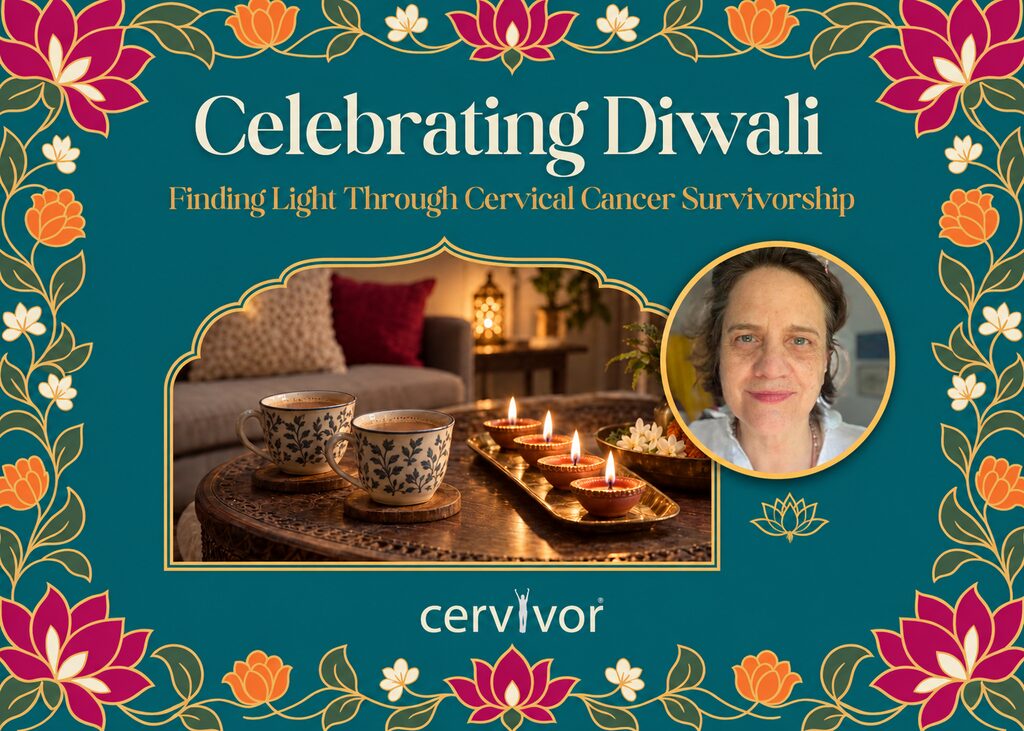
For cervical cancer survivor, artist, and filmmaker Nathalie Latham, Diwali — the Festival of Lights, celebrated this weekend in India and around the world — holds personal meaning.
After a Stage III cervical cancer diagnosis in 2009, creativity, prayer, and spiritual connection helped her navigate treatment and a long, difficult recovery — an experience that may resonate with many in our Cervivor community.
Now living in South India, Nathalie reflects on the lessons of survivorship, the difference between happiness and inner peace, and how Diwali reminds her to bring more wisdom, love, and light into her life.
Finding Creativity in the Darkness of Cancer Treatment
Diwali is my favourite festival, not only for its beauty but also for its deeper symbolism: the journey toward becoming a better person and living in greater connection with oneself and the world.
I was diagnosed with Stage III cervical cancer in 2009 and underwent seven days and nights of continuous brachytherapy. At the time, I was a photographer and filmmaker living in Paris.
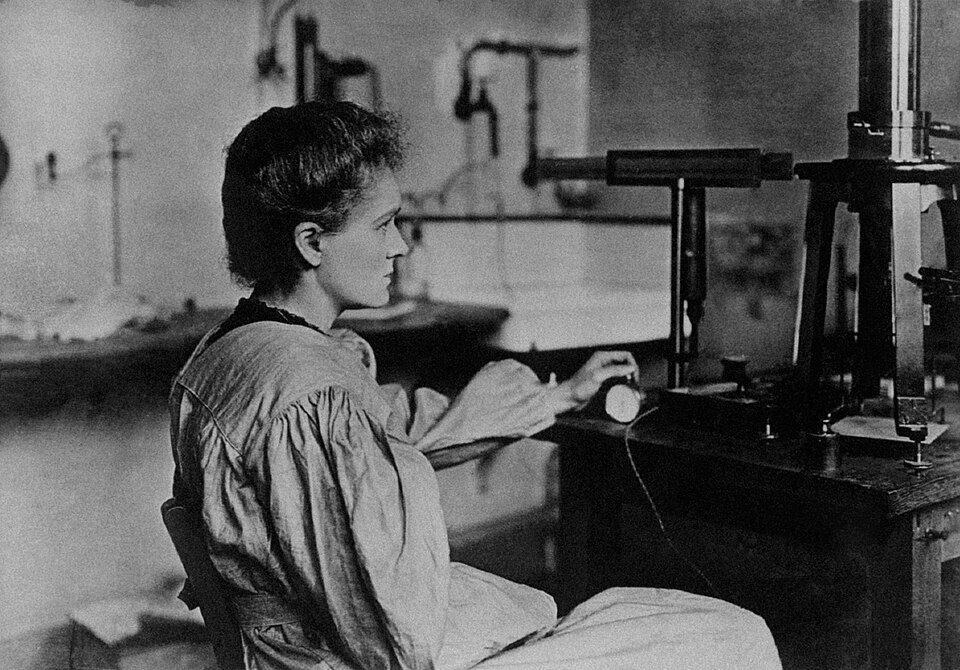
My treatment took place at the Institut Curie, near the place where Marie Curie conducted her pioneering work with radiation. For many years afterward, I had a complicated relationship with my radiation experience. The radiation had devastated my body, but it had also destroyed my tumour and saved my life.
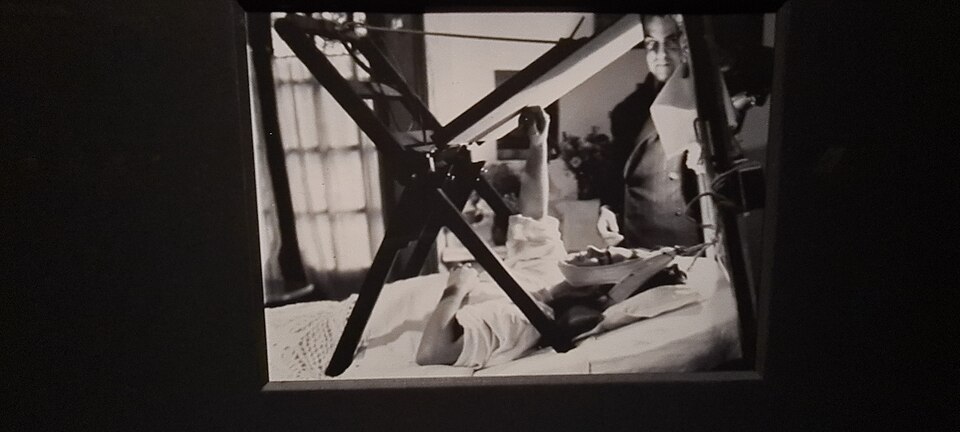
Before treatment, my doctors explained that I would be confined to bed for seven days, receiving radiation every hour. This felt like my worst nightmare.
I turned to images of the Mexican artist Frida Kahlo, who spent years recovering from a terrible accident and created an extraordinary body of work during that time. While confined to bed, lying on her back in excruciating pain, she painted.
Her example inspired me. I went to my favourite art store and bought a bag full of supplies to bring to radiation treatment.
The message for me was simple: Even when one is suffering, one can be creative.
Creativity and prayer saved me during this time. I prayed and chanted my mantra, Om Namo Narayani (I surrender to Mother Nature), every moment. Throughout treatment, I knew my loved ones were praying for me, too.
I asked everyone around me who had a spiritual life to pray for me. It did not matter what their spiritual path was or what they believed in: I wanted their love, thoughts, and prayers. Since childhood, I have understood that we are all connected through the universal soul. Their love and support helped me feel that I was not going through this alone.
Drawing My Way Through Cervical Cancer Recovery
As radiation treatment began, I started to draw.
I drew the horror I was experiencing, always connecting to my inner being and placing colours on paper. I layered colours on top of one another. I scratched in words:
HELP.
THIS IS TOO HARD.
I MUST GET THROUGH THIS.
I kept drawing throughout treatment. The drawings served as my lifeline. The white paper became a place where I could put down all these emotions.
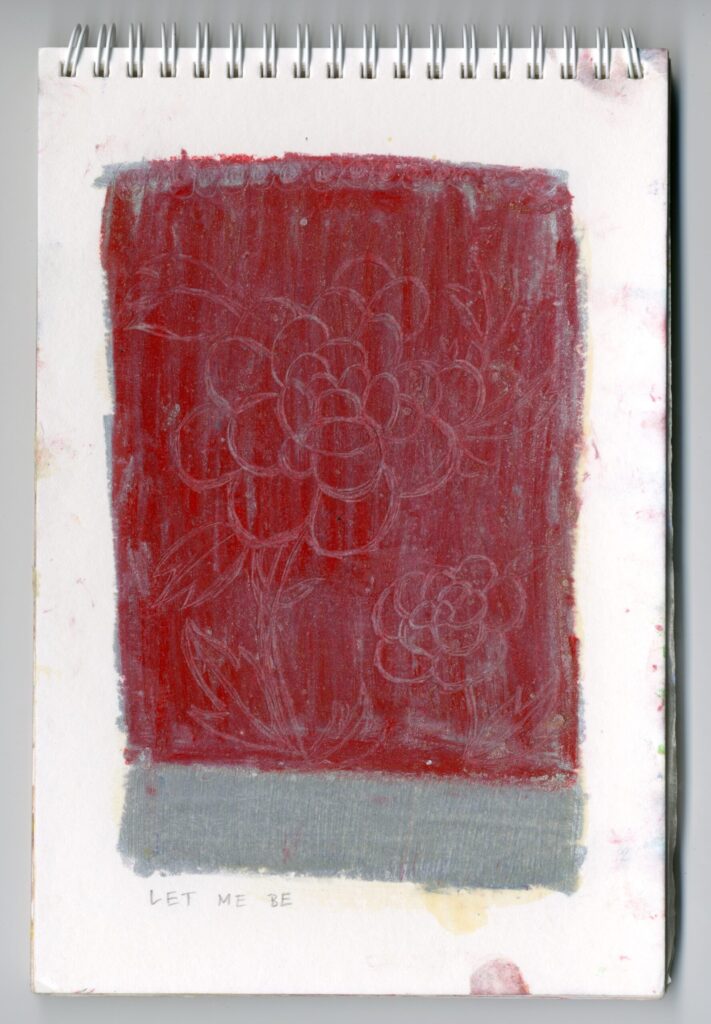
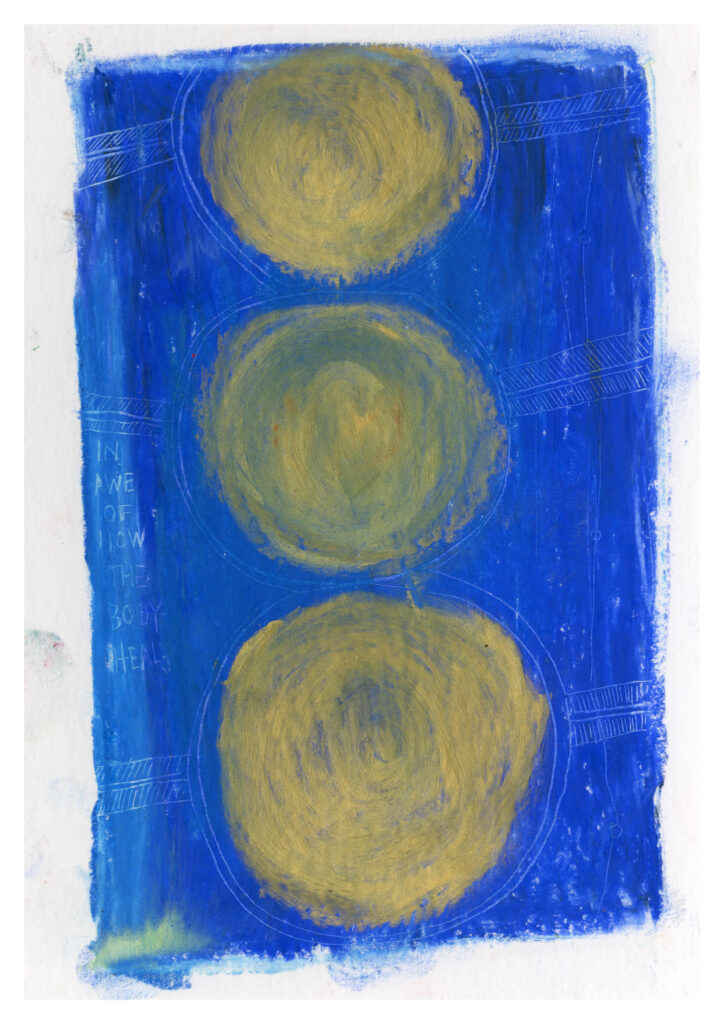
Radiation ended. I went into a deep depression, yet I continued drawing every day.
Each time I finished a drawing, I held it in my hands. This was my way of knowing that I was still alive.
That was a very important message for me.
I kept drawing for seven years throughout my recovery — through surgically induced menopause, anger, rage, kindness, love, despair, and the slow process of reconnecting with my body and the life force.
Finding a New Life and Purpose in India
After completing treatment, I went to South India to live near the temple of my spiritual teacher, Sri Sakthi Amma.
I thought I would stay for three months. Instead, I made a new life there. Today, I serve as Director of Programs for Green Sakthi, an environmental nonprofit.
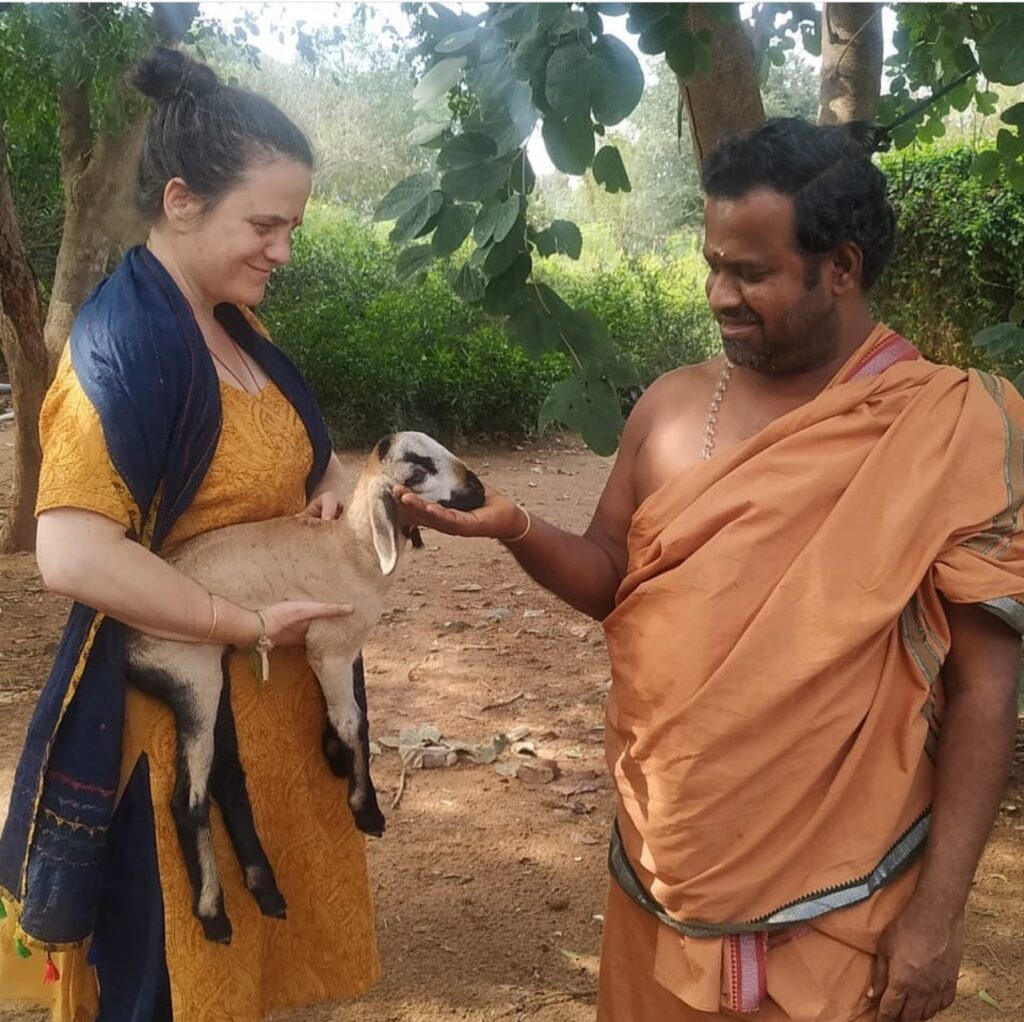
An important lesson I have learned while living in India is the difference between the pursuit of happiness and the experience of inner peace.
Happiness Versus Inner Peace
What is happiness?
We have many opportunities to experience happiness. It is something we are always looking for.
When we get what we want, we feel happy. But once we have that thing or experience, we may begin to worry about losing it. Or we start searching for something else to make us happy.
Constant expectations. The pursuit is never-ending — and exhausting!
What is peace?
When we have peace, we feel that we have everything and do not need to worry about anything.
When we look deeply into life and connect with our soul, we begin to experience the vastness of our being. For me, this is the experience of the divine within us, where we find peace.
I find this alignment through creativity. I draw to connect with that deep part of myself.
I also find it in nature, in prayer, with animals, and in the rituals of Diwali.
Diwali: Bringing Wisdom and Light Into Our Lives
In South India, Diwali, also called Deepavali, is celebrated as the Festival of Lights.
In homes and temples, rows upon rows of small lamps are lit. The festival’s name reflects these rows of light.
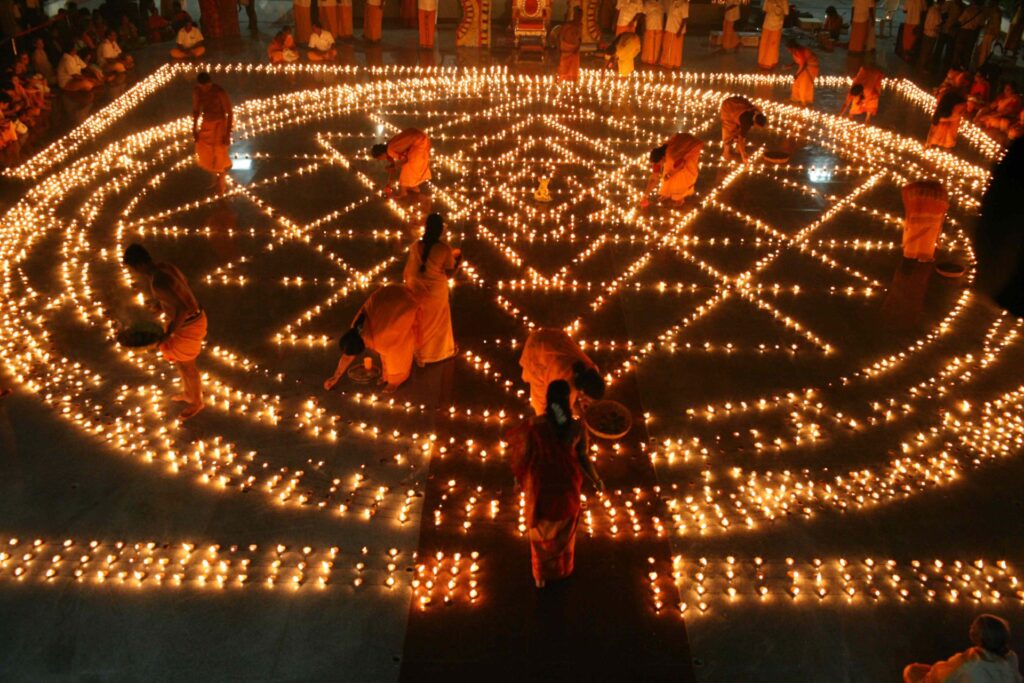
Traditionally, Diwali celebrates the triumph of light over darkness, symbolised in the story of the defeat of the demon Narakasura.
For me, the demon also represents the darker qualities within ourselves: anger, greed, ignorance, negative thoughts, and the false belief that we are separate from one another.
Diwali is a time to bring light — wisdom — into our lives by recognising and working to overcome that inner darkness.
This is my favourite festival because it invites us to identify the negative energies within ourselves and seek divine support to transform them.
When we make an effort to move toward love, more love comes.
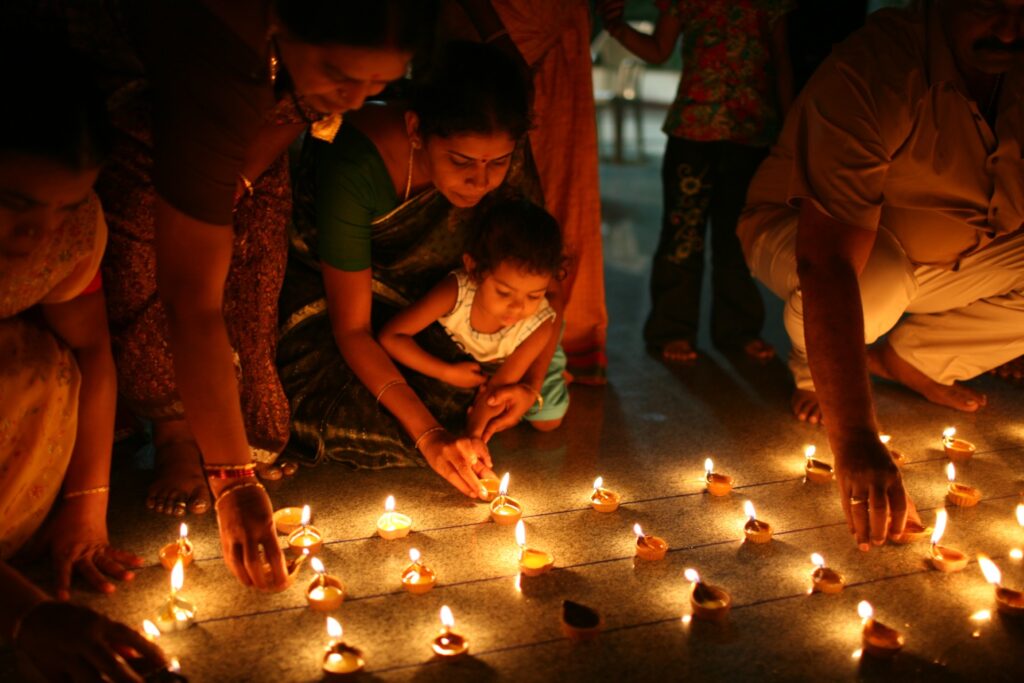
When light comes, darkness disappears.
When wisdom enters, ignorance, greed, and anger leave.
For Diwali, we bring light into our lives so darkness disappears.
About the Author
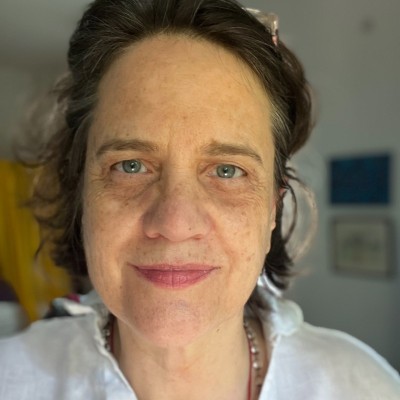
Nathalie Latham is a multidisciplinary artist, photographer, filmmaker, and cervical cancer survivor whose work explores creativity, healing, culture, and the environment.
Diagnosed with Stage III cervical cancer in 2009, Nathalie turned to drawing during treatment and her seven-year recovery, developing a meditative artistic practice that helped her process the physical and emotional challenges of survivorship.
Her photography has been exhibited internationally, including at Australia’s National Portrait Gallery, and her documentaries have been produced for broadcasters including Arte, BBC, and Mezzo.
Now based in South India, Nathalie serves as Director of Programs for Green Sakthi, an environmental nonprofit focused on reforestation. Her new collection, I AM ALIVE, chronicles her journey through cancer, recovery, and creative transformation.