By Kyle Minnis, Cervivor Communications Assistant
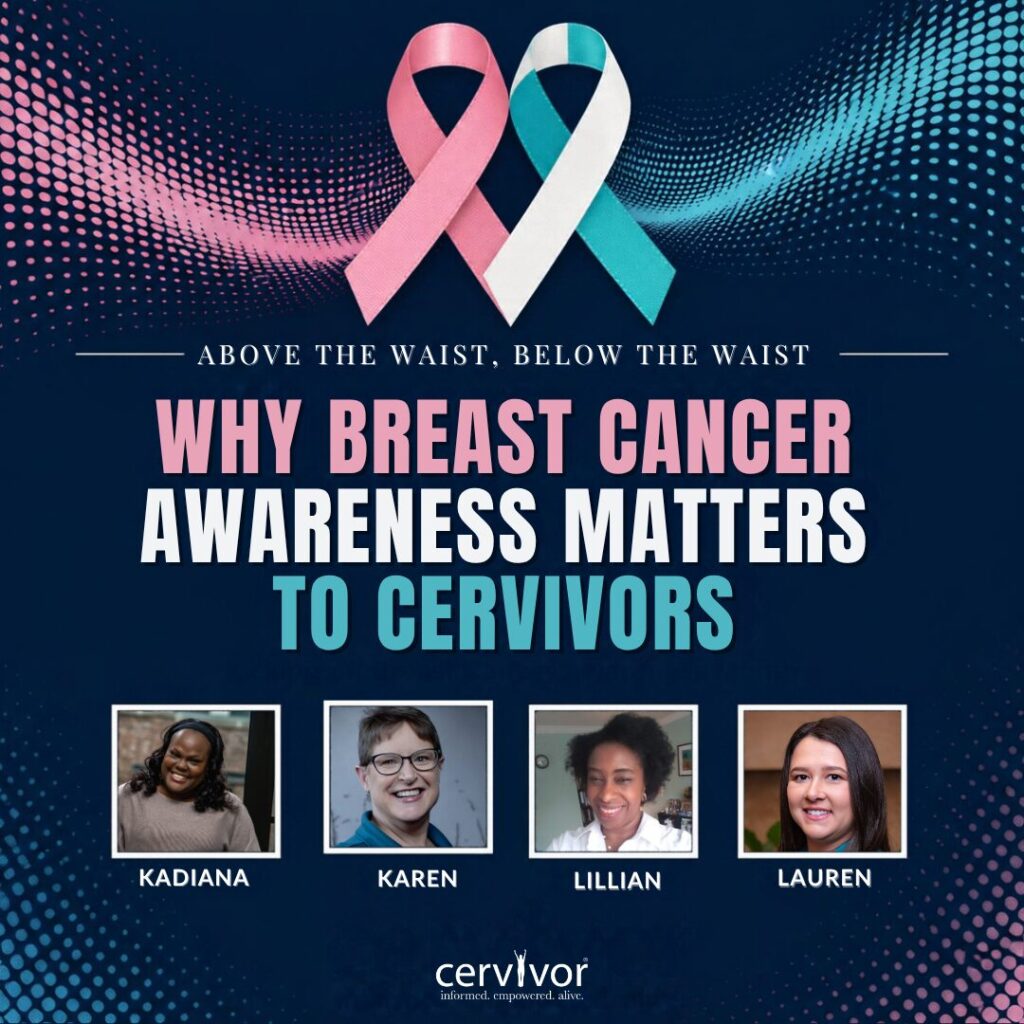
October is Breast Cancer Awareness Month, and you might wonder why a cervical cancer community like Cervivor cares so much. The answer is simple: Our stories don’t fit neatly into one diagnosis, one organ, or one month on the calendar.
Many cervical cancer survivors — a.k.a. Cervivors — have lost mothers, grandmothers, sisters, and friends to breast cancer. Some have faced both cancers themselves. And many of the same barriers that can stand between someone and a Pap or HPV test — including cost, lack of insurance, and distance to care — can also keep them from getting a mammogram.
In 2026, an estimated 321,910 women in the U.S. will be diagnosed with invasive breast cancer, while an estimated 13,490 women will be diagnosed with invasive cervical cancer. Behind every one of those numbers is a person, a family, and a community. This month, we’re sharing the stories of Cervivors whose lives have been touched by both cancers, along with resources that can help you or someone you love access screening and care.
Where Our Stories Intersect
For some Cervivors, the connection to breast cancer is another diagnosis. For others, it’s a genetic risk, a family history, or an unexpected moment when cervical cancer care opens the door to breast care. Their stories show just how differently — and deeply — these cancer communities intersect.
Karen’s Story: Breast and Cervical Cancer
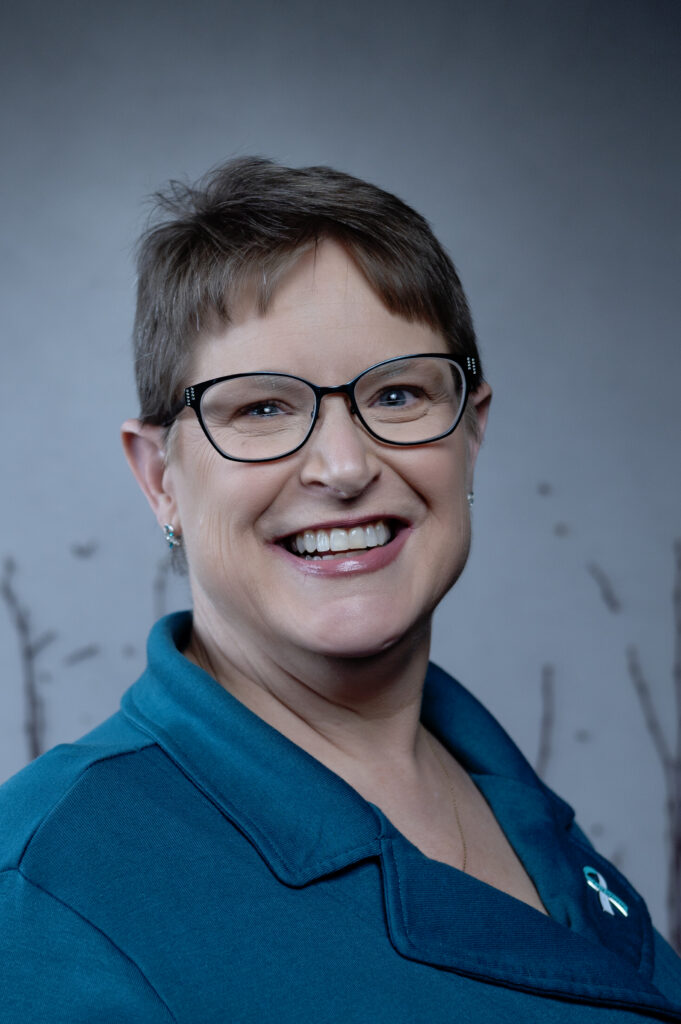
Cervivor Ambassador and SGM/LGBTQIA+ Lead Karen North, BSN, RN, was 46 when a routine mammogram found her breast cancer. She chose a double mastectomy and didn’t need further treatment. Eighteen months later, she was diagnosed with cervical cancer.
Having faced both, Karen believes cancer communities need to show up for one another. “There are too many people being diagnosed, in treatment, dying, and scared of a recurrence,” she said.
For her, October should focus on what matters most: “prevention, screening, access to treatment and aftercare.”
Karen also wants cancer awareness to include everyone it affects, including people with a cervix who don’t identify as female. “Everyone deserves to feel seen, respected, and included when it comes to cancer awareness, prevention, and care,” she says. “There are too many barriers with cancer and gender shouldn’t be one of them.”
Kadiana’s Story: Survivor to Previvor
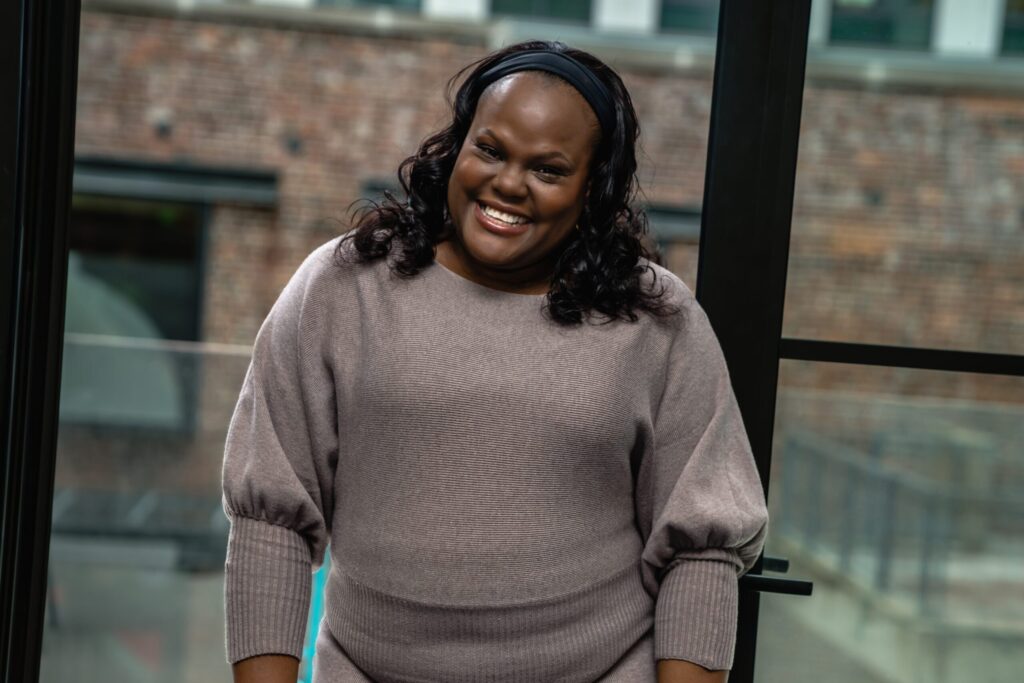
In 2020, Cervivor Ambassador and Caribbean Liaison Kadiana Vegee was in treatment for cervical cancer when her doctor suggested genetic testing because of her family history. She learned she carries a BRCA1 mutation, increasing her breast cancer risk.
“It was a lot to take in because I was already dealing with cervical cancer,” she says, noting her 32 rounds of external radiation, 6 rounds of brachytherapy, and 6 cycles of chemotherapy. “But at the same time, I’m grateful I had that information because it gave me the opportunity to make decisions about my health instead of waiting for something to happen.”
Kadiana ultimately chose a preventive double mastectomy without reconstruction. “I didn’t want to live constantly wondering if breast cancer was going to be the next thing I had to face,” she says. “I chose my health and my peace of mind.”
Today, she is both a cervical cancer survivor and a breast cancer “previvor.” Her advice to others who learn they carry a BRCA mutation is to give themselves time, ask questions, and make the choice that is right for them.
Lillian’s Story: Loss, Survival, and Advocacy
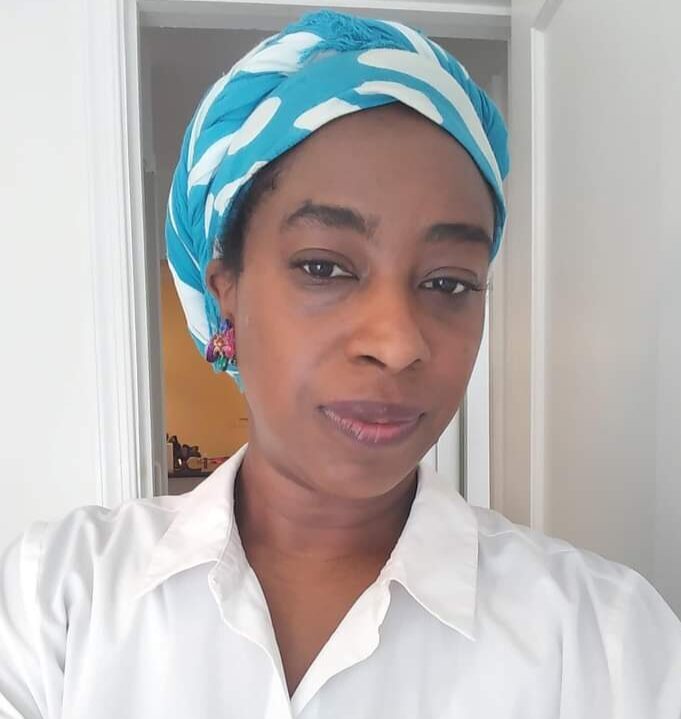
Mental health therapist Dr. Lillian Walker Shelton, Ed.D., LPC, LCPC, ACS, lost her mother to cervical cancer in 1996, when the disease and its connection to HPV were still widely misunderstood. Lillian recalls a doctor asking whether her mother had been a prostitute — a question so disturbing that her grandmother filed a formal complaint.
Years later, after moving to Washington, D.C., Lillian met Cervivor Founder and Chief Visionary Tamika Felder and trained as a cancer advocate through Tamika & Friends, as the organization was originally named. That training became vital when Lillian was diagnosed with breast cancer in 2020 and again in 2022. Today, she is living with metastatic breast cancer.
Her mother, she says, never felt empowered to advocate for herself. Lillian approaches her own care differently: “I know that my life depends on my advocacy.”
After her cancer spread to her bones, Lillian experienced two broken legs and a hip replacement between 2022 and 2025. She has learned to ask for help and lean on family, friends, and therapy. Her message to other survivors is simple: “You can’t do cancer alone.”
Lauren’s Story: When Screening Connects
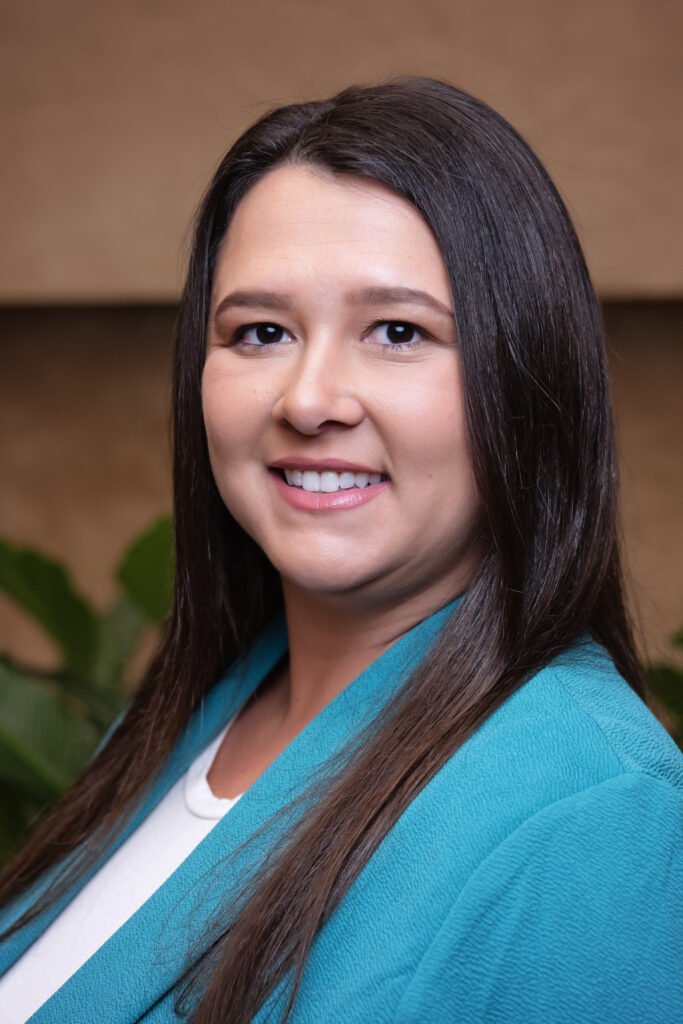
Cervivor Program Coordinator Lauren Lastauskas is a cervical cancer survivor with a strong connection to breast cancer: Her maternal grandmother died of a recurrence, and Lauren later helped care for a sister-in-law diagnosed with stage 3 HER2-positive breast cancer.
When Lauren was uninsured, she received her cervical cancer follow-up care through Take Charge, Oklahoma’s branch of the National Breast and Cervical Cancer Early Detection Program. At one visit, a provider asked whether she had noticed any breast changes. Lauren mentioned a new nipple discharge. “Through my own cervical cancer experience and many friends and family dealing with breast cancer, I knew I had to speak up!”
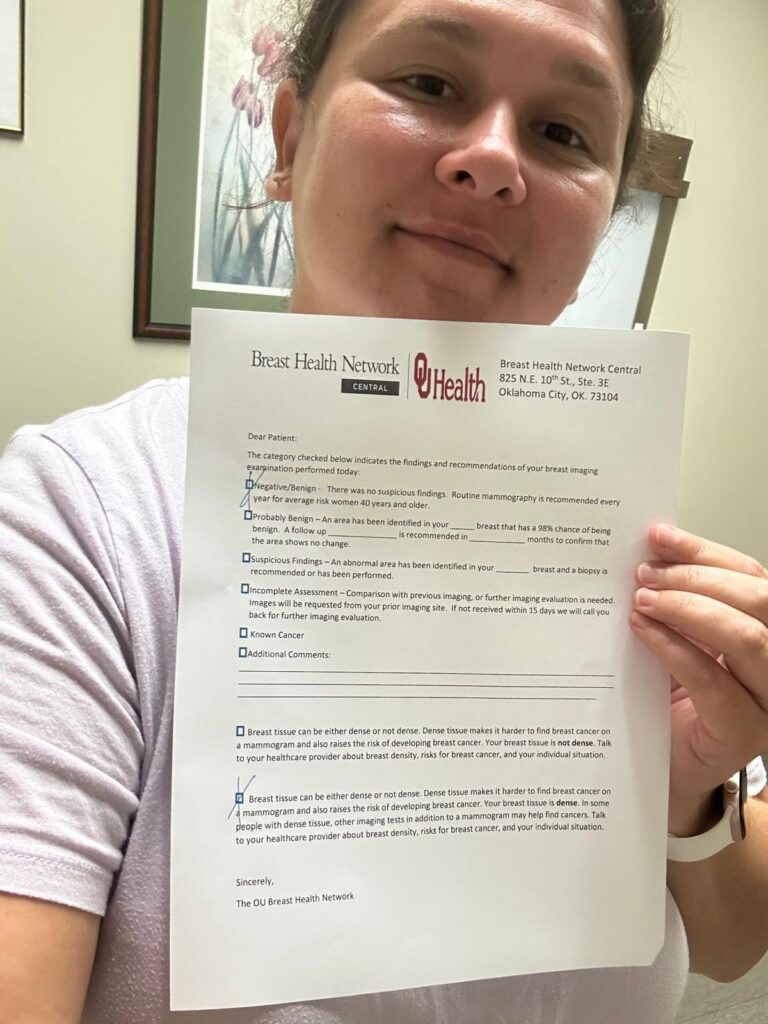
The provider referred the then-32-year-old Lauren for a diagnostic mammogram, which came back clear. “I only got that clear result because of my cervical cancer screening and the federally funded breast and cervical program,” she says.
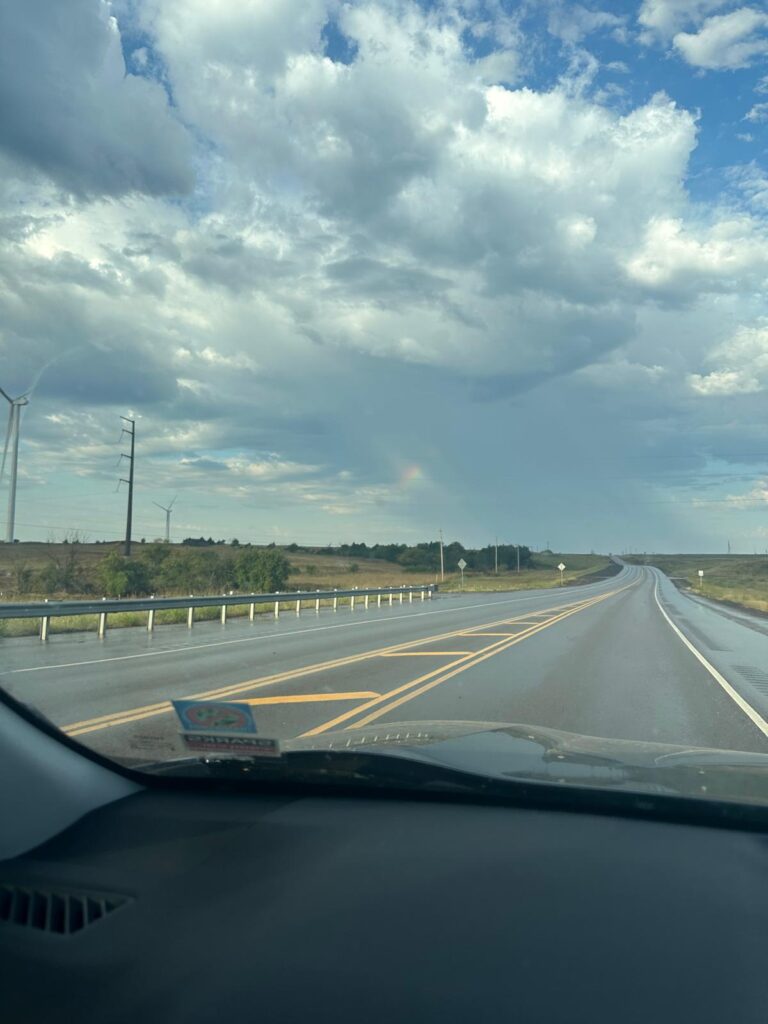
Access wasn’t easy: Lauren drove about an hour and a half for her Pap test and another hour and a half for the mammogram. The experience, she says, “reiterated the importance of advocating for yourself and mentioning any and all problems to a health provider.”
The Program Behind Lauren’s Story: The NBCCEDP
The CDC’s National Breast and Cervical Cancer Early Detection Program (NBCCEDP) provides free and low-cost breast and cervical cancer screening and diagnostic services to people with low incomes who are uninsured or underinsured.
Early detection can make a profound difference: Five-year relative survival is more than 99% for localized breast cancer and 91% for localized cervical cancer. That makes access to screening especially important for people who might otherwise go without it, like Lauren.
The program works through state, tribal, and territorial public health departments across the country, so the name and the places you can go will vary by state. Since 1991, it has served more than 6.7 million women and provided more than 16.8 million breast and cervical cancer screening exams. Those exams have found more than 82,000 invasive breast cancers and 5,400 invasive cervical cancers, plus more than 259,000 cervical precancers caught before they could become cancer.
If cost or insurance is standing between you and a mammogram or a Pap/HPV test, visit the CDC’s NBCCEDP page (link above) to find your state or tribal program.
Partners in the Work: The Promise Fund
Some organizations already see breast and cervical cancer as one fight. The Promise Fund, based in West Palm Beach, FL, works to increase survivorship from both cancers. It was founded in 2018 by former U.S. Ambassador Nancy G. Brinker, who also founded Susan G. Komen after losing her sister to breast cancer.
Promise Fund Navigators provide women with one-on-one guidance from screening through diagnosis, treatment, and completion of care. They help remove barriers by arranging transportation, providing translation, answering insurance questions, and connecting women with mammograms, Pap tests, HPV testing, and other essential services at little or no cost. Through partnerships with health-care providers and community organizations, the Promise Fund serves women across Palm Beach, Broward, and Martin counties.
Ambassador Brinker is also a 2024 Cervivor Champion Award recipient and shared her insights with our community at the 2025 Cervical Cancer Summit Powered by Cervivor, Inc. Watch her talk here — it’s a good one!
Cervivor’s Commitment
Cervivor was built to give a voice to people affected by cervical cancer. That mission has never meant caring about only one part of a person’s health. Our community members are whole people, with whole bodies and whole families, and the cancers that touch them don’t respect boundaries.
As our founder Tamika explains: “At Cervivor, we care about the cancers above the waist just as much as the ones below it. So many of our members have watched breast cancer take someone they love, or have faced it themselves. Breast Cancer Awareness Month is our month too.”
Throughout October, we’ll be sharing stories, resources, and reminders to help our community stay informed and screened.
What You Can Do This Month
Awareness means the most when it turns into action. This October, we’re asking our community to:
- Schedule your mammogram, and check whether your Pap or HPV test is due too.
- Speak up about any changes you notice, even if you’re at an appointment for something else.
- Look up free or low-cost screening through the NBCCEDP if cost is a barrier.
- Share this post with someone who may be putting off screening.
- Tell us your story if breast cancer has touched your life.
Informed. Empowered. Alive. That applies to every part of us.
About the Author

Kyle Minnis is a recent graduate of Strategic Communications at the University of Kansas with a passion for digital media, storytelling, and audience engagement. He has experience in content strategy and media production. Kyle is especially interested in the intersection of media, branding, and digital growth.