Let’s Talk About Below-the-Belt Cancers

When the calendar turns to September, it’s a good reason for anyone touched by gynecological cancer to share their story because September is Gynecological Cancer Awareness Month (GCAM).

For those of us in the Cervivor community, September is a significant opportunity to pull out our advocacy boots (and dust them off if they haven’t been used in a while), put below-the-belt cancers in the spotlight, and pick up our momentum to carry us through the remainder of the year. 

Why is GCAM so important?

  • Late-stage cervical cancer is being diagnosed at higher rates in the United States. Historically, cervical cancer has disproportionately impacted Black and Hispanic women. In this study, the overall prevalence of the disease was higher in Black women and there is a large increase in diagnoses for Non-Hispanic White women (CNN).
  • Uterine cancers are on the rise, especially in Black women. It is quickly making its way to becoming the third most common type of cancer among women (NY Times).
  • Fertility and quality of life are still impacting those diagnosed with gynecologic cancers (Oncology Nurse Advisor).
  • Intersectionalities in sexual orientation as well as race and ethnicity show significantly lower odds of undergoing routine cervical cancer screenings (Health Day).
  • Reducing social detriments can improve quality of life, increase survival rates, and close the gap in racial disparities (ASCO Post).

We know there are so many more to list which is why Cervivor continues to be actively engaged in gynecologic cancer awareness. We’re committed to sharing our stories, spreading awareness, and showing the people impacted by gynecologic cancers. We’re facing these disparities head-on!

How can you get involved this GCAM?

  • Share Cervivor content during GCAM. We will have plenty of graphics, articles, and other resources to share with your social media network, across all platforms. Make sure to follow us on Facebook, Twitter, Instagram, TikTok, and Pinterest.
  • Wear Teal and White on #TealandWhiteTuesday. Don’t forget to tag us on Instagram and post your photos in the comment of our Facebook posts!

  • Share your Cervivor Story. Have you shared your story with us on Cervivor.org? Sharing your story on our site is a powerful tool for getting your story out there. Our template guides you with questions, to help you share your cervical cancer story in a way that is personal to you. You can share as little or as much as you like. Once you have submitted your story and it is published, you will be able to share the link with others. Need help getting started? Send us an email at [email protected]!

  • Contact local media to share your Cervivor story. Many times, local news stations, newspapers, and neighborhood publications are looking for content. Reach out to them and share your story. If your story is on Cervivor.org, share the link with them when you reach out.

  • Host a Cervivor Meet-Up. Meet-Ups are local gatherings of Cervivors, networking and sharing in a social environment. You can hold a Cervivor Meet-Up in a coffee shop, restaurant, bar, or anywhere you feel is a welcoming and relaxed place for Cervivors to talk and share. If you’re interested in hosting a Cervivor Meet-Up in your area, contact us at [email protected]. *Cervivor recommends following the latest CDC recommendations for any gatherings.*

  • Become a Partner in Purpose. From care team to community member, your role in cervical cancer awareness, treatment, support, and prevention is of the utmost importance to us. Interested? Sign up here.

  • Donate to Cervivor or host a fundraiser on behalf of Cervivor.

We look forward to a successful GCAM and can’t wait to see how our Cervivor Community comes together to bring awareness to gynecologic cancers!
Ending Cervical Cancer Starts with Us

Preoccupied much? It happens. Especially when caring for yourself and others, mourning loved ones, slogging through a global pandemic, and attempting to check off all of the things from your personal and professional to-do list. Because we were quarantined and protecting ourselves, we probably missed a few important benchmarks, library books that may have been due, or our annual dentist appointment may have fallen off the calendar. We know first-hand that everything simply can’t be done. But Cervivor does want to help you prioritize the following three things before summer’s out. (Don’t worry, you’ve got two more months to go!)

1) Stay up-to-date on screenings.

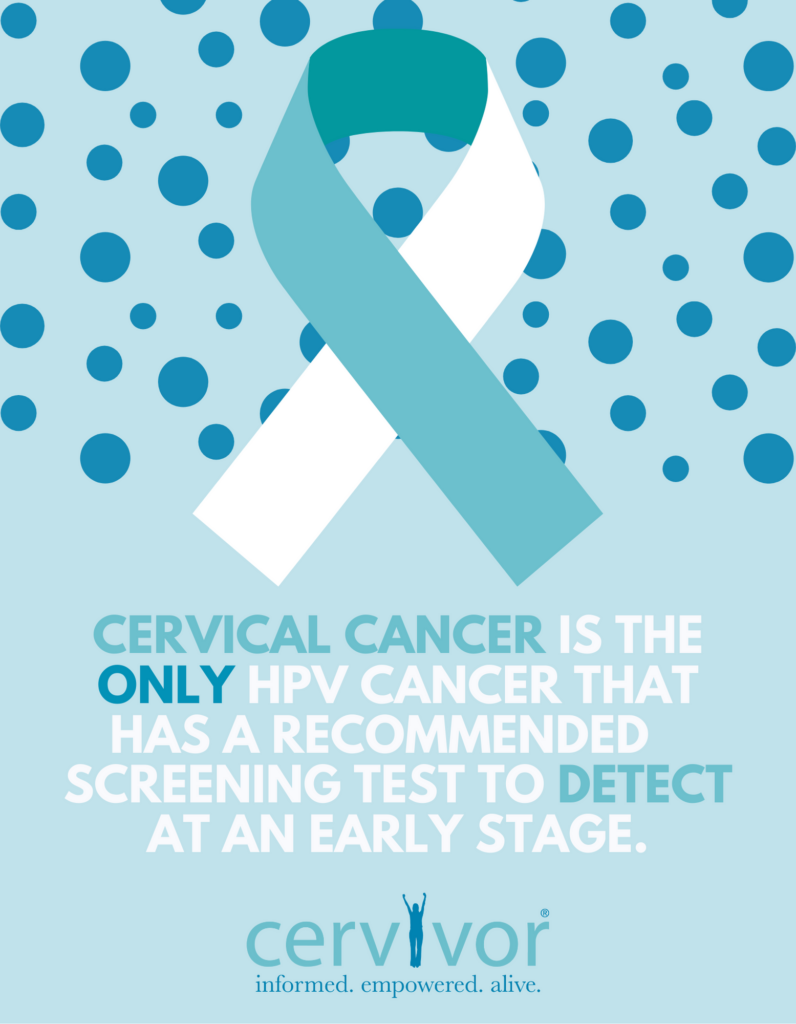
Did you know? Anyone with a cervix is at risk for cervical cancer. Each year, 14,100 individuals will be diagnosed and 4,280 will die as a result of cervical cancer. This disease is the only type of cancer caused by HPV that can be detected early by a recommended screening test. It is also highly curable when found and treated early. Knowing this we will continue to share information on risks, prevention, treatment, and resources.

Not sure of what guidelines to follow? Check out the American Cancer Society’s cancer screening guide, schedule your appointment, and have this meaningful conversation with your doctor.

2) Share YOUR story with others.

Your Cervivor story is unique. It helps others to feel seen. And it helps us feel heard – when we are ready to use our voice, of course. Sharing your story is also a crucial aspect in educating the public, caregivers, medical professionals, and even those funding cancer research.

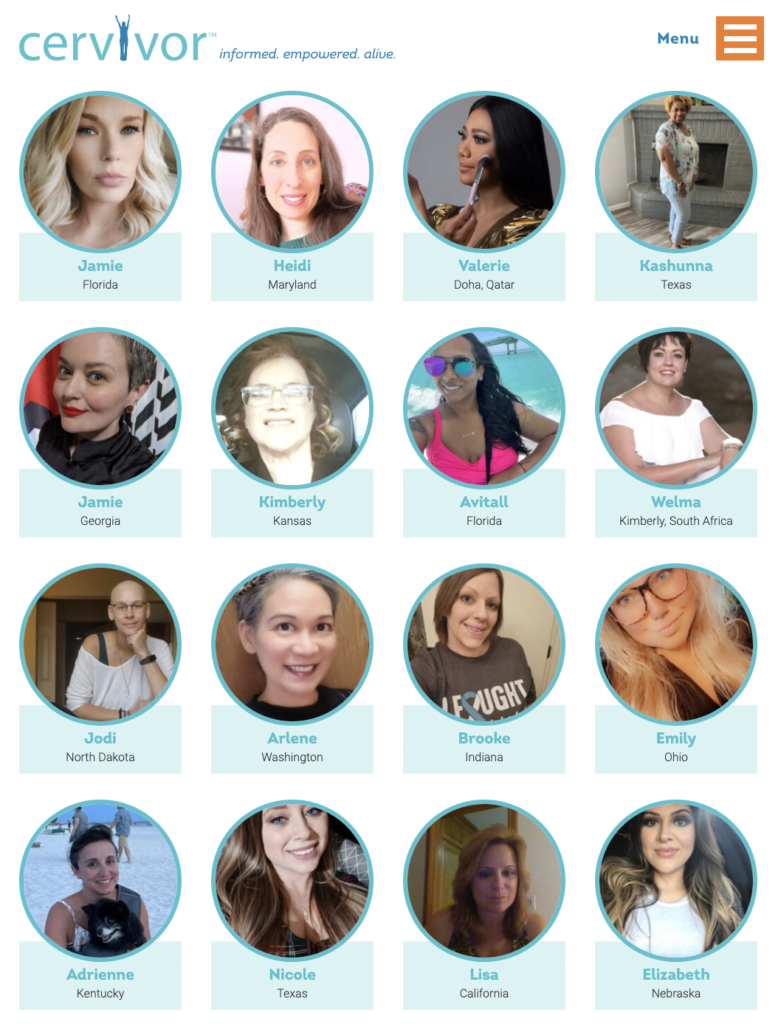
Seeing and hearing your lived experiences amplifies what others, too, may be going through and helps to further research, offers a personal accounting of what cervical cancer looks like, and most importantly – empowers us more and more to thrive. Take a look at these beautiful testimonies, and consider sharing yours with Cervivor.

3) Start vaccinations early.

According to the June American Cancer Society 2021 HPV VACs Impact Report, about 3 to 4 million HPV vaccine doses were missed. “ACS health care partners maintained rates for 9- to 13-year-olds, growing shot series initiation by 2 percent for ages 9 to 10 and shot completion by 2 percent for age 13.”

Cervivor is happy to partner with organizations like St. Jude’s HPV Cancer Prevention Program, the American Cancer Society, and the National HPV Roundtable (to name a few)- all of which continue to help prevent HPV by increasing HPV vaccination rates for this age group. HPV vaccination can prevent more than 90 percent of these cancers if given at the recommended ages. 

Our new mantra is “start at 9.” Giving a strong recommendation for the 9-year-olds in our lives will increase vaccination success, according to the National HPV Roundtable. When we take our young people to health providers at age 9, it provides ample time to complete the HPV series before age 11, which is when they receive their Tetanus, Diphtheria, Pertussis (Tdap) and Meningococcal (MenACWY) vaccines. More than 75% of U.S. parents have chosen to protect their children from HPV cancer with the HPV vaccine.

Since August is National Immunization Awareness Month, let’s raise that number even more! Together we can end cervical cancer, once and for all! 

Take a look at how survivors in our community have shared their stories and are making a difference:

Need some additional help in prevention messaging? Take a look at the resources in this toolbox created by the National HPV Roundtable, and share with your networks, friends, and families. This impacts everyone, and with your support, we can change the course of cancer.