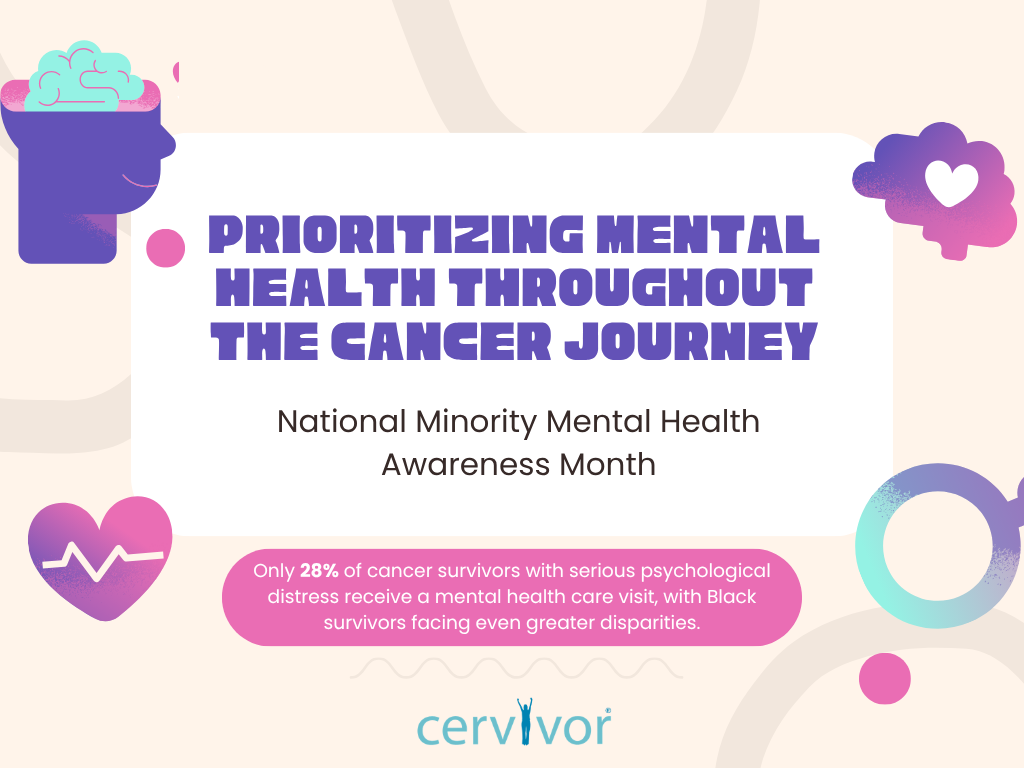
Each July, National Minority Mental Health Awareness Month serves as a reminder that mental health deserves the same attention and care as physical health. For those impacted by cervical cancer, emotional well-being is not separate from survivorship. It is an essential part of the journey.
Receiving a cancer diagnosis can bring fear, uncertainty, isolation, and anxiety. For many people in historically underserved communities, these feelings are often compounded by barriers to healthcare, financial challenges, cultural stigma surrounding mental health, and inequities in access to support services. No one should have to navigate those challenges alone.
Receiving a cancer diagnosis can bring fear, uncertainty, isolation, and anxiety. For many people in historically underserved communities, these feelings are often compounded by barriers to healthcare, financial challenges, cultural stigma surrounding mental health, and inequities in access to support services. Research shows that while cancer survivors from racial and ethnic minority communities often experience higher levels of psychological distress, they are also less likely to receive mental health care than their White counterparts. Among cancer survivors experiencing serious psychological distress, only 28% reported having a mental health care visit, with Black survivors receiving fewer counseling visits and spending less on mental health care than White survivors.
For Tiera Wade, Community Outreach & Partnership Director at Cervivor, prioritizing her mental health became an important part of navigating her own cancer experience.
“During my cancer journey, I advocated for my mental health. In the isolation of the pandemic, I knew I needed the tools to speak up for myself and make it through,” said Tiera. “Seeking that support didn’t just help me cope; it became a lifeline through the hardest moments, and it’s still helping me today. Combined with my faith, I truly believe I can do all things through Christ who strengthens me.”
This month is also an opportunity to encourage honest conversations about mental health within our families, communities, and healthcare settings. Seeking counseling, joining a support group, leaning on loved ones, or simply asking for help are all signs of strength, not weakness.
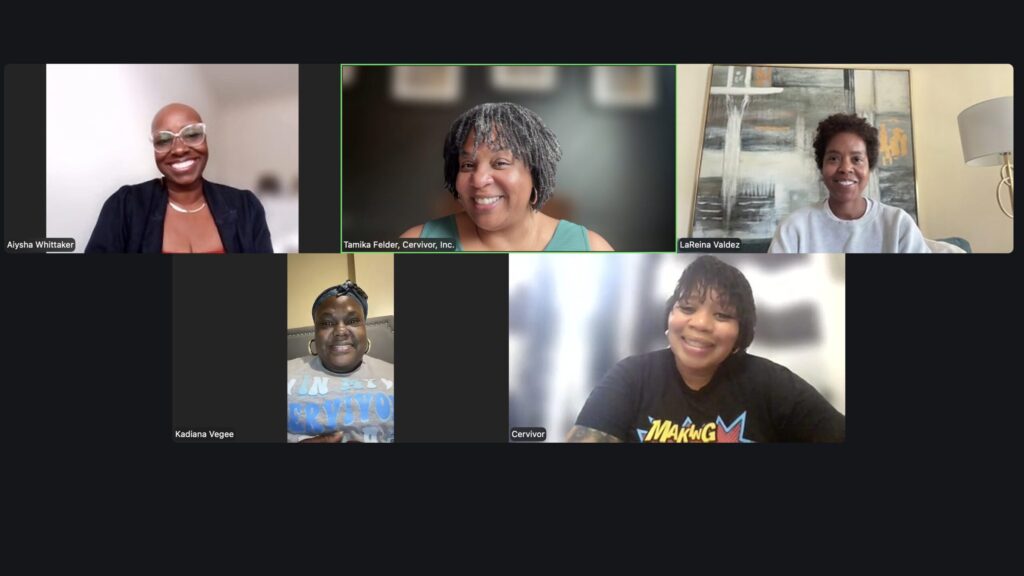
At Cervivor, we believe caring for the whole person means recognizing that healing extends beyond treatment. Survivors deserve access to emotional support, trusted information, and a community that understands what they’re experiencing. Through programs like Cervivor Noir, our community created by and for Black cervical cancer patients, survivors, and thrivers, we foster culturally affirming spaces where members can connect, share their stories, and find support from others who understand their unique experiences.
This month is also an opportunity to encourage honest conversations about mental health within our families, communities, and healthcare settings. Seeking counseling, joining a support group, leaning on loved ones, or simply asking for help are all signs of strength, not weakness.
At Cervivor, we’re committed to ensuring every survivor feels seen, heard, and supported. Whether through Cervivor Noir, our virtual support groups, advocacy programs, or survivor community, we want every person affected by cervical cancer to know they don’t have to face this journey alone.
This National Minority Mental Health Awareness Month, let’s continue breaking the stigma surrounding mental health, advocating for equitable access to care, and reminding every survivor that healing includes both the body and the mind.