By The Cervivor Communications Team
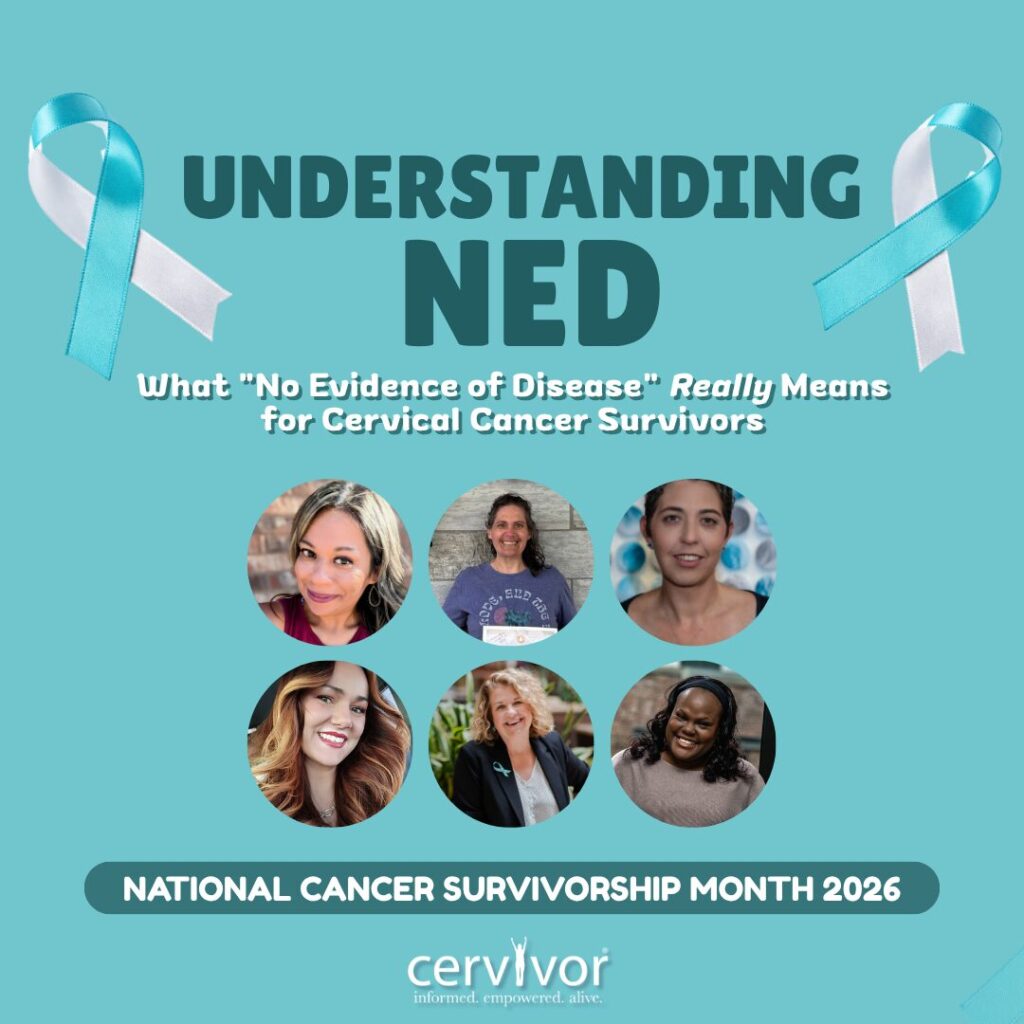
NED — short for “No Evidence of Disease” — is often seen as the ultimate goal after cancer treatment. But for many cervical cancer survivors, hearing those words is not the end of the journey; it’s the beginning of a new and often complicated chapter marked by uncertainty, resilience, and emotional healing.
While early-stage cervical cancer has a five-year survival rate above 90%, survivors — especially those diagnosed at later stages — can face lasting physical and psychological effects long after treatment ends.
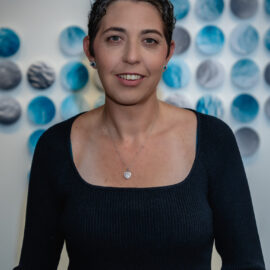
For Cervivor community member Kellie Defelice, a Stage 4A cervical cancer survivor, hearing she was NED three and a half years ago came with a wave of emotions — not all of them expected.
“I used to think NED meant the end of someone’s cancer journey,” says the 2023 Cervivor School graduate. “Now I realize it’s just the beginning of a different kind of fight. It’s a relief, but also a possible ticking time bomb. I no longer want to waste time, and I just want to be happy.”
In honor of National Cancer Survivorship Month, we’re shedding light on what survivorship really looks like through the voices of the Cervivor community while also helping demystify what NED really means.
What Does NED Mean in Cancer?
NED is a medical term used when imaging tests, such as PET or CT scans, blood tests, or physical exams, can no longer detect cancer in a person’s body. But NED doesn’t mean they’re “cured.”
Medical professionals are careful with their language. A patient might have no detectable cancer, but that doesn’t always mean the disease is gone for good — it just means there are currently no signs of it. That’s why ongoing monitoring, like scans every few months or years, remains essential.
Hence the reason why “scanxiety” — the intense fear, stress, and anticipatory anxiety many survivors feel before follow-up scans, tests, or appointments — is “very real,” says Kellie.
NED, Remission, Cured: What’s the Difference?
These terms are also often confused:
- NED (No Evidence of Disease): No detectable cancer can be found.
- Remission: Cancer has responded to treatment.
- Complete remission means all signs of cancer are gone.
- Partial remission means the cancer has shrunk or decreased.
- Cured: The cancer is gone and not expected to return — though this term is rarely used until many years have passed.
For survivors, these distinctions can deeply affect how they understand their health, identity, and future.
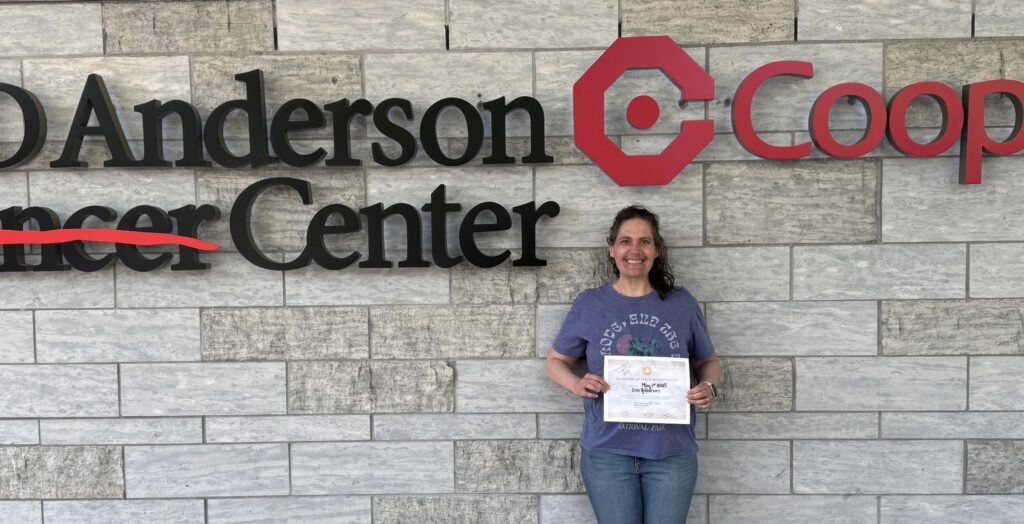
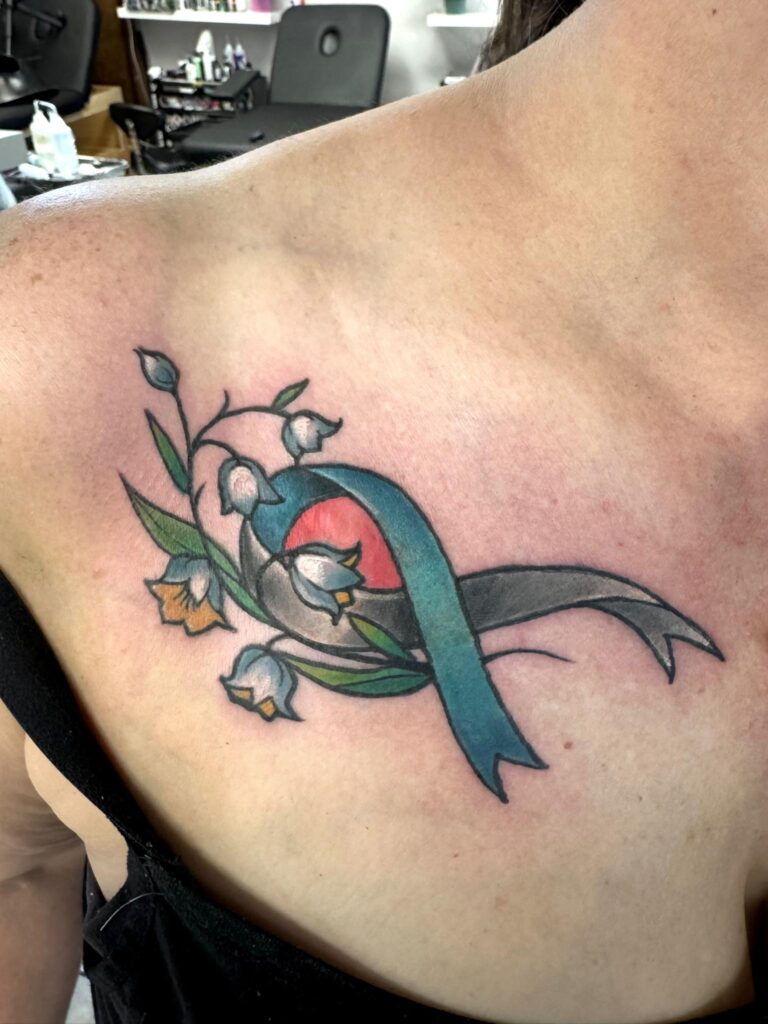
Last May, Cervivor community member Erin Anderson shared the joy of hearing those words after eight years: “I finally got back the results of my CT DNA blood test, and the results show that there is no evidence of any cancer whatsoever! That means I am officially in REMISSION!!!!! 8 long years and I am here!!!!” One year later, she marked the anniversary of ringing the bell by getting a tattoo of the cervical cancer ribbon and flowers over her port scar.
Moments like these are powerful, but they often coexist with fear, anxiety, and emotional whiplash.
Survivorship Is Not a Clean Finish Line
When Cervivor recently asked survivors on its private Facebook group, “What was it like to hear the words ‘No Evidence of Disease’? How do you live beyond the disease?” the responses revealed just how layered survivorship can be.
Some spoke openly about lingering anxiety.
“Never gets old,” wrote Samantha Richman. “13 years out and still get anxious until I hear those words.”
Many survivors also described how cancer changed the way they approach life.
“I travel, I try new things, I do things that scare me,” wrote Dusty Ferrarese, who’s been NED for 10 years. “This extra time I’m given isn’t to be taken for granted.”
Four-year survivor Martha Lovette echoed that sentiment: “I spend all the time I can with my godson, and I prioritize pleasure over ‘to-dos.’ I do what’s essential and let go of the rest.”
Others focus on simply moving forward. ‘I just live my life,’ shared Jenny Morales, who was two years NED at the time of her comment. “I don’t want to waste good times always in fear.”
The Emotional Aftermath of Cancer
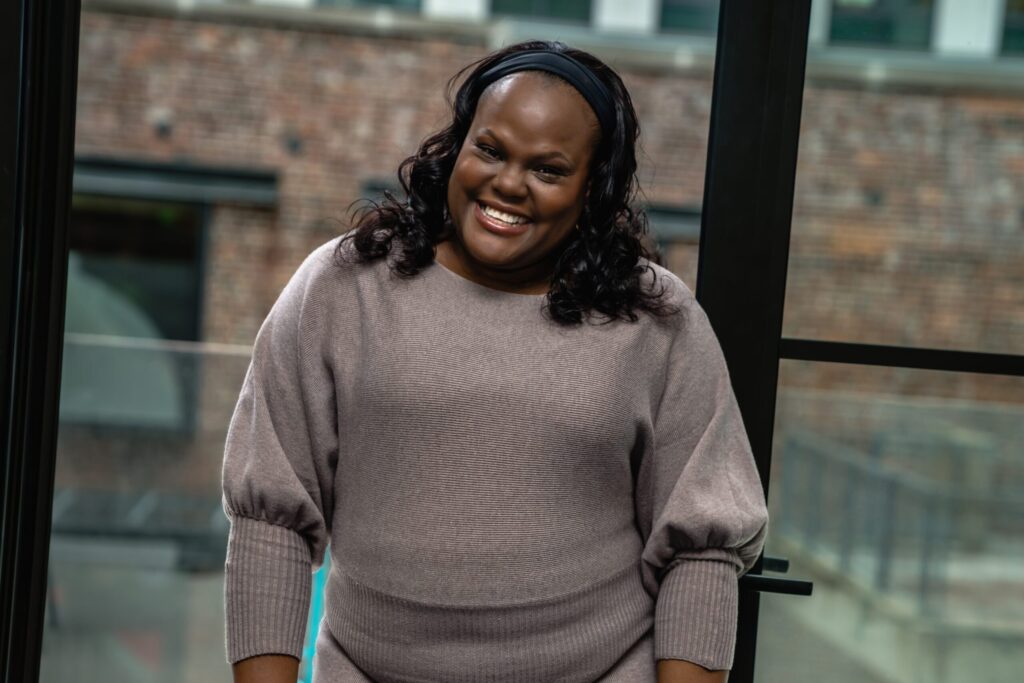
For many survivors, the hardest part begins after treatment ends.
Kadiana Vegee, a 2022 Cervivor School graduate, said she felt completely unprepared once the medical crisis was over, describing crying constantly, struggling to sleep, and withdrawing from the world around her as she slipped into a deep depression.
Kellie said she experienced a similar realization. “I suddenly found that many cancer survivors have lasting side effects from treatment. I also came to see that many have PTSD from treatment, and the mental toll cancer takes does not go away.”

Survivor Erica Field echoed that sentiment: “Even after a clean bill of health, it never gets easier. You never get rid of scanxiety. You always have PTSD walking into the oncology doors… but today, I’m incredibly grateful.”
The emotional complexity of survivorship is something many people outside the cancer community struggle to understand.
Shantel Bateman explained how invisible survivorship can feel: “I push through and act like I am fine physically and mentally on the outside. Everyone is so obsessed with looks. You have to look sick to have cancer.”

She also shared the painful confusion of being told she was “cancer-free,” only to later learn more scans were needed because cancer might still be present.
And like many survivors, she wrestled with survivor’s guilt. “My sister-in-law had the same cancer and didn’t make it. Why do I get to live and she didn’t?”
Lead Cervivor Ambassador Carol Lacey, who lives with recurrent metastatic cancer, captured the emotional uncertainty many survivors carry: “I cherished each time I heard those words. Even when the cancer came back, I lived in the moment of NED.”
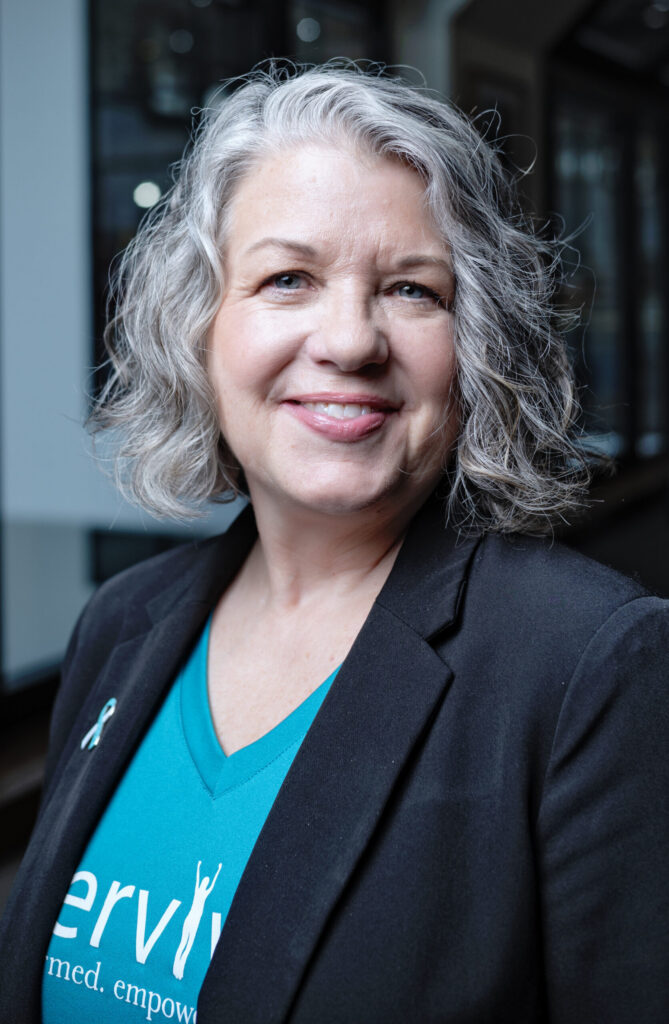
How to Support Someone Who Is NED
If someone you love has heard the words “No Evidence of Disease,” don’t assume they’re “back to normal.” Survivors need ongoing support long after their medical intervention has concluded.
Cervivor Ambassador Kellie shares how to show up:
- Listen. When we say we are tired, know we are experiencing fatigue — both mental and physical. Believe us when we describe the exhaustion that lingers after the fight.
- Be Sympathetic. Cry with us when we lose friends to this disease. Many of us are grieving and often feeling a heavy sense of survivor’s guilt.
- Be Patient. Scanxiety and PTSD are very real. Be there when we’re going through tests, and don’t dismiss our fears. Just like soldiers have trauma, so do we.
- Take Action. Support legislation like American Cancer Society Cancer Action Network (ACS CAN) bills. Share our posts and attend community events. Walk beside us, stand with us, and prioritize your own screenings.
Survivorship is a Story Worth Telling
NED is more than a medical term — it’s an emotional milestone and a lifelong reckoning that involves fear, gratitude, and uncertainty all at once.
As Shantel puts it: “My soul is so tired. I’ve stayed positive for so long. But when I break down, I’m told to stay strong instead of being allowed to feel.”
Ultimately, survivorship is not a clean finish line; it is a complicated chapter that deserves to be seen and supported with true compassion.
If you’re a patient or survivor, share your story; you never know who needs to hear it. Together, we tell the whole story — because survivorship matters.
Want more survivor voices and support resources delivered to your inbox? Sign up for our newsletter — and help us amplify our mission to end cervical cancer by sharing this story and tagging Cervivor on social media.