Navigating Loss and Stepping Into Healing

As a psychotherapist, I work often with individuals experiencing grief and quite regularly, find that people do not realize they are going through the grieving process when they are experiencing something that is not related to death. When we think of grief, we think of funerals and tears, not the loss of a friendship, the loss of a job, or our own health declining. On July 27th, 2020, at 8 am, I was beginning my workday when my phone rang. The voice on the other end of the call was the same warm, comforting voice that helped me stay breathing during my colposcopy only a few weeks earlier. “Your test results have come back. I am sorry, but you have cancer, and we have sent your paperwork up to an oncology team…” I spent the rest of the day, with a best friend by my side, staring at the floor in silence. I had no clue how my life would change or that grief would be part of my journey in some of the worst ways.

The next few weeks went by quickly, meeting my oncologist, setting up a treatment plan filled with backup plans, and many tearful calls with my mentor, Dr. Steve, who was also a cancer patient. I realized quickly what I am sure many others in this community have, cervical cancer is addressed but not often or in-depth enough, and breaking the rules I was given: DO NOT GOOGLE YOUR DIAGNOSIS, I immediately began feeling confused, ashamed, and guilty as I read everything I could find: HPV caused this? No one even told me I had HPV. I attended my exams as recommended, there was never a mention of abnormal pap, just a sore lower back and a lot of confusion. After diagnosis, there are a lot of questions that go through our minds such as: Am I going to die? What if my treatment has complications? Will I still be able to have children? What will happen to my body from the cancer? From my perspective, as a cancer patient and in working with cancer patients, rumination is our best friend and worst enemy.

So many of us in the cancer community have experienced “cancer ghosting” to some degree. When we need people the most, where are they? Quick to offer a kind word and prayers, but when we need help at home after surgery or a ride to and from chemo, where are these wonderful people who offered their support? We grieve the loss of friendships we thought we had. We grieve the way our bodies change from treatment and the loss of our hair from chemo, we grieve the time we lose during active treatment. And sometimes we develop friendships with some people we always wish we knew, and then they are gone. There are so many ways in which we grieve during this experience, and it seems to me that we only understand that grief as we go through it. We grieve how difficult it becomes to relate to others who have not had the same experiences, how could they possibly understand? When I first got sick, my mentor, Dr. Steve, told me, “…with cancer, sometimes we will come to deeply love someone only to lose them, and sometimes we are the ones they lose”. Sadly, we lost Dr. Steve in June 2023 to both
multiple myeloma and pancreatic cancer. I did not realize at the time that he was preparing me for losing him and, of all the things cancer took from me, losing him to cancer while I was still in remission was the hardest pill to swallow.

In connecting with other cervical cancer patients throughout the several months following diagnosis, there was a common theme of being fixated on the HPV portion of the diagnosis. Some said to me that it made them feel shameful because of language used such as “promiscuity” and “contracted through sexual partners”. One woman told me they could not stop fixating on the number of partners she had, a small amount, and began to feel anger toward previous partners. When I addressed the cancer diagnosis as a traumatic experience to this individual, I was met by a baffled expression… “I do not have PTSD”, they told me. Recent research will show that a vast majority of individuals dealing with cancer have either a prior diagnosis of a stressor-related disorder such as PTSD related to experiences in early childhood or will begin to develop symptoms during active treatment which makes the process, and survivorship, a sometimes very difficult period to navigate. To this, the best recommendation I can make is to take care of your mental health in any way possible beginning with your initial diagnosis. If you are a survivor and still feel lingering emotional pain, Psychology Today is a great resource in which you can find a trauma-informed counselor who specializes in working with illness.

Elizabeth Kubler-Ross, a psychiatrist, identified that there are five stages to grief: denial, anger, bargaining, depression, and acceptance in her book “On Death and Dying”. One important thing to acknowledge is that though there are stages listed, they are not linear, and some components can strike even years after finding out we are free of disease. When we think of the moment that we found out we had cancer, can we also recall the emotions surging through our bodies? For me, it was denial followed immediately by depression, and now, three years later, there are more moments of acceptance, but still periods of deep denial, almost to the point where I feel like an imposter. A cancer imposter. Some clients of mine have shared ways in which bargaining presented for them, feeling though if they had just done something differently, they would not have been “punished” with cancer. And that’s the thing about grief, and with cancer, it is not a punishment nor is it something to feel ashamed about. Cancer and loss are things that happen to you, but they do not have to be what defines you.

Through community, we can begin the healing process. The best thing I did for myself when I was diagnosed was to work with a mental health professional individually to process the changes I was about to endure; for my clients, we talk as little or as much as they want about what cancer is doing to them emotionally and/or to their loved ones, and I encourage them to use resources for support such as groups available through the Bright Spot Network, local therapy offices or their cancer center, and programs such as the Cancer Support Network. When someone we love passes, or we have a terminal diagnosis, I encourage joining groups through local hospices, a great and not well-known source in terms of support. It is important to not be fixated on one specific type of therapy, as there are many options, and while something like EMDR may seem appealing, it may not be an appropriate fit at a specific point in time but something such as trauma-focused cognitive behavioral therapy may be. Connecting with others in the cervical cancer community, or the cancer community in general, can be tremendous because it allows us to see and truly feel that we are not alone regardless of where we are on our journey. Cervivor is the best resource, in my opinion, for those with a cervical cancer diagnosis, not just because we are meeting others who had or have cervical cancer, but because we truly are a group of sisters who stand behind and support one another in a way I have never seen elsewhere. There has never been an unkind word from one sister to another because of things such as different treatment, different stages, different complications, just pure and unconditional love and support.

Another thing I often find myself suggesting to clients is to read books on grief, and at times, stories of others’ journeys through cancer. A friend of mine, Gina Moffa, LCSW, is a grief and trauma specialist who recently published a book called, “Moving on Doesn’t Mean Letting Go”, which I initially began reading to help me through the loss of my mother, my best friend Andrew, and Dr. Steve, who all passed within a 10-month period of one another not long after I finally began to feel consistently healthy. Her book provided tools and insight into the grieving process that helped me reframe my entire cancer experience, and through the loss of my loved ones, and continues to inspire the way in which I approach grieving. One thing that makes her book so special is that it feels as though she is speaking directly to you and could be encouraging to those who are still unsure about meeting individually with a counselor, with the reminder that in fact, moving on or through our grief does not mean we have to let go of what occurred in order to move forward. With clients who have loved ones with cancer, are experiencing cancer or grief themselves, I have recommended books such as, “When Cancer Strikes a Friend,” by Bonnie Draeger, “The Grieving Brain” by Mary-Frances O’Conner, “The Beauty of What Remains” by Steve Leder, and “Between Two Kingdoms” by Suleika Jaouad. These books can be read at any point and maintain relevance in many ways as we go through our grief or cancer journey. It is important to remember that our journeys are individual, what may help one may not help another, but encourage you to remember that there are many paths to healing and you are never as alone as you may feel.

Cervivor School Seattle Reflections

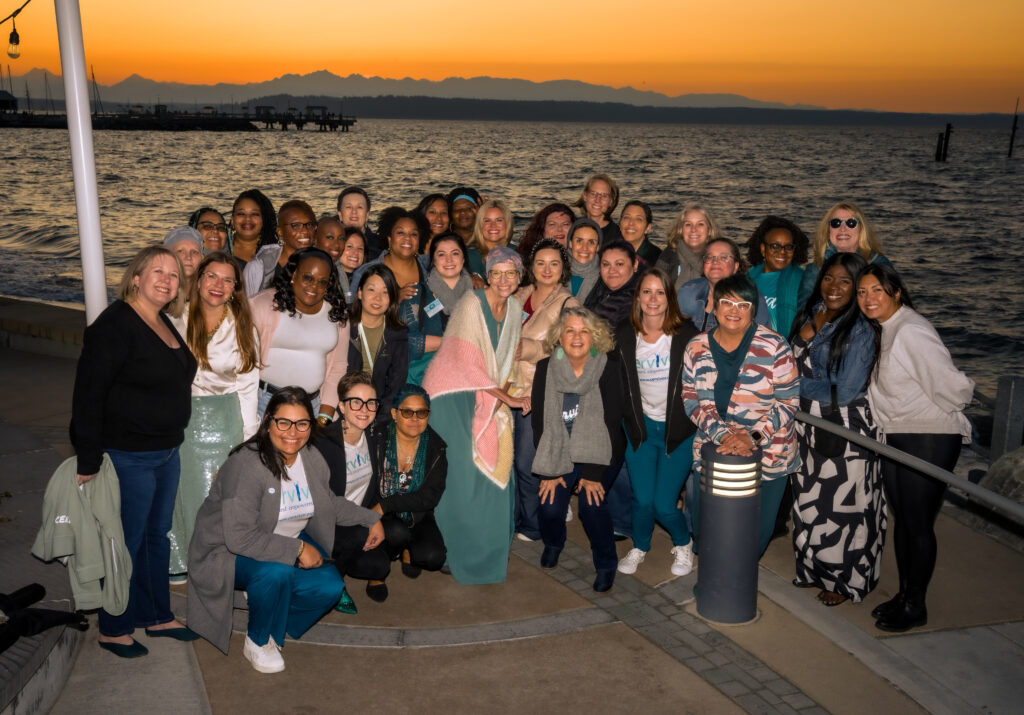
In the heart of the Pacific Northwest, amidst the city landscapes of Seattle, Washington, a group of resilient cervical cancer survivors recently gathered to embark on a patient advocacy journey that transcended the boundaries of a traditional classroom.

Cervivor School, an immersive patient advocacy training program for cervical cancer survivors hosted by Cervivor, Inc. trained 23 new attendees with a deep dive into the psychosocial aspects of cervical cancer and paired it with the latest science to help them understand the scope of the national and global disparities. In this blog post, we will take you on a reflective journey through the empowering experiences, inspiring stories, and invaluable insights gained during the Cervivor School in Seattle:

“I went to Cervivor School, afraid of not belonging, but I returned with a feeling of sorority and acceptance. Cervivor School exceeded my expectations by far. There was an energy and a contagious passion. I felt enlightened and empowered like never before. After hearing the stories of these extraordinary women, it gives me more reasons to do something to end cervical cancer.” – Claudia Perez-Favela, California

“This past weekend was amazing. Cervivor School was so informative. The knowledge gained is beyond words. I felt so empowered being in a room filled with so many powerful women and the love and support given is just fantastic. I felt a sense of belonging from the get go, there was no awkward moments in the room and I loved that. I admired how everything tied in nicely. I applaud Team Cervivor for the work they put into Cervivor School to make it a reality.  Once again, thank you for allowing me to be part of this.” – Nymphia Emmanuel, St. Lucia

“Firstly, I was so privileged and grateful for the opportunity to attend Cervivor School in Seattle Washington. Meeting with other Cervivors, sharing our stories encouraging each other to be empowered, and learning together how we can all make a difference in our society by advocating for others against cervical cancer and HPV. My personal goal is to gain my voice, knowing that I have the power to help eradicate cervical cancer mortality rates. Sharing my story and being a “Pillar” of hope to someone is making a difference.” – Davina Woolward, Guyana

“It was an incredible opportunity to connect with fellow survivors and advocates with whom I have shared journeys and passions. The sense of belonging and support within the Cervivor community is a big extended family and the knowledge and skills I gained during my time there were invaluable. Learning from experts in cervical health and hearing the inspiring stories of resilience from others was not only educational but deeply empowering. It was a reminder that I am part of a strong, compassionate, and dedicated network working together to raise awareness about cervical cancer, and the HPV vaccination and make a positive impact and a change in women’s health. Cervivor School left a permanent mark on me, and I am grateful for the chance to be a part of such an incredible community.” – Julianna Colley, Georgia

Before we shift our focus to celebrating the remarkable individuals who have earned the prestigious title of Cervivor Champion, we want to extend our heartfelt gratitude to the dynamic speakers and passionate advocates who graced our event with their insights and experiences – Thank you to Dr. Linda Eckert of the University of Washington, Dr. Hyo Sook Bae of the National Cancer Institute, Roshanda Pratt of the REP Network, Kiara Long of the American Cancer Society, Dr. Carolyn Kay of Roche Diagnostics, Dr. Sarah Villarreal of the University of Washington, Dr. Leeya Pinder of the University of Cincinnati, Christina Turpin of the National HPV Vaccination Roundtable, Dr. Yolanda Evans of Seattle Children’s Hospital, Kate Weissman, Cervivor Ambassador, and the incredible team at Cervivor for the impactful conversations and necessary information to become well-informed patient advocates. A special thank you also goes out to Mike Hill and Sue Collins of Moonshine Agency for selecting Cervivor School as an exclusive film screening for Conquering Cancer in the United States.

Next, we extend our warmest congratulations to the exceptional individuals who have been named as the newest Cervivor Champion award recipients. Your dedication, resilience, and unwavering commitment to the fight against cervical cancer have not only transformed your own lives but have also left an indelible mark on our community.

As Cervivor Champions, you embody the spirit of advocacy, turning your personal journeys into powerful forces for change. Your voices and stories inspire, educate, and empower others to take control of their health and join in the mission to end cervical cancer. We celebrate your achievements, and we look forward to witnessing the positive impact you will continue to make in the world of cervical cancer advocacy.

Congratulations to Anna Ogo, Anne Zajic, Cindy Trice, Josyln Paguio, and Kadiana Vegee!

In our relentless pursuit to end cervical cancer, the voices of patient advocates are not just valuable; they are absolutely necessary. Patient advocates are the heart and soul of our movement, the driving force behind the progress we’ve made, and the torchbearers of hope for a future free from this devastating disease. Their lived experiences, their determination, and their unwavering commitment serve as inspiration and hope for individuals facing a cervical cancer diagnosis, and as a powerful catalyst for change within healthcare and policy systems.

Patient advocate voices remind us that behind every statistic is a human life, and that the fight against cervical cancer is not just a medical journey, but a deeply emotional taxing one. As we move forward, let us continue to amplify these voices, to listen, to learn, and to stand together in the unshakable belief that one day we can, and will, bring an end to cervical cancer.

Together, we are a force to be reckoned with, and with each voice that joins our mission, we come one step closer to a world where cervical cancer is but a distant memory.

Lastly, Cervivor, Inc. would like to thank our generous sponsors for supporting our mission of educating and empowering individuals impacted by cervical cancer to take action and create change in their local communities and beyond. Thank you, Hologic, Seagen, Genmab, and Genentech.