Cervical cancer is a life-altering diagnosis that affects more than just physical health—it can deeply affect emotional well-being and intimate relationships. From the emotional toll of a serious diagnosis to the physical changes that disrupt intimacy, it can challenge both self-identity and personal connections. Unfortunately, many survivors navigate this journey alone—whether due to discomfort in discussing such a personal matter or simply a lack of information and trusted resources.
During two interactive sessions at Cervivor’s recent Cervical Cancer Summit—one focused on intimacy after cervical cancer and the other on navigating menopause with confidence—participants felt safe enough to openly shared their experiences and concerns in a supportive space. Here is just some of what they said:
“I no longer feel like a woman. I’m disconnected from my sexual self, and I don’t know how to get it back. My recent pelvic exam caused days of bleeding, and I get a UTI with most insertions.”
“No one talks about the sex part of cervical cancer. My doctor just handed me a box of dilators with no explanation on how to use them or how often.”
“I didn’t know about any of this until Cervivor. It still has not been a conversation topic with my medical team unless I talk about it with them.”
These honest reflections highlight the need for open conversations and greater awareness—including, in some cases, among medical professionals. Whether you’re undergoing treatment or navigating recovery, understanding the facts and exploring new ways to connect can empower you to rediscover what feels good for you and regain confidence in your intimate life. It can also help you navigate intimacy with a current or future partner. Acknowledging the impact of cervical cancer on intimacy and relationships—and seeking out support and strategies for maintaining connection—can strengthen bonds and enhance overall well-being.
How Cervical Cancer Impacts Intimacy
Surviving cervical cancer is a triumph, but it often comes with a host of lasting physical and emotional challenges. For many survivors, it’s a case of “I survived, but no one prepared me for this.” These challenges can profoundly affect intimacy, touching both the body and the mind in ways that can feel overwhelming and isolating.
While the emotional and physical tolls of cervical cancer are unique to each person, they often manifest in two key areas: the physical changes resulting from treatment, and the emotional shifts that affect a person’s sense of self and connection to others.

Physical Impact
Treatments for cervical cancer can lead to a variety of challenges that make physical intimacy difficult. These include vaginal dryness, pelvic pain, and changes in sexual sensation—issues that can significantly affect a person’s ability to engage in or enjoy sexual activities. This is expressed powerfully by Cervivor community member Amanda Hunter: “I have changed after my cancer diagnosis and treatment, and I don’t know how to fix it. The main thing I regret is having my hysterectomy. I no longer feel like a woman because of it, and I am angry. I had just found the love of my life and married him—I absolutely adore my new husband. There was a time I couldn’t keep my hands off of him. But now, between the physical changes from the hysterectomy that have completely altered the feeling of sex, to the loss of hormones from radiation killing my ovaries and the menopausal symptoms that come with it, I am spending our second wedding anniversary feeling guilty because I never want to have sex anymore.”
Emotional Impact
The diagnosis and treatment of cervical cancer can also take a significant emotional toll. The stress of facing cancer and undergoing treatment can trigger anxiety, depression, and concerns about body image. These emotional shifts can affect sexual desire and impact overall intimacy and connection with one’s partner.

Sage Bolte, PhD, LCSW, CST, FAOSW, Chief Philanthropy Officer and President of the Inova Health Foundation, and a 22-year oncology social work professional, was the keynote speaker at the Summit session on intimacy. She shared, “Getting here required, and I know many of you experienced, much loss and grief. There needs to be space to honor that. This doesn’t mean dwelling in sadness, but if we don’t acknowledge what’s lost, we can’t celebrate what’s gained or learned, nor can we learn something different.”
Research confirms what many survivors have shared. Studies indicate that up to 50-70% of women who undergo treatment for cervical cancer experience changes in their sexual function. These changes can include reduced libido, discomfort during sex, or altered sexual satisfaction. Addressing these challenges is essential for maintaining healthy relationships and overall well-being during and after treatment. But, regardless of relationship status, navigating intimacy can be a unique journey for each woman.
Sage offers hope: “You may think, ‘I’ve completely lost interest in sex. My libido is totally gone.’ But libido starts in the mind. Wanting to want to means you still have libido and interest. Give it time and space. The beauty is that you’re going to get to know your body all over again. And figuring out what feels good is very important, whether you have a partner or not.”
Redefining Intimacy
Intimacy is often misunderstood as being solely synonymous with sexual activity, but in reality, it encompasses a broad spectrum of connections that can deepen and enrich relationships. This allows couples to explore and express their bond in various ways, creating a stronger and more resilient connection. The following aspects highlight the diverse landscape of intimacy:
Emotional Closeness: Sharing thoughts, fears, and hopes builds a deep emotional bond. This deep emotional bond is nurtured when partners feel comfortable opening up to each other, creating a safe space for vulnerability and trust. Sharing personal feelings, desires, and anxieties can bring partners closer together, fostering a sense of mutual understanding and support. It can be cultivated through regular, meaningful conversations, active listening, and empathy, ultimately strengthening the relationship.
Physical Touch: Sage emphasizes that the mind is the most important organ in sparking intimacy, while the skin is the largest one. Simple gestures like holding hands, cuddling, or offering gentle massages can foster closeness and provide comfort without the pressures of traditional sexual activity. These acts of physical affection help release oxytocin, often called the “love hormone,” which promotes feelings of bonding and attachment. Physical touch, particularly during stressful times like cancer treatment and recovery, can be a powerful way to express love and care.
Shared Experiences: Shared experiences play a vital role in intimacy, as they provide opportunities for couples to spend quality time together. This can be achieved through various activities, such as engaging in conversation, sharing hobbies, or simply enjoying quiet moments together. These shared experiences can help both partners feel connected, creating a sense of togetherness and unity. Whether it’s cooking a meal, watching a movie, going for a walk, or practicing a hobby, the time spent together can strengthen the bond between partners, fostering a deeper sense of intimacy and connection.
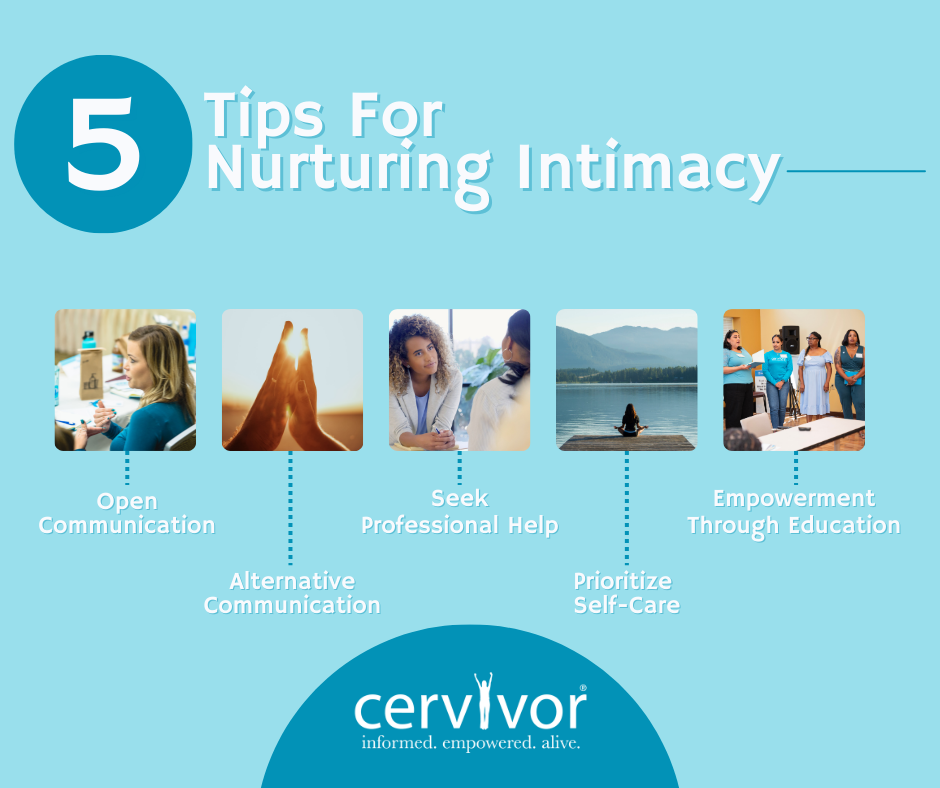
5 Tips for Nurturing Intimacy
Many community members have shared their experiences with receiving a bag or box of dilators after brachytherapy (internal radiation) without a clear explanation of their importance for maintaining pelvic floor health and keeping the vaginal canal open post-treatment. Unfortunately, some have not been as fortunate and have experienced their vaginal canals fusing together. On the other hand, many have received the necessary education, engaged in open dialogue with their care team, and are achieving tremendous success in their post-treatment phase. Cervical cancer survivor Samantha wholeheartedly recommends dilating and shares in her Cervivor Story: “Your sex life does not have to be over after this! In some cases, it’s physically impossible, and I understand that. But for the vast majority of us, with consistent dilation, pelvic floor therapy, and lube, we can repair vaginal tissues and have a sex life again.”
It’s essential to remember that you matter and should never hesitate to advocate for yourself. The following tips can help you navigate the challenges of intimacy after cervical cancer treatment:
- Open Communication: Discuss your feelings, needs, and concerns with your partner. Honest dialogue can help both of you navigate the physical and emotional challenges together.
- Explore Alternative Forms of Connection: If traditional sexual activity is uncomfortable, consider non-sexual forms of intimacy like cuddling, massage, or simply spending quality time together. Redefining what intimacy means for you can pave the way for a deeper connection.
- Seek Professional Support: Professional counselors, therapists, or sexologists with experience in cancer care can offer strategies tailored to your situation, including interventions like pelvic floor therapy or sexual counseling to address specific concerns.
- Prioritize Self-Care: Engage in activities that promote overall well-being. Exercise, mindfulness practices, and self-compassion can improve your mood and self-esteem, making it easier to embrace intimacy.
- Educate Yourselves: Understanding the potential side effects of treatments can help set realistic expectations. Trusted sources like the National Cancer Institute and the American Cancer Society provide comprehensive information on managing these challenges.
Products and Resources for Sexual Health
The following products and resources can help patients and survivors manage sexual health challenges:

- Dilators: Are used to moisturize, stretch and strengthen for overall vaginal health. Products like Soul Source or Intimate Rose are popular due to the silicone material. Typically recommended use of 3-5 times a week at 5-20 minutes.
- Depth Control Devices: Like Ohnut to help you control depth and alleviate pain.
- Lubricants: Water-based artificial lubrication (paraben and glycerin-free) like Sliquid, Slippery Stuff, and as an alternative, coconut oil.
- Vaginal Moisturizers: Like Replens, Good Clean Love, and Aloe Cadabra to provide relief for vaginal dryness and discomfort.
- Pelvic Floor Therapist Referral: A specialist for retraining and strengthening pelvic floor muscles. Additionally, Cervu Health offers pelvic therapy solutions for female cancer survivors. If you experience chronic pelvic pain or discomfort during sexual activity (dyspareunia), consider participating in their research study to help develop a treatment device for women facing similar challenges.
It’s essential to understand the difference between moisturizers and lubricants, as well as the importance of maintaining the vagina’s natural pH balance. Hormonal changes, radiation, and chemotherapy can affect the vagina’s pH balance, making it crucial to choose products that are gentle and suitable for your needs.
Last Thoughts
Cervical cancer treatment can significantly impact a woman’s sexual health and intimacy. However, remember that these aspects are vital parts of your overall well-being. Or, as Sage wisely says: “Think about what sexual intimacy is really about with another person. Orgasms are a great thing to experience, but that isn’t the goal.” With the right support and resources, you can navigate these challenges and build a stronger, more meaningful relationship with yourself and your partner. Research shows that interventions like pelvic floor rehabilitation and targeted therapy can improve sexual function and quality of life for cervical cancer survivors. Open communication with your care team and partner is essential in strengthening your connection and enhancing your life.
By advocating for yourself, exploring new forms of connection, and seeking support from communities like Cervivor, you can redefine intimacy in a way that honors both your physical and emotional needs.
Disclaimer: This information is intended for informational purposes only and does not substitute for professional medical advice. It is essential to always consult your healthcare provider regarding any concerns or questions about your treatment or health. While we strive to provide accurate and helpful information, personal medical decisions should be made in consultation with a qualified healthcare professional.