Patient Advocates Matter

My cervical cancer story began when I was 24 years old. I had graduated from a local dental assisting program and worked in the field for only a couple of years when I was diagnosed on World Cancer Day 2015. I was completely devastated that cancer was happening to me! I mean, I knew I had a cervix but I was naive to the fact that I could get cancer “there.” And wasn’t it most common for older people, not younger people, to get sick? That’s when I realized how gravely wrong I was. Didn’t I just witness a high school friend succumb to cancer just a year before? She passed away at the young age of 27 and I truly thought that was going to be my destiny. I didn’t know anyone else my age that was going through it.

All throughout my treatment, I placed blame on myself for getting cancer, and even though I felt that deeply, I knew I wanted to do something more to help others. I wanted them to know about cervical cancer and how Planned Parenthood saved my life with their preventive screening services. I wasn’t sure how to start advocating or sharing my story, so I started spreading awareness by handing out little ribbons I made. (Some of my friends still wear them to this day).

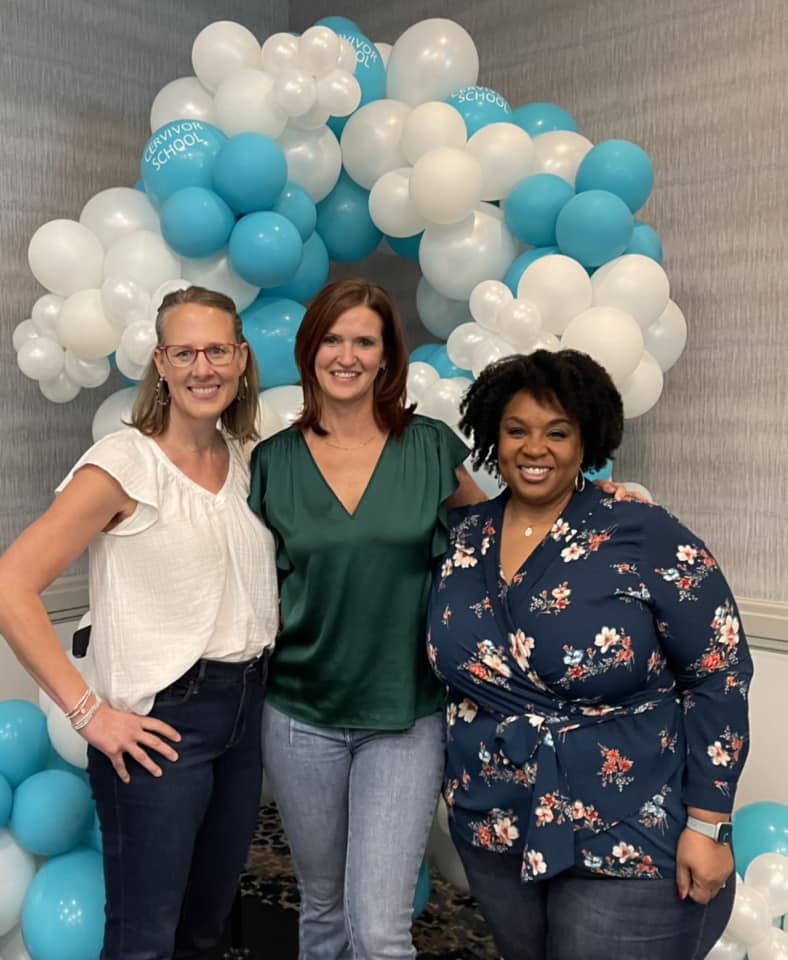
If you would have told me back then I would become an award-winning patient advocate, I never would have believed you. You see, I’ve suffered from social anxiety throughout my entire childhood and adult life. It wasn’t until I was finished with cancer treatment that I found out about Cervivor, signed up for Cervivor School, and grew into the patient advocate I am now.

I have been involved with the organization since 2017 and have been presented with some pretty incredible opportunities – including employment by the organization. I started in 2021 when everything had been pretty virtual but this year, in-person events have started happening more frequently. Team Cervivor, consisting of Cervivor Founder, Tamika Felder, and myself, made the decision to attend the annual meeting of the American Society of Clinical Oncology (aka ASCO). As a first-time attendee, I can say I was completely blown away! This event was massive and full of oncology’s leading cancer researchers, clinicians, thought leaders, industry partners, advocates, and so much more!

We kicked off the week-long conference with a breakfast meeting in which we were able to connect with so many people – putting names to faces that we’ve been working with via Zoom meetings and emails for the last few years. We had a constant line of people waiting to talk with us about our work and hear our stories. It could have been the lack of caffeine but it really didn’t hit me until midway through that breakfast – the impact of our work as patient advocates is crucial in the oncology world. This made me even more proud to be working for the organization that gave me my voice.

Dr. Martina Murphy was one of these people who expressed just how important our work is including our Comfort Care & Compassion Program. She says, “Cervical cancer is a disease where we need so much more attention and work. The impact of this group is powerful.”

We continued to attend meeting after meeting and heard a consistent message across the board: we are dedicated to putting equitable patient care as our priority. We heard how patient advocate voices have a seat at the table and how we are leading engagement for some important topics across social media platforms. The realization hit me once again: We make a difference every day. Patient advocates matter.

Now, we made sure to celebrate a little while we were in Chicago too. The Sunday of the conference was a day recognized as National Cancer Survivors Day and we had A LOT to celebrate: Tamika was 21 years cancer free and was given the most exceptional gift and I was just days from officially being 6 years cancer free. We made sure to spend time with some friends and partners – both new and old, to eat incredible food, and to take time to unwind.

It has truly been eye-opening and so rewarding to see the kind of impact my story has had in the last several years. It’s been a lot of hard work and it’s taken time to see the results. But I know it’s not just my story in this. It’s the collective of our stories pushing for the same mission: to end cervical cancer once and for all.

Morgan Newman, MSWOutside of her Community Engagement Liaison position at Cervivor, you can find Morgan nurturing her relationships with local community partner organizations like the American Cancer Society Cancer Action Network (ACSCAN), the Iowa Cancer Consortium, and serving as a board member for Above and Beyond Cancer. Learn more about Morgan at Cervivor.org.

Observing Asian American and Pacific Islander Heritage Month

Happy Asian American and Pacific Islander Heritage Month! This month, we pay tribute to the generations of Asian Americans and Pacific Islanders who have shaped America’s history. Asian American and Pacific Islander Heritage Month originated with Congress in the late 1970s and is recognized and celebrated worldwide today!

We are celebrating by honoring some of our resilient Cervivors and continuing to spread awareness to reduce health disparities within the community but first, let’s take a look at some of the glaring statistics.

In 2022, the American Cancer Society released their Cancer Facts & Figures report stating the rates of new cancer cases and the rates of cancer deaths among Asian Americans, Native Hawaiians, and Pacific Islanders varied widely, mostly because of significant differences in exposure to cancer risk factors.

Of these findings, they found that:

  • Cancer is the leading cause of death in the Asian and Pacific Islander population in the US.
  • In 2022, an estimated 14,100 cases of invasive cervical cancer will be diagnosed and about 4,280 deaths will occur in the US.
  • Large variations in cancer occurrence within the API population reflect diversity in terms of geographic origin, language, acculturation, and socioeconomic status.
  • According to the US Census Bureau, in 2020, 20% of Black and 17% of Hispanic/ Latino populations lived below the poverty line, compared to 8% of non-Hispanic White (White) and Asian populations.
  • In addition, in 2019, 10% of Black and 19% of Hispanic/Latino populations were uninsured, compared to 6% of White and 7% of Asian populations.
  • Cervical cancer incidence rates among Cambodian, Vietnamese, and Laotian women decreased dramatically from 1990 to 2008, a change that has been attributed to increases in screening and treatment in these groups.
  • The use of the Pap test within the past 3 years is highest among Filipino women (83%, the same rate as in non-Hispanic whites), and lowest among Chinese women (66%).
  • The 5-year relative survival rate for cervical cancer is 66% overall, but ranges from 39% for Black women 65 years of age and older to 79% for White women under 50, and from 92% for localized-stage disease to 18% for distant-stage.

Meet some of the Asian Americans and Pacific Islanders in our Cervivor community who want to change these statistics!

Meet Arlene, a Washington state Cervivor who recently shared her story to help make a difference in her community. She says, “In honor of Asian American and Pacific Islander Heritage Month and Mental Health Awareness Month, I am humbled to share Part 1 of my cervical cancer journey! It’s time to RISE UP and be a voice! I am no longer ashamed!”

Meet Gina, a cervical cancer patient residing in Maryland. She just learned a year ago about her cancer diagnosis less than a week after turning 32, and 13 weeks after learning she was pregnant. Hear directly from Gina as she shares her story in our CervivorTV video below – We know you will appreciate, empathize with, and want to share with your networks.

We are also super excited to highlight California Cervivor, Joslyn Chaiprasert-Paguio. We love Joslyn because of her energy and advocacy, and if you’ve listened to the first episode of Season 2 of the Cervivor Podcast, you know we are happy to announce that she will be taking over as the host of the podcast! Joslyn will be bringing a new perspective as a Gen Z-er and as a recurrent cervical cancer survivor. Join us in wishing Joslyn success in this new role and get ready for a new season of robust conversations to help us cope, heal, learn and thrive. Don’t forget to visit the Cervivor Podcast on your preferred listening platform and subscribe to get alerts about new episodes!

The Asian culture rarely discusses below-the-belt talk, awareness of, and the knowledge of how important their checkups with their healthcare providers are and they are highly underrepresented in our public health data, however, storytelling has made a difference in the population by increasing the awareness of HPV, cervical cancer prevention screenings, and vaccination. Studies have shown an increase in a more positive outcomes in health data.

Beyond Arlene, Gina, and Joslyn’s stories, visit Cervivor.org to meet other cervical cancer survivors repping the Asian and Pacific Islander communities and share their stories this month with your networks!

What’s your story? Are you a cervical cancer survivor? Your story matters. Share your cervical cancer story and make a difference. Click this link to follow our easy-to-use template.