Latina Cervivor Stories: Changing the Narrative about Cervical Cancer in Hispanic Communities This Hispanic Heritage Month

By Kyle Minnis, Cervivor Communications Assistant

Each year, Hispanic Heritage Month (September 15 to October 15) honors the contributions and resilience of the more than 65 million Hispanic Americans who shape our nation’s culture, economy, and communities. It’s also an important opportunity to highlight persistent health disparities—particularly in cervical cancer prevention and treatment, which disproportionately affects Latina women.

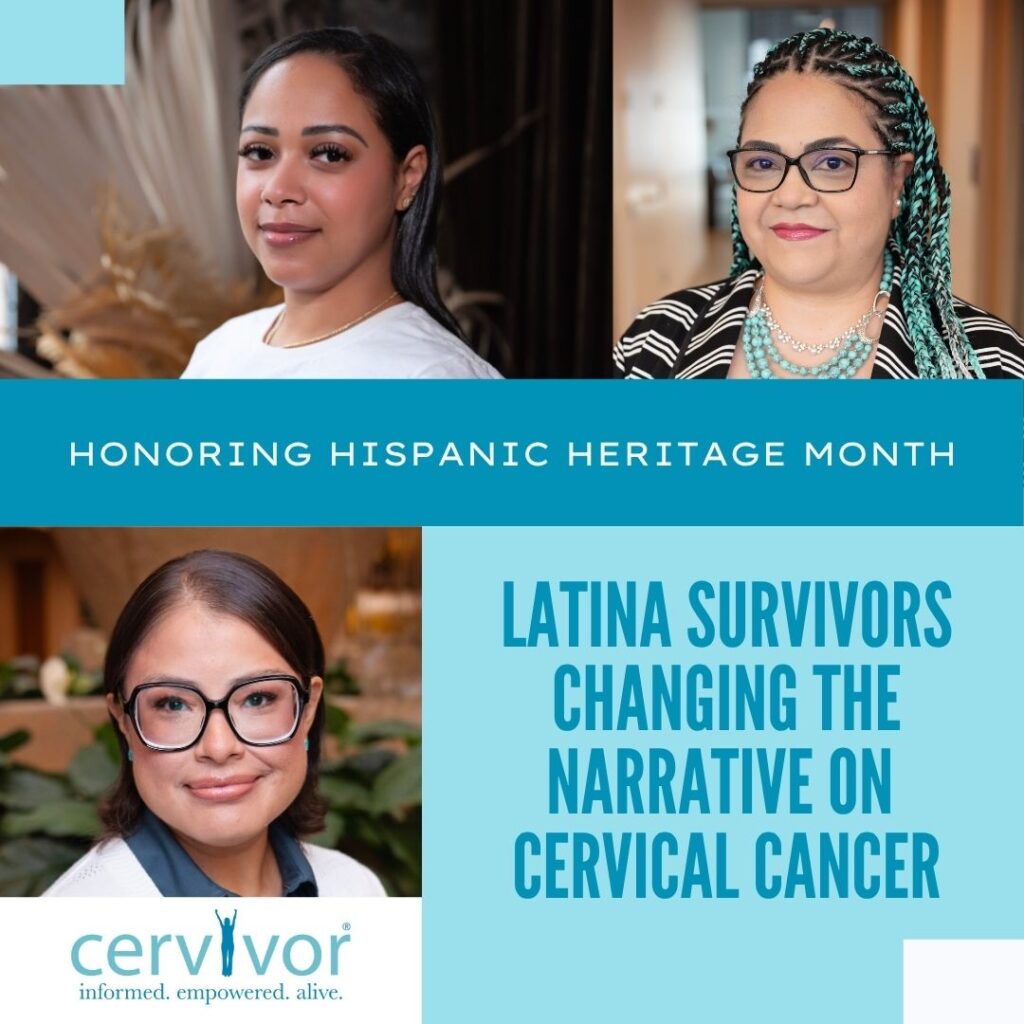
Composite image of three Latina cervical cancer survivors with teal text: "LATINA SURVIVORS CHANGING THE NARRATIVE ON CERVICAL CANCER." The image highlights representation and advocacy for cervical cancer in Hispanic communities.

Latinas are 43% more likely to be diagnosed with cervical cancer than non-Hispanic white women, and their risk of dying from it is 25 to 50% higher, according to the American Cancer Society (ACS). They receive significantly fewer Pap tests and are less likely to follow up on abnormal results, reports the Centers for Disease Control and Prevention (CDC). Barriers to care include stigma and silence around “below-the-belt” cancers, language differences, insurance gaps, transportation challenges, and inflexible work schedules, all of which delay diagnosis and limit access to lifesaving interventions.

Patient navigators like Nancy Peña—Founder and Director of Navegación de Pacientes Internacional (NPI), which trains Spanish-speaking clinical advocates across the U.S. and Latin America—champion bilingual education and culturally competent care, explaining, “Native-language navigation improves informed consent, adherence, and satisfaction; reduces errors and no-shows; and honors dignity.”

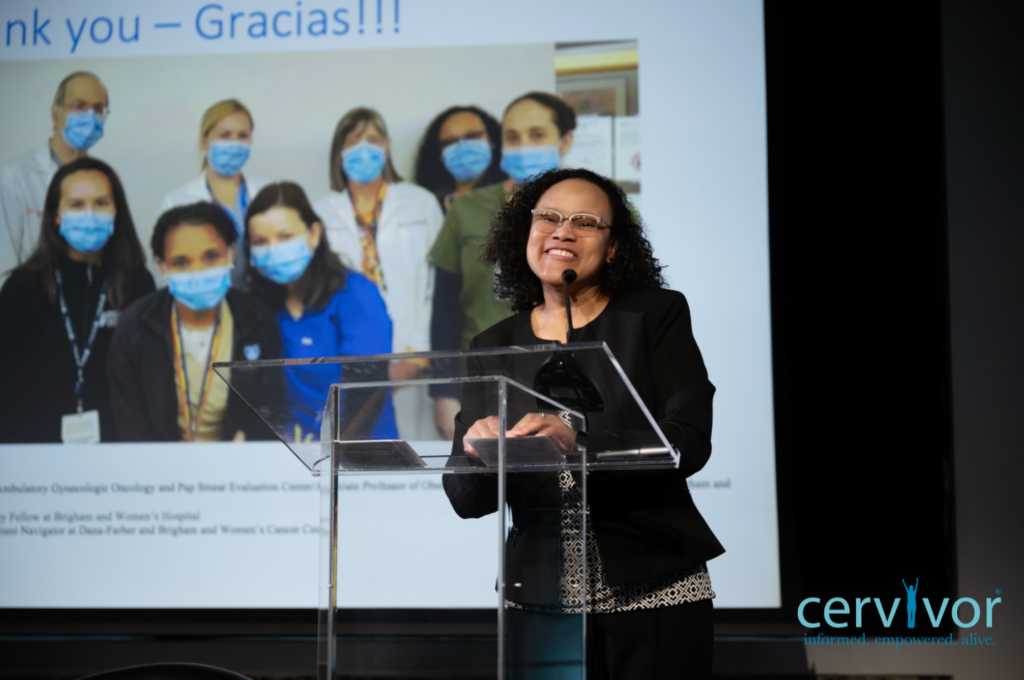
Bilingual clinical patient navigator Nancy Peña spoke to attendees at the 2024 Cervical Cancer Summit.

HPV vaccine uptake among Hispanic youth and young adults also remains low. While 63% of U.S. adolescents ages 13 to 17 are up to date on the full series, Hispanic adults ages 18 to 26 lag behind: According to the latest National Health Interview Survey, only 36% had received at least one dose, and just 21.5% had completed the full series—far below the national goal of 80% two-dose completion by age 15.

As Cervivor has reported, in many traditional households—Hispanic or otherwise—the vaccine is still seen to promote promiscuity. “It’s so important to speak openly with our children about cervical cancer and the HPV vaccine,” says cervical cancer survivor Maritza Manjarrez, a Cervivor Español member who was raised in a Mexican family. “Vaccinating our youth doesn’t mean we’re giving them permission to have sex—it means we’re protecting them from a cancer that can develop later in life.”

Cervivor’s mission is to help eliminate cervical cancer while also lifting survivors from isolation, providing community and education, and empowering those affected to become advocates. This Hispanic Heritage Month, we celebrate our Latina community members—including Maritza, Dulcely Tavarez, Yvette Torres, and many more—by amplifying their stories and strength. Their voices demonstrate what it means to live beyond cervical cancer while advocating for health equity and compassion.

Maritza Manjarrez: Breaking the Silence

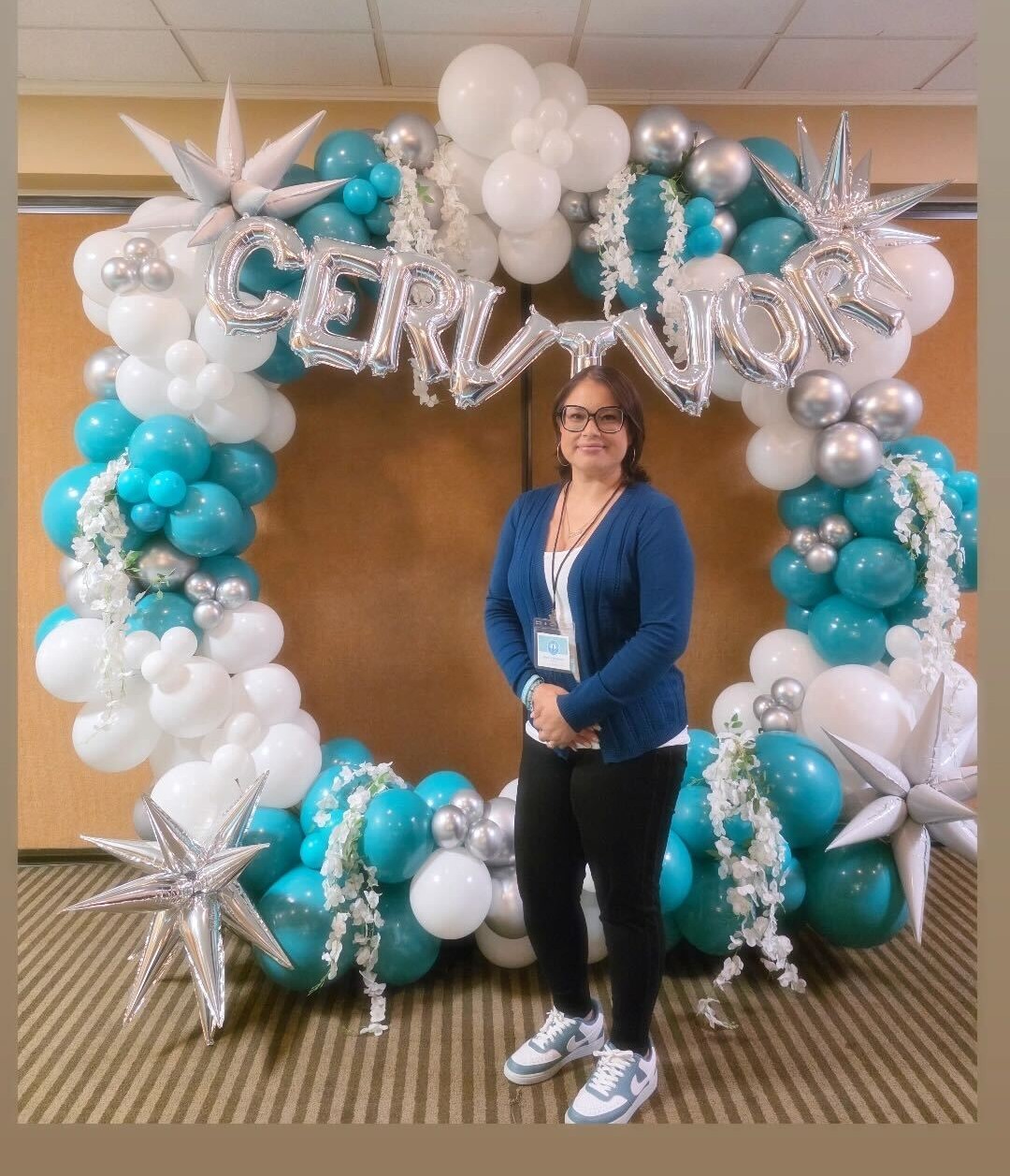
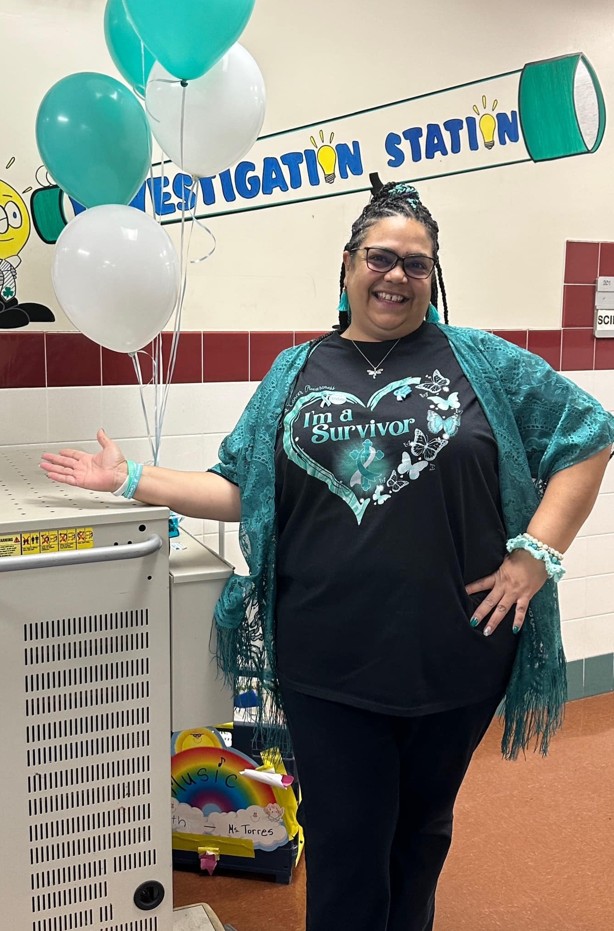
Maritza recently graduated from Cervivor School 2025.

“My cervical cancer journey has been especially difficult as a Latina. The stigma surrounding HPV and cervical cancer in our community has played a huge role in that,” says Maritza, who was diagnosed with metastatic squamous cell carcinoma at age 34. “Growing up Mexican meant you didn’t talk openly about topics like this. Keeping what was considered ‘private information’ to myself made it very hard to find help, support groups, or even basic information.”

That silence meant it took Maritza years to find Cervivor and feel comfortable sharing her story. “When asked what type of cancer I had, I felt a sense of shame and embarrassment to answer cervical cancer,” she recalls. “I believe this stigma plays a big role in the statistics. It makes me sad and worried, because if we don’t increase advocacy, these numbers are not going to change. Too many of our women are dying from this preventable disease.”

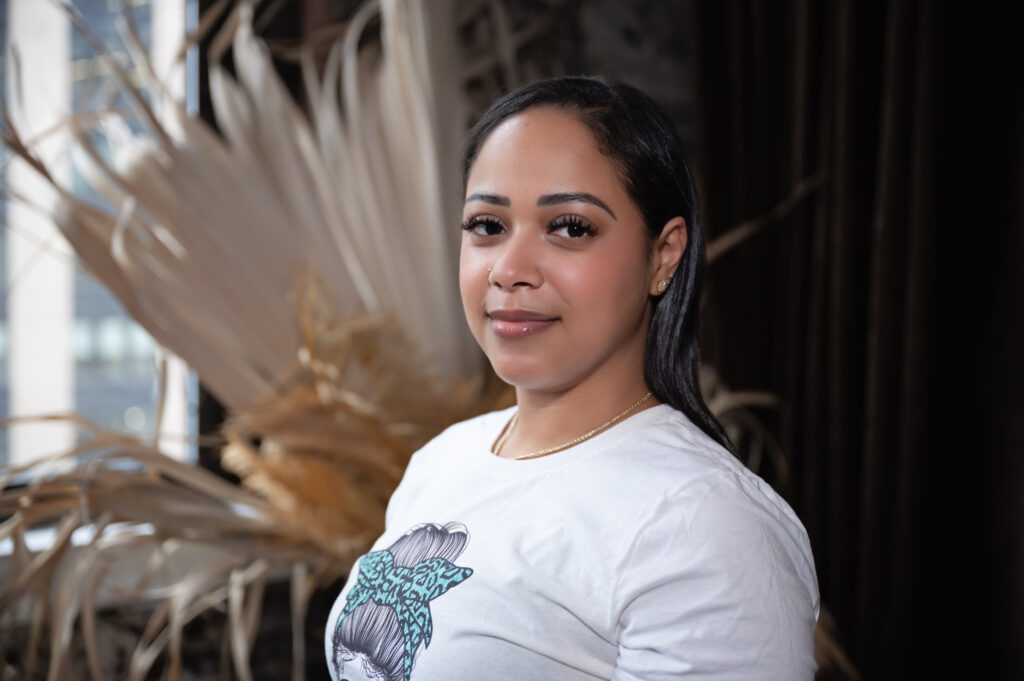
Dulcely Tavarez: Shattered Dreams, Renewed Fire

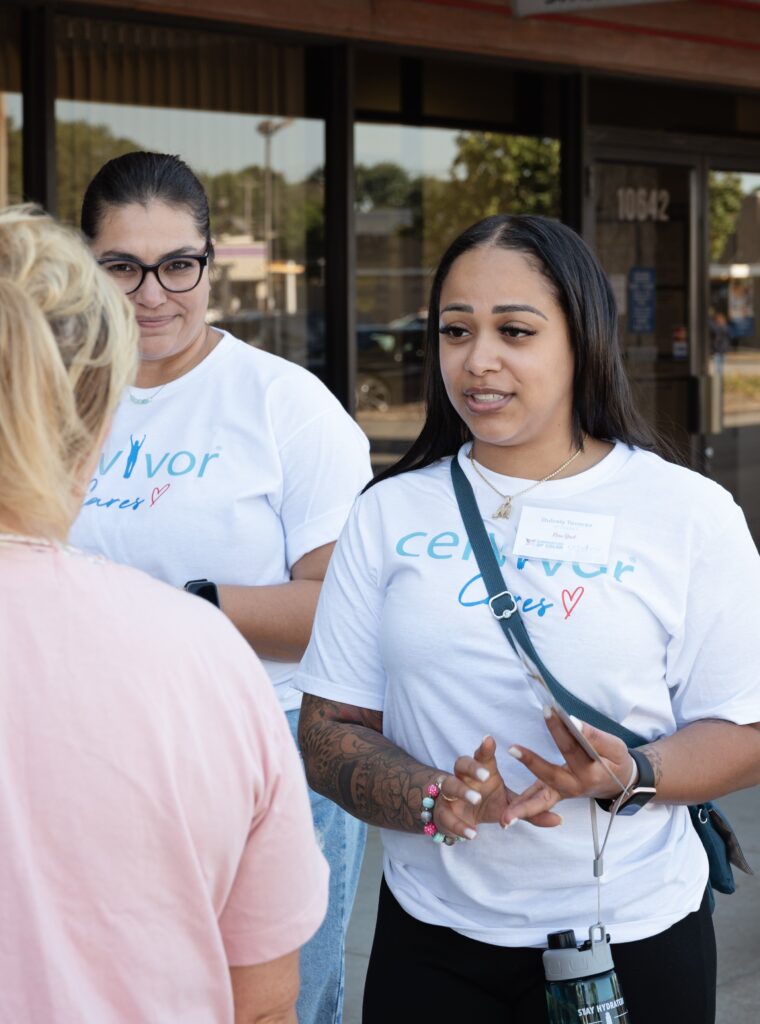
Dulcely Tavarez

Dulcely describes being in her early twenties, putting her own health last while caring for others, a struggle familiar to many Latinas. In April 2015, she finally saw a doctor about her irregular menstrual cycles, but was bounced between providers before receiving a cervical cancer diagnosis. “‘Later’ almost cost me everything. By the time I was diagnosed, the treatment I needed was life-saving but meant I could never carry a child.”

Dulcely’s family surrounded her with care and love, but it sometimes intensified her grief and isolation. “In our community, family and children are seen as such a natural part of life that it’s hard to explain the emptiness when that dream is taken away. Even when they were trying to comfort me, sometimes I felt alone in those emotions.”

She found healing in Cervivor. “When I looked for stories that reflected my own—young, Latina, facing cancer and fertility loss—I couldn’t find them. And that loneliness can be crushing. We need to see ourselves in these campaigns, in our own language, in ways that reflect our values and struggles. Representation is not just about visibility—it’s about saving lives and healing hearts.”

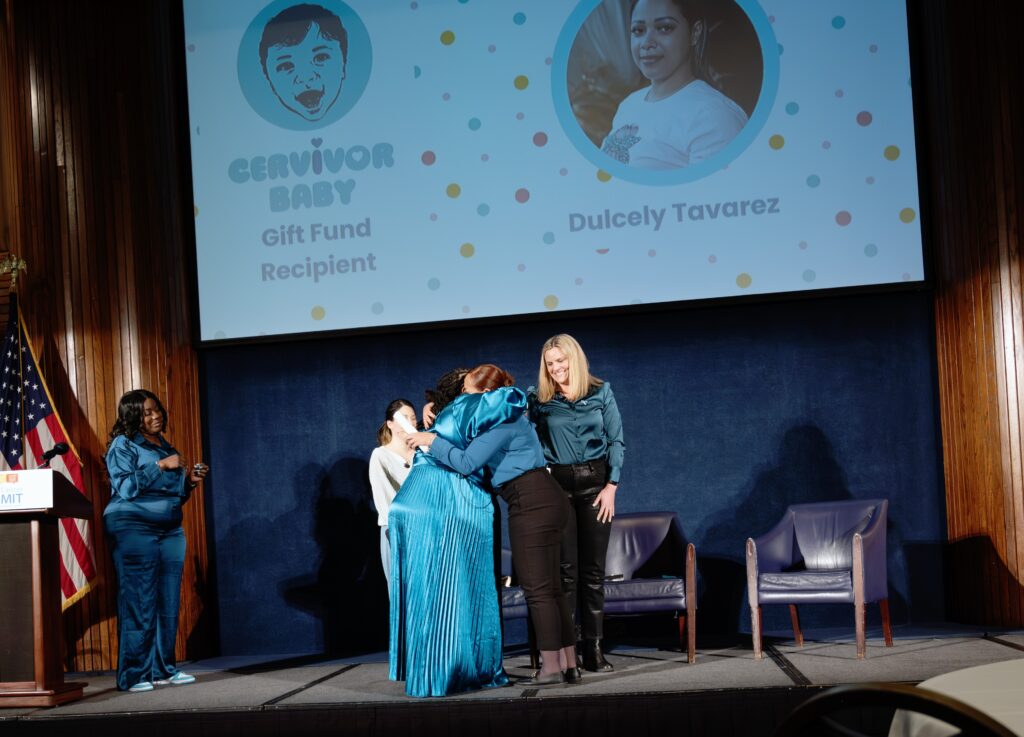
Thanks to her involvement with Cervivor, Dulcely became the first-ever recipient of the Cervivor Baby Gift Fund at this January’s 2025 Cervical Cancer Summit. The award supports cervical cancer survivors pursuing alternative paths to motherhood and accepts donations from $10 to $50,000.

Dulcely gets a hug—after receiving the first-ever Cervivor Baby Gift Fund—from Cervivor Founder and Chief Visionary Tamika Felder at the 2025 Cervical Cancer Summit.

Yvette Torres: From Shame to Advocacy

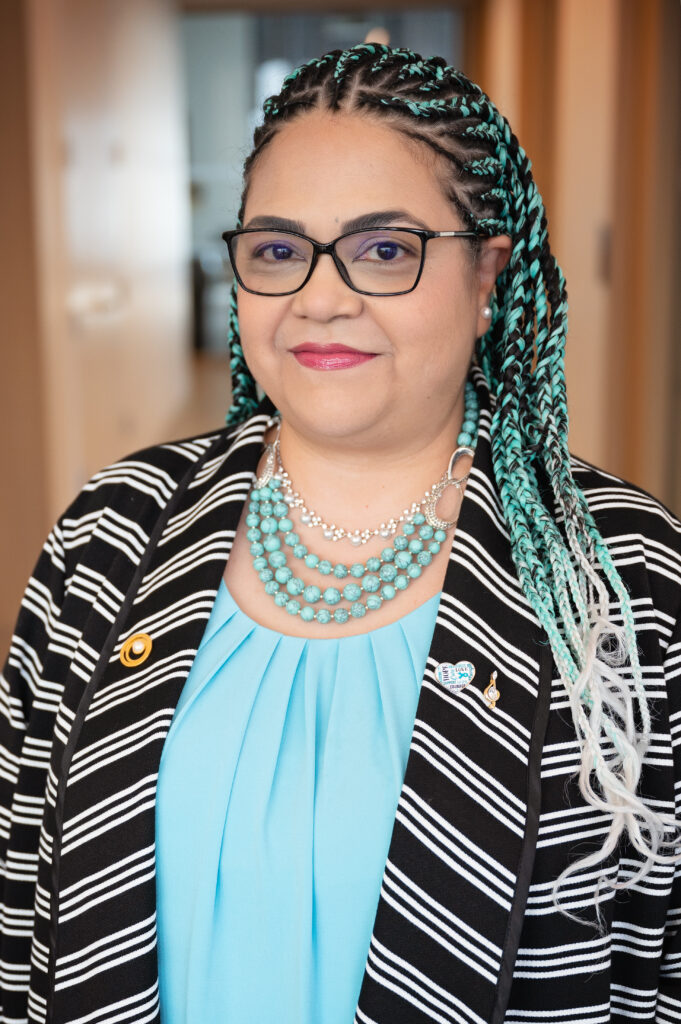
Yvette Torres

Yvette’s cancer journey began with an unsympathetic, unprofessional diagnosis. “The doctor asked, ‘Why did I wait so long?’ Still in shock, I did not answer that callous question,” she recalls. At 42, she and her husband had been hoping for another child so their youngest son could have a closer-in-age sibling—but that hope ended with a biopsy, performed on her son’s 4th birthday, that confirmed cervical cancer in 2013. She remembers the OB/GYN telling her it “didn’t look good,” that it was most likely cancer, and later saying it was a “good thing I already had two children,” since treatment would likely take away her chance to have more.

This cold medical treatment reinforced how stigma and cultural silence can delay women from seeking care. Yvette shares, “I hid. I felt ashamed. I didn’t want to talk about it because that’s what I learned growing up—we didn’t talk about below-the-belt issues. My mother did teach me the importance of going to the gynecologist. However, I did not feel comfortable talking about details, differences, or changes in my body.” Her experience echoes what many Cervivor Español members describe: how misconceptions about HPV, reluctance to discuss gynecologic cancers, and language barriers all contribute to lower screening and vaccination rates.

For Yvette, community was the turning point. “I found Cervivor during COVID, when isolation made everything feel even worse.” Through Cervivor Español, she gained the confidence to speak out in Spanish, even though she hadn’t grown up fluent, and now distributes bilingual prevention materials. “Now, I celebrate and embrace my Black and Hispanic identity by advocating for these communities and helping women not feel ashamed by sharing my story,” says Yvette, a 2023 Cervivor Champion and recent top Tell 20, Give 20 fundraiser, who also mobilized her students through a school workplace drive to spread awareness.

Join the Movement to End Cervical Cancer Disparities in Hispanic Communities

Latinas make up 20% of the U.S. population, and their stories of surviving cancer, overcoming setbacks, and celebrating successes deserve to be heard—not just during Hispanic Heritage Month. Whether navigating care in a new language, confronting cultural silence around cancer, or redefining family and identity after treatment, Latina Cervivors show that community and compassion can transform what’s possible.

To help reduce cervical cancer diagnoses and improve outcomes for Hispanic individuals with a cervix, take action today by:

  • Sharing your Cervivor Story to put a face on a cancer that is too often hidden or hushed.

  • Supporting Cervivor’s 20th-year Tell 20, Give 20 campaign to fund culturally relevant programming and Cervivor Español support group (and sign up for next month’s event).

  • Advocating for bilingual programs—like Nancy Peña’s NPI patient navigators—that help create more equitable care pathways.

  • Championing advocacy groups such as the ACSí Se Puede Hispanic/Latino Advocacy Alliance, which amplify voices and expand access for Spanish-speaking communities.

  • Using your voice. If you speak Spanish—whether fluently or conversationally—you can support those facing language barriers. Talk with them about the life-saving benefits of HPV vaccination, regular screenings, and timely follow-ups.

Lastly, honor the voices of Maritza, Dulcely, and Yvette—and so many others—by making this Hispanic Heritage Month a catalyst for lasting change. As Dulcely reminds us:

“Please don’t wait. Don’t push your health to the bottom of the list the way I did… To the mothers—protect your children with the HPV vaccine. It’s an act of love. To my fellow women—know your worth, use your voice, and never stop fighting for answers.”

If you found this blog post helpful, please share it with friends or family members. You may just save a life. Questions? Contact us at info@cervivor.org.

About the Author

The image is a portrait of a young man with dark skin and short, curly black hair. He is wearing a blue collared shirt and black-framed glasses, and is smiling at the camera.
The man has dark skin and short, curly black hair.
His hair is cut close to his head, with a slight fade at the sides.
His eyebrows are thick and well-groomed.
He is wearing a blue collared shirt.
The shirt is a medium blue color and appears to be made of a lightweight material.
It has a relaxed fit and is buttoned up to the top.
He is also wearing black-framed glasses.
The frames are rectangular in shape and have a subtle curve at the temples.
The lenses are clear and do not appear to have any tint or coating.
The man is smiling at the camera.
His smile is wide and genuine, showing off his white teeth.
His eyes are crinkled at the corners, giving him a friendly and approachable appearance.
The background of the image is a plain gray color.
The gray is a medium tone, neither too light nor too dark.
It provides a neutral backdrop that allows the subject to stand out.
Overall, the image presents a friendly and approachable young man who appears to be confident and comfortable in front of the camera

Kyle Minnis is a senior studying Strategic Communications at the University of Kansas. He is currently serving as Cervivor’s Communications Assistant.

Cervivor Founder: A Voice for Cervical Cancer Survivors and Health Equity This Black Philanthropy Month

When Tamika Felder founded Cervivor, Inc., in 2005, she wasn’t trying to build a national nonprofit with global reach. She was simply navigating her own cervical cancer diagnosis and determined that no woman should feel as alone as she once did.

Today, as Founder and Chief Visionary of Cervivor, Tamika leads an international movement to eliminate cervical cancer and confront health disparities—especially those affecting women of color.

During Black Philanthropy Month—and on Give 8/28, a national day dedicated to uplifting Black-led and Black-benefiting nonprofits—Tamika’s story is a powerful reminder of how Black leaders are driving change in health equity and advocacy. For her, the day is rooted in pride and visibility. “I’ve always been a part of community service,” she says, reflecting on the example set by her parents. “There are so many Black organizations doing incredible work, but they don’t always get the recognition they deserve. Give 8/28 is a day to say we’re proud to lead these organizations.”

Here, Tamika shares her wisdom and advice for others—whether you’re launching a nonprofit or fighting for access to quality healthcare for all.

Finding Her ‘Why’ and Reclaiming Her Voice

One of Tamika’s guiding messages as a leader and survivor is the importance of finding your “why”—the driving force behind your advocacy work and passion. For her, that “why” was born during cancer treatment and its aftermath, as she grieved the sudden end of her career as an up-and-coming broadcast journalist in Washington, D.C., and the loss of her fertility. “Little by little, the trauma had less of a hold on my life, and I began to embrace the possibilities that life beyond cancer could hold,” she says.

A pivotal moment came when she was asked to testify in support of a Maryland law to safeguard parenthood for young adult cancer patients. “Through tears and shaky hands, I shared my story with legislators, and it made a difference,” she recalls. The Protect Parenthood law was ultimately passed in 2018. Since then, Tamika has continued to use her powerful voice—speaking on Presidential Panels and global stages, serving on national roundtables, and appearing in award-winning documentaries and major publications.

“Black Philanthropy Month is about increasing visibility for Black-led nonprofits,” she says. “Some people might look at Cervivor and think, ‘Well, it already has great visibility.’ But until cervical cancer is eliminated, it will always need more.”

Centering Health Equity

Tamika has always been clear: While the mission of Cervivor is universal—cervical cancer prevention and elimination—the path forward must address inequities that disproportionately affect Black and brown women. And she doesn’t mince words about why health equity is central to her work. “We know that there are disparity gaps in this space, and that people of color, especially Black and brown women, are falling through those gaps at a higher incidence,” she explains.

Cervical cancer is one of the most preventable cancers. With the HPV vaccine, Pap tests, HPV testing, and now self-collection options, the prevention tools exist to save lives. Yet Black women continue to face higher rates of diagnosis and death. Tamika believes part of the solution lies in representation: survivors telling their own stories and trusted messengers bringing information to their communities.

The image is a graphic featuring a quote and a photograph. The quote, displayed on the left side of the image, reads: "MY LEGACY WOULDN'T BE THE LIVES I BROUGHT INTO THE WORLD. IT WAS GOING TO BE THE LIVES THAT I SAVED." The text is presented in a large, bold font, with the words "MY LEGACY," "WAS GOING TO BE THE," and "LIVES THAT I SAVED" in teal, and "WOULDN'T BE THE," "LIVES I BROUGHT," and "IT" in red and orange.
To the right of the quote is a photograph of a group of eight women, all wearing white or light-colored shirts with the word "cervivor" printed on them. They are seated on two white couches, arranged in a conversational manner. The background of the photograph features a wood-paneled wall adorned with a large piece of artwork.
At the bottom-right corner of the image, three logos are visible. The first logo, situated closest to the photograph, reads "cervivor" in teal text, accompanied by the tagline "informed. empowered. alive." in smaller text below. The second logo, positioned to the right of the first, displays the name "Tamika Felder" in orange text. The overall design of the image suggests that it may be related to a campaign or organization focused on cervical cancer awareness or support.
Cervivor Noir community members at last year’s Cervical Cancer Patient Advocacy Retreat For Communities of Color in Cleveland, OH.

“When I first started sharing my story, I didn’t see anyone who looked like me,” she says. “Every time I see a Black woman sharing their story and sharing the correct scientific information behind cervical cancer, it makes me feel really, really proud.”

The Power of Patient Stories

Tamika has built Cervivor around the conviction that data alone is not enough. “We gave the data, but we didn’t tell the story,” a researcher once told her. That insight reshaped her advocacy.

“You hear all the time that patient stories are important, but I uniquely got it,” Tamika reflects. “My story makes a difference. The hard parts of my story that I may not want to talk about can make a difference. ”From Cleveland to Rwanda, Cervivor has seen an impact by uplifting patient voices. At a Cleveland Clinic event, Cervivor ensured that “no one was left out of the screening” by providing culturally specific support through Cervivor Español and Cervivor Noir.

These stories matter because they reveal the lived reality of surviving cervical cancer—the hysterectomies, infertility, ostomies, and lifelong side effects often invisible to the public. “If we just let the general population tell it, well, you survived it, you’re doing fine. But I don’t look like what I’ve been through,” Tamika says.

Building Trust and Representation

Trust is everything in underserved communities, and Tamika insists on meeting people where they are. “I go to those communities. If I don’t go myself, someone from my organization goes. We talk to them. We build trust,” she says.

Representation plays a central role in Cervivor’s impact. Tamika works to ensure that photos, videos, and programs reflect diverse survivors. “I never want anyone not to see themselves,” she explains. “There’s something special to be said by connecting with people who’ve gone through what you’ve gone through.”

Resilience and Self-Care in Leadership

Running a nonprofit rooted in lived trauma is deeply personal work, and Tamika is candid about the toll. “There are points where it’s going to be really hard, but when you’re really committed to this work, you’ll find a way to keep going,” she says.

The image is a collage of 84 headshots of women, arranged in six rows, with a light blue background that gradually darkens towards the top. The headshots are presented in white-bordered boxes, each containing a photo of a woman and her name, along with her birth and death years. The women depicted are diverse in terms of age, ethnicity, and attire. At the bottom of the image, the text "WITH CERVIVOR, THEY LIVE ON #ENDCERVICALCANCER" is displayed in white, accompanied by the Cervivor logo in the bottom-right corner. The overall tone of the image is somber, as it appears to be a tribute to women who have passed away from cervical cancer.

Tamika with Lisa Simms Booth, Executive Director of the Smith Center for Healing and the Arts

As a survivor herself, every death in the community is another wound. “It’s another person who’s died from a preventable disease, and so I have to really practice self-care around that,” she shares. Surrounding herself with other Black women nonprofit leaders helps her carry the weight. “It’s a very hard time, not only for nonprofits, but nonprofits run by Black women. Knowing that you’re not alone helps it be manageable.”

Standing Firm on Equity

Even as some organizations shy away from terms like “DEI” or “health equity” in response to political pressures, Tamika refuses to dilute Cervivor’s mission. “Just because we change and don’t call a thing a thing doesn’t mean that we don’t experience it,” she says. “We’ve already had a funder not fund us because of our Communities of Color retreat. And I’m not going to change the name of it. No one is going to die from cervical cancer on my watch.”

Her vision is clear: to leave behind a legacy of courage, visibility, and unrelenting advocacy.

A Legacy of Hope and Action

What began as one woman’s way to not feel alone has become a global movement of survivors, advocates, and educators. Tamika is proud of how Cervivor has connected patients, clinicians, community workers, and researchers. “We’ve inspired patients, educated clinicians, and shifted the narrative around cervical cancer,” she says.

On Black Philanthropy Day, her journey reminds us that philanthropy is not just about giving money—it’s about giving voice, visibility, and leadership. Tamika embodies all three, leading with resilience and purpose to ensure that no one falls through the gaps in the fight against cervical cancer.

Support the Mission

This Black Philanthropy Month, we invite you to support Tamika’s vision and Cervivor’s mission to end cervical cancer through advocacy, education, and community. Here’s how you can take action:  

  • Give $20 on 8/28: As part of Cervivor’s year-long Tell 20, Give 20 campaign, your $20 donation will directly support a Black-led nonprofit committed to health equity for all. 
  • Engage with Cervivor: Follow us on social media, share our posts, and help amplify the voices of cervical cancer survivors and advocates. Your engagement builds awareness, strengthens our community, and inspires action.
  • Attend Cervivor Events: From Cervivor School and monthly virtual meetups to the next Cervical Cancer Summit—your presence makes a difference. Show up, speak out, and stand with us.